
Last updated November 21, 2026
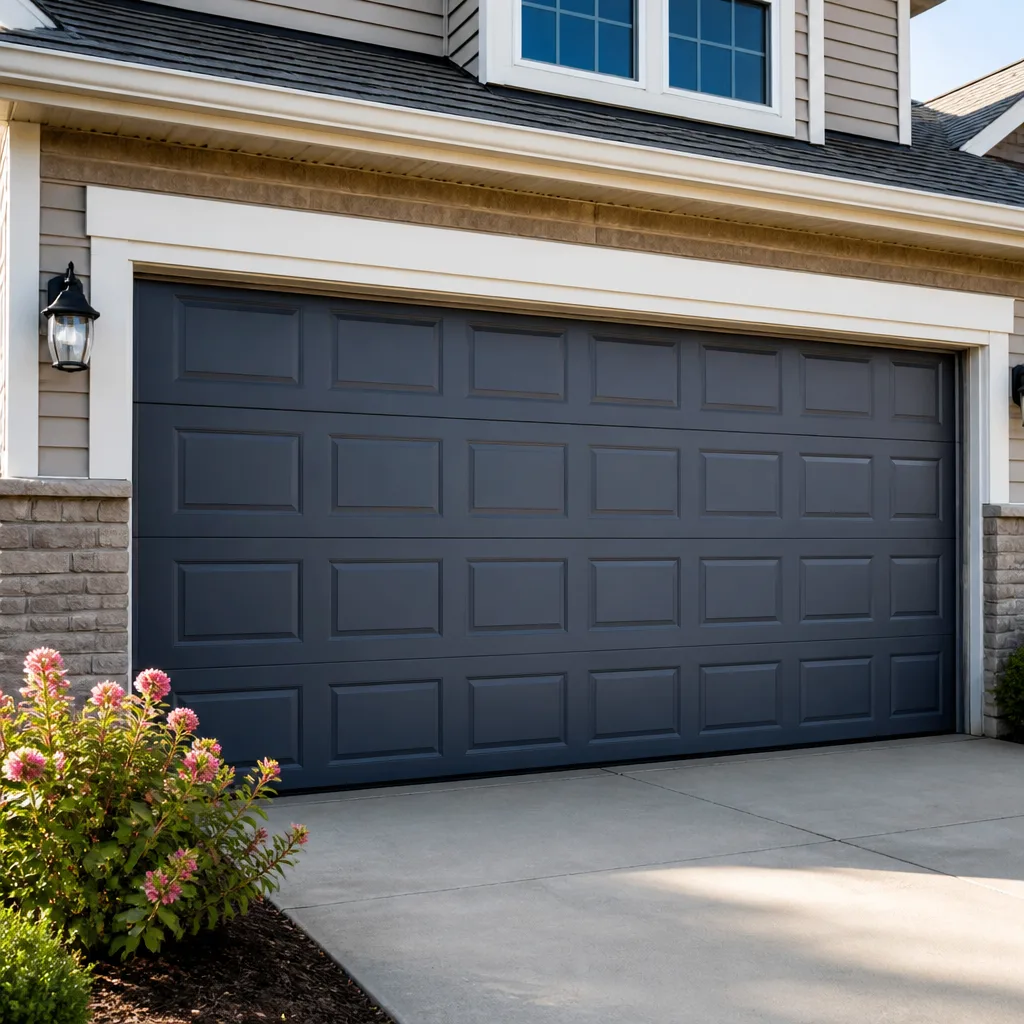 Raised-panel steel
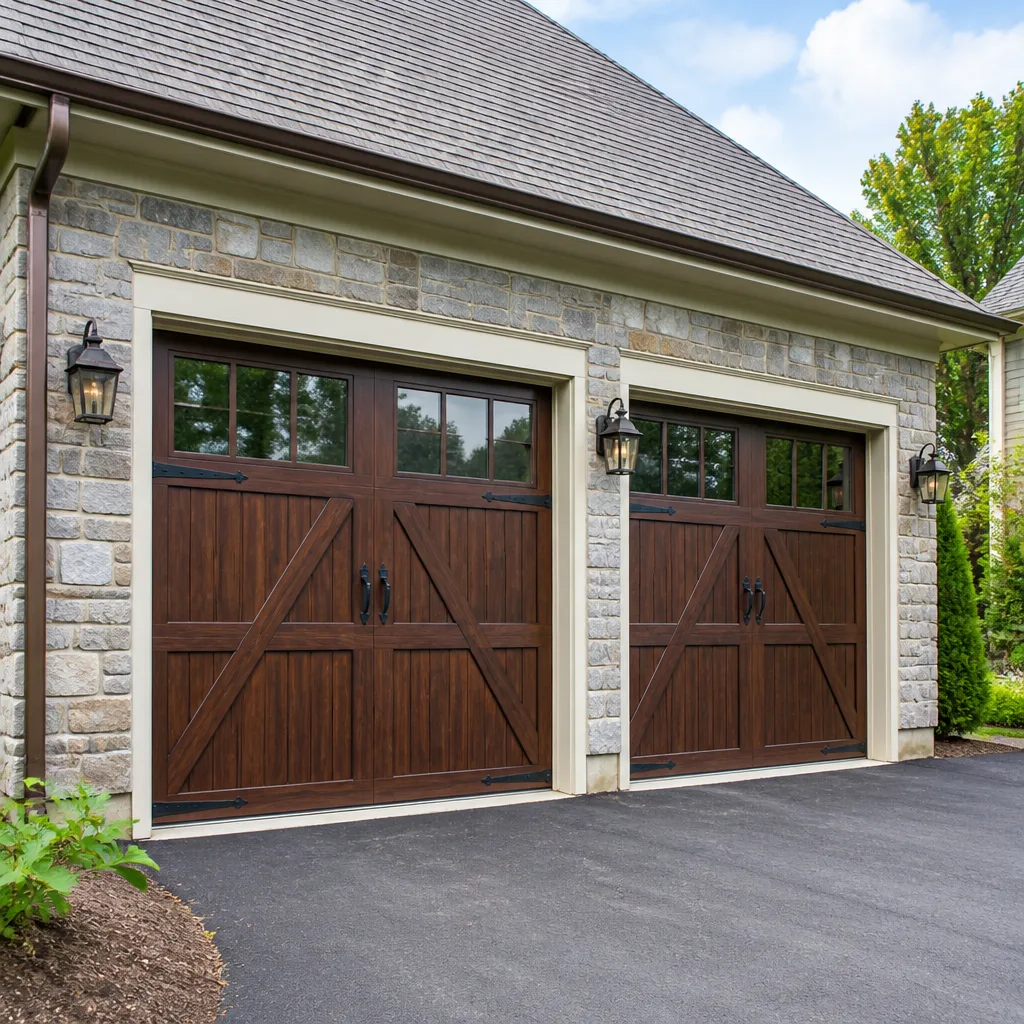 Carriage house
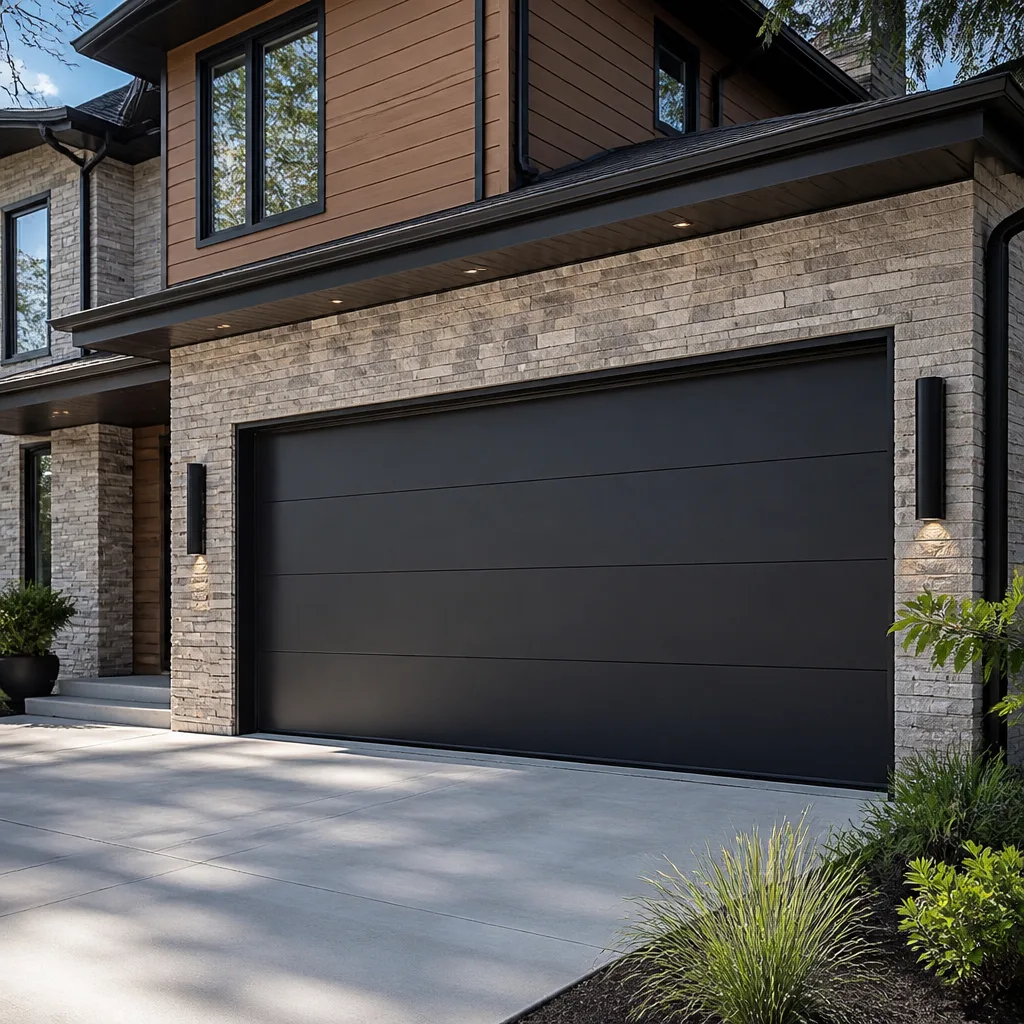 Modern flush
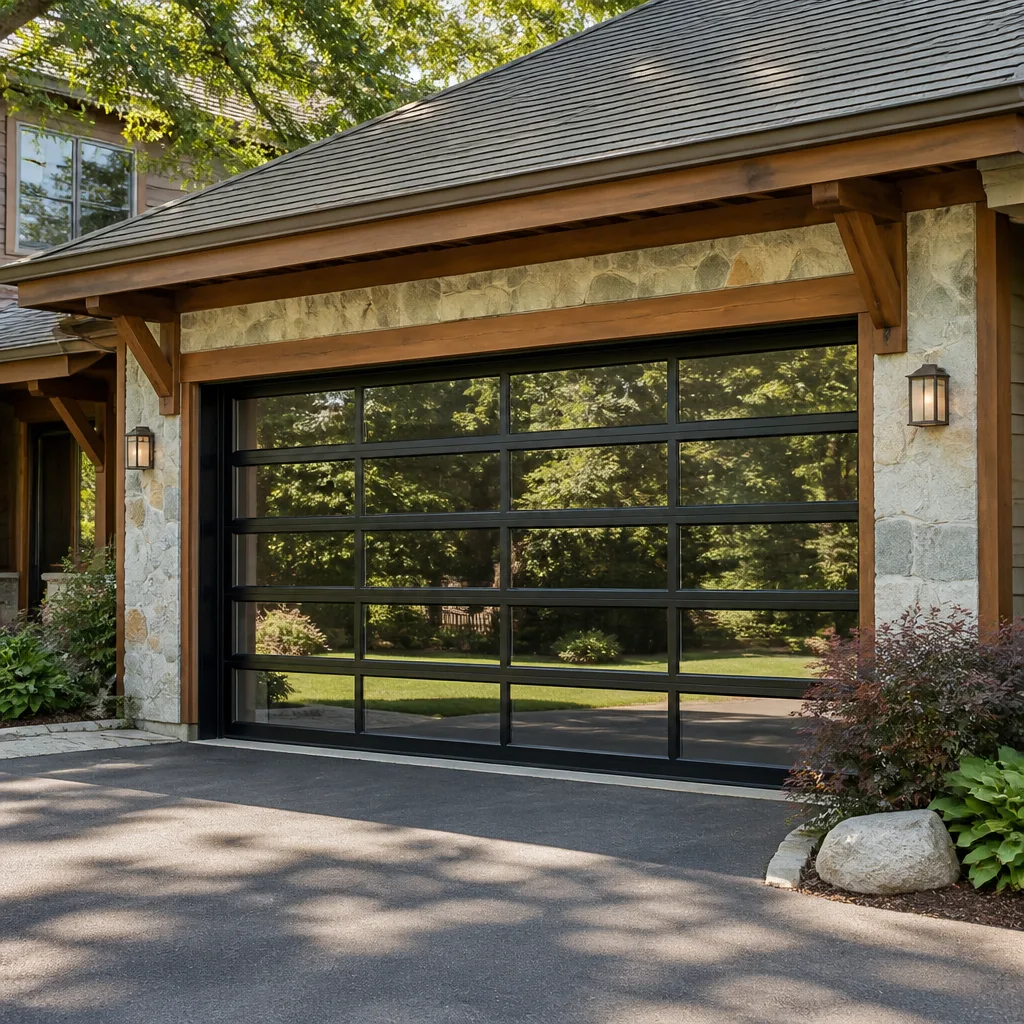 Full-view glass
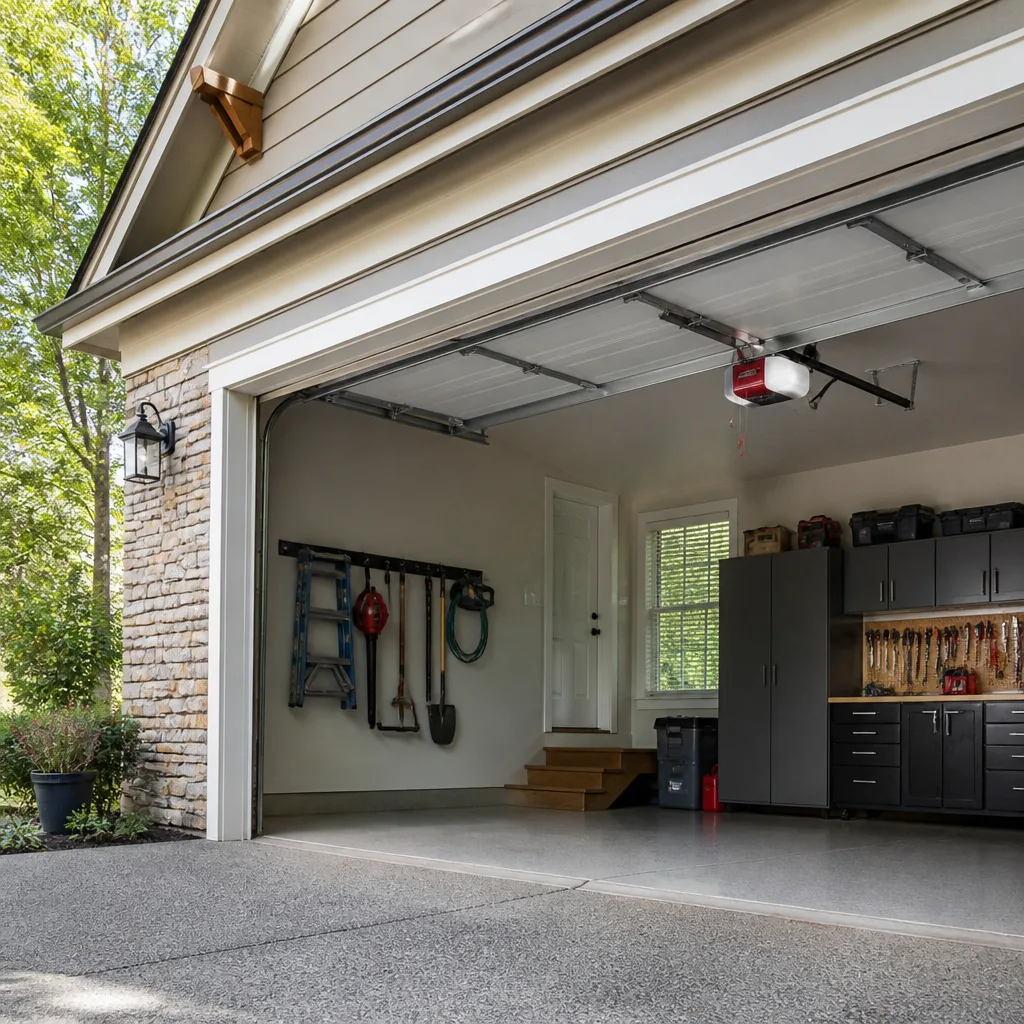 LiftMaster openers
 Chamberlain openers
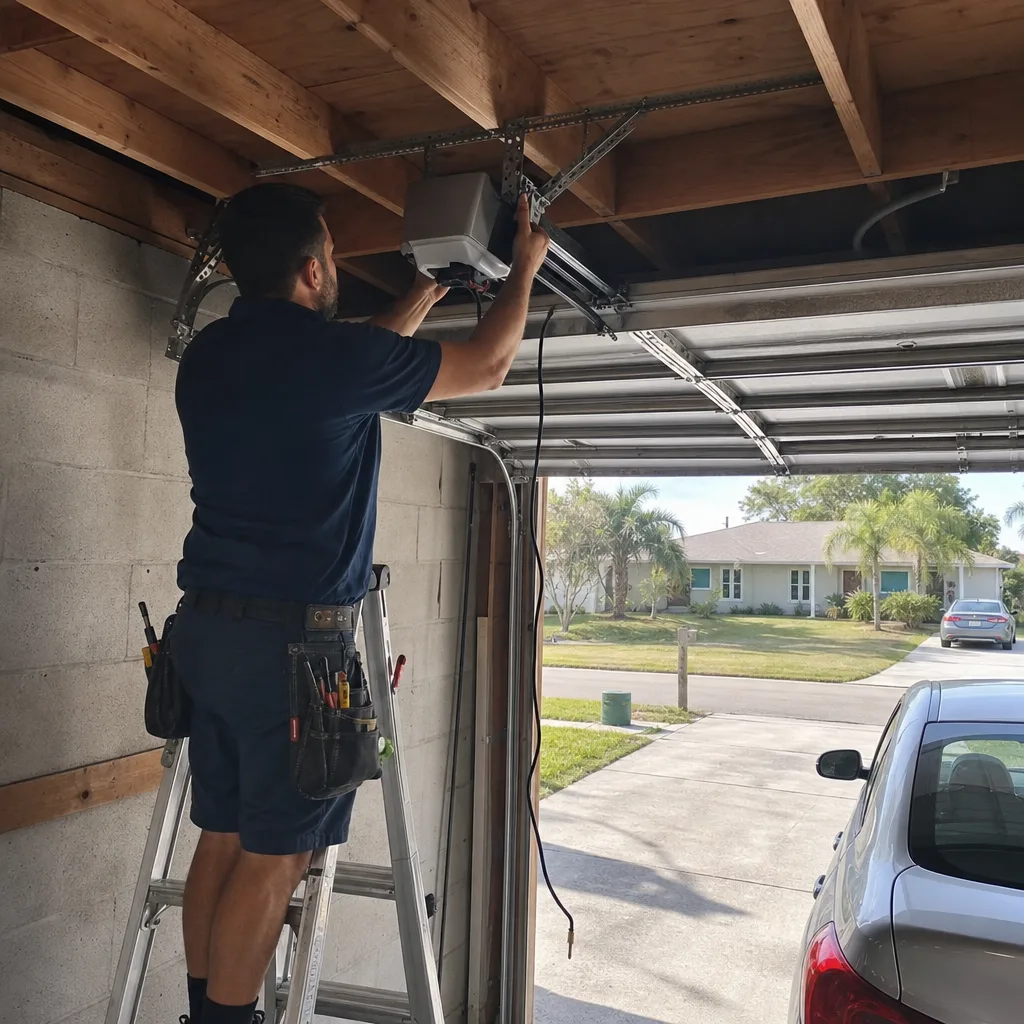
Full 25-point door and opener safety check with every visit - springs, cables, rollers, tracks, and your LiftMaster or Chamberlain opener included
You get a price before we start. It does not change when the pro arrives.
Get your free estimateGarage Door Repair Maintenance Checklist for Palm Bay Homeowners
You’ve probably read that you should lubricate your garage door springs every six months. That advice was written for a garage in Ohio, where winter freezes and spring thaws dictate the maintenance calendar. Palm Bay doesn’t work that way. Here, the calendar is ruled by a wet season that pushes humidity into every moving part, a dry season that shrinks wood and dries out seals, and a storm season that can stress a door frame in a single afternoon. The same spring that a Midwesterner checks twice a year may need attention every 90 days through a wet Palm Bay summer, or it can seize up before you ever hear a warning squeak. This guide gives you a month-by-month schedule built for this climate, the specific products that hold up here, and the five-minute inspection routine that catches most failures before they strand your car.
Quick Answer
For a Palm Bay homeowner, the most important garage door maintenance is a five-minute monthly visual check of springs, cables, rollers, and the bottom seal, plus a deeper service tied to the local calendar: a pre-wet-season tune-up in late spring, a post-storm inspection after any named system passes through, and a dry-season contraction check in late fall. Lubricate moving metal parts every 90 days during the humid months with a silicone- or lithium-based product, not a thick grease that traps grit, and test the auto-reverse and safety sensors every month.
Styles & brands we work with
- Raised-panel steel
- Carriage house
- Modern flush
- Full-view glass
- LiftMaster openers
- Chamberlain openers
Table of Contents
- Why Palm Bay’s Climate Sets the Maintenance Calendar
- The Palm Bay Month-by-Month Garage Door Schedule
- The Five-Minute Visual Inspection Routine
- Choosing the Right Lubricant for Florida Humidity
- Weatherstripping and Bottom Seal Checks After the First Big Rain
- Testing Auto-Reverse and Sensors After a Power Surge
- When to Call a Professional
- Frequently Asked Questions
Why Palm Bay’s Climate Sets the Maintenance Calendar
Most generic maintenance checklists ignore the one variable that matters most in Palm Bay: the weather pattern. Our year splits into a hot, humid wet season and a milder, drier stretch, and each one stresses your garage door differently. During the wet months, humidity works its way into hinges, rollers, and the spring assembly, and any lubricant that isn’t formulated for moisture will thin out, gum up, and let rust start. Then the dry season arrives, and wood components in older doors can contract slightly, which changes how the door sits in its frame and how the weatherstripping seals.
Storm season adds a third layer. Palm Bay sits in Brevard County, where summer storms and the occasional tropical system bring wind-driven rain and power surges. Wind load puts stress on the door panels, the tracks, and the anchoring hardware. Power surges, which are common during storm season, can scramble the logic board in your opener or knock the safety sensors out of alignment. A door that checked out fine in May can be misbehaving in July without any obvious cause.
What that means for you is simple. Generic advice to “check twice a year” leaves gaps here. Your door needs a light touch every month, a real service before the wet season, and a focused inspection after any major storm. The schedule below turns that into something you can actually follow.
The other Palm Bay-specific factor is the mix of housing stock. Neighborhoods across the city carry a wide range of door ages and systems, from older doors with wood frames to newer installs with Clopay or Amarr panels and modern openers. Older doors need more attention to their moving hardware; newer doors need more attention to the electronics. Either way, the calendar is the same.
The Palm Bay Month-by-Month Garage Door Schedule
Here’s how to tie your maintenance to the actual rhythm of a Palm Bay year. This isn’t a rigid list of dates; it’s a set of triggers. When the trigger arrives, do the check.
- Late spring, before the wet season settles in: Give the whole door a full once-over. Lubricate hinges, rollers, and the spring assembly with a moisture-resistant product. Check the bottom seal and side weatherstripping for cracks or gaps that let humid air and rain in. Tighten any loose bolts on the track brackets and hinges. This is your most important service of the year.
- Monthly through the wet season (roughly June through September): Do the five-minute visual inspection and re-lubricate the high-movement points. Humidity is at its peak, so this is when a cheap or wrong lubricant fails fastest. Test the auto-reverse and the safety sensors at least once a month, since power surges are most common now.
- After any named storm or major system: Do a post-storm inspection. Look for bent or shifted track, panels that have popped out of alignment, and any water that got past the bottom seal. Run the door up and down slowly and listen for new noises.
- Late fall, into the dry season: Check for contraction issues. Look at how the door seals against the frame as the air dries. Wood-framed doors may show small gaps. Re-check the balance of the door and listen for any grinding that suggests a roller or bearing is wearing.
- Year-round, once a month: Test the safety sensors by placing an object in the door’s path and confirming it reverses. Test the manual release to make sure you could open the door by hand in a power outage. Both are quick and both matter.
If you only do one thing from this schedule, make it the pre-wet-season service. It’s the check that prevents the most common summer failures we see across Palm Bay.
The Five-Minute Visual Inspection Routine
Most garage door emergencies we handle started as something visible weeks earlier. This routine is designed to catch those early warning signs in about the time it takes to drink a cup of coffee. Do it once a month, and do it again after any storm.
- Look at the springs. With the door closed, inspect the springs above the door (torsion) or along the sides (extension). Look for gaps, visible rust, or a stretched, uneven appearance. Never touch or try to adjust a spring yourself; just look and note anything odd.
- Check the cables. The cables run along the sides. Look for fraying, kinks, or slack. A cable that looks like it’s unwinding is a call-us-now situation.
- Inspect the rollers and hinges. Watch the rollers as the door moves. They should spin smoothly without wobbling. Hinges should be tight, not loose or bent.
- Run the door and listen. Open and close it once. Grinding, squealing, or a door that jerks or shudders signals a problem with balance, rollers, or the opener.
- Check the bottom seal and weatherstripping. Look for tears, hardening, or gaps between the seal and the floor. This is your barrier against rain, humidity, and pests.
That’s it. Five checkpoints, five minutes. In our experience across Palm Bay, this routine catches the large majority of failures before they become emergencies, because springs, cables, and rollers almost always give a visible warning first.
Choosing the Right Lubricant for Florida Humidity
The lubricant you use matters more in Palm Bay than in a dry climate. A product that works fine in low humidity can turn into a sticky trap for grit and dust here, or it can wash out and leave metal bare. Here’s what to look for and what to avoid.
What works:
- Silicone-based spray lubricant: It resists moisture, doesn’t attract dust the way grease does, and stays effective through humid stretches. Good for hinges, rollers, and the tracks.
- White lithium grease: A better choice for the heavier contact points like the spring assembly and the opener rail, where you want a longer-lasting film. Apply sparingly in high humidity so it doesn’t collect grit.
- Purpose-made garage door lubricant: Many brands sell a spray specifically formulated to resist moisture and stay put on moving parts. These are worth the small extra cost in a humid climate.
What to avoid:
- Thick, heavy grease on the tracks or rollers. It traps grit in a humid environment, which grinds down the rollers and makes the door harder to move.
- WD-40 as a long-term lubricant. It’s useful as a quick cleaner, but it’s not a lasting lubricant and will leave moving parts dry within weeks.
- Motor oil or cooking oil. Neither holds up to humidity and both attract debris. Skip them.
Lubricate every 90 days through the wet season, and never spray lubricant on the tracks themselves (clean them instead) or on the springs if you’re not sure of the type. Springs are the most dangerous part of any door, so if you have any doubt, leave them to us.
Weatherstripping and Bottom Seal Checks After the First Big Rain
Most generic checklists skip the seal check, but in Palm Bay it’s one of the most important. Your bottom seal and weatherstripping are the barrier that keeps wind-driven rain, humid air, and pests out of the garage. After the first big rainstorm of the season, walk out and inspect them.
Here’s what to look for after that first major storm:
- Water on the floor inside the door. A puddle or damp strip along the inside of the door means the bottom seal isn’t sitting flush. It could be worn, torn, or simply out of position.
- A hard or cracked seal. Sun and heat break down rubber over time. A seal that’s stiff, cracked, or crumbling won’t seal. Run your hand along it; it should feel pliable.
- Daylight under the door. Close the door and look for light coming through at the bottom or sides. Any visible light is a gap that rain and bugs will find.
- Lifted or torn side weatherstripping. The strips along the sides can pull away from the frame, especially after wind. Press them back and check that they still make contact with the door.
If the seal is worn, replacing it is a straightforward repair and one of the best things you can do before the worst of the wet season. If you’re seeing water inside and the seal looks fine, the door may not be closing squarely, which points to a track or balance issue worth a professional look.
Testing Auto-Reverse and Sensors After a Power Surge
Power surges are common in Brevard County during storm season, and your garage door opener is a small computer that a surge can scramble. The good news is that you can test the safety features yourself in a couple of minutes, and you should after any storm or power event. This is a case where the test is safe and the fix is not, so test, then call if something’s off.
How to test the auto-reverse:
- Place a roll of paper towels or a similar soft object flat on the floor in the door’s path.
- Press the button to close the door.
- The door should reverse direction as soon as it contacts the object. If it keeps pressing down, stop the test and call us; the auto-reverse is a critical safety feature and must work.
How to test the safety sensors:
- Locate the two small sensors near the floor on each side of the door. They should both have a lit indicator.
- If one light is off or flickering, the sensors are misaligned or blocked. Gently wipe the lenses and check that nothing is in the way.
- With the door open, press the button to close it, then pass your hand through the sensor beam. The door should stop and reverse.
If either test fails, don’t force it. A door that won’t reverse or a sensor that won’t align is a safety issue, not a nuisance. In Palm Bay, we handle these on garage door opener repair calls often after summer storms, and most are a quick fix once we’re on site.
See the difference
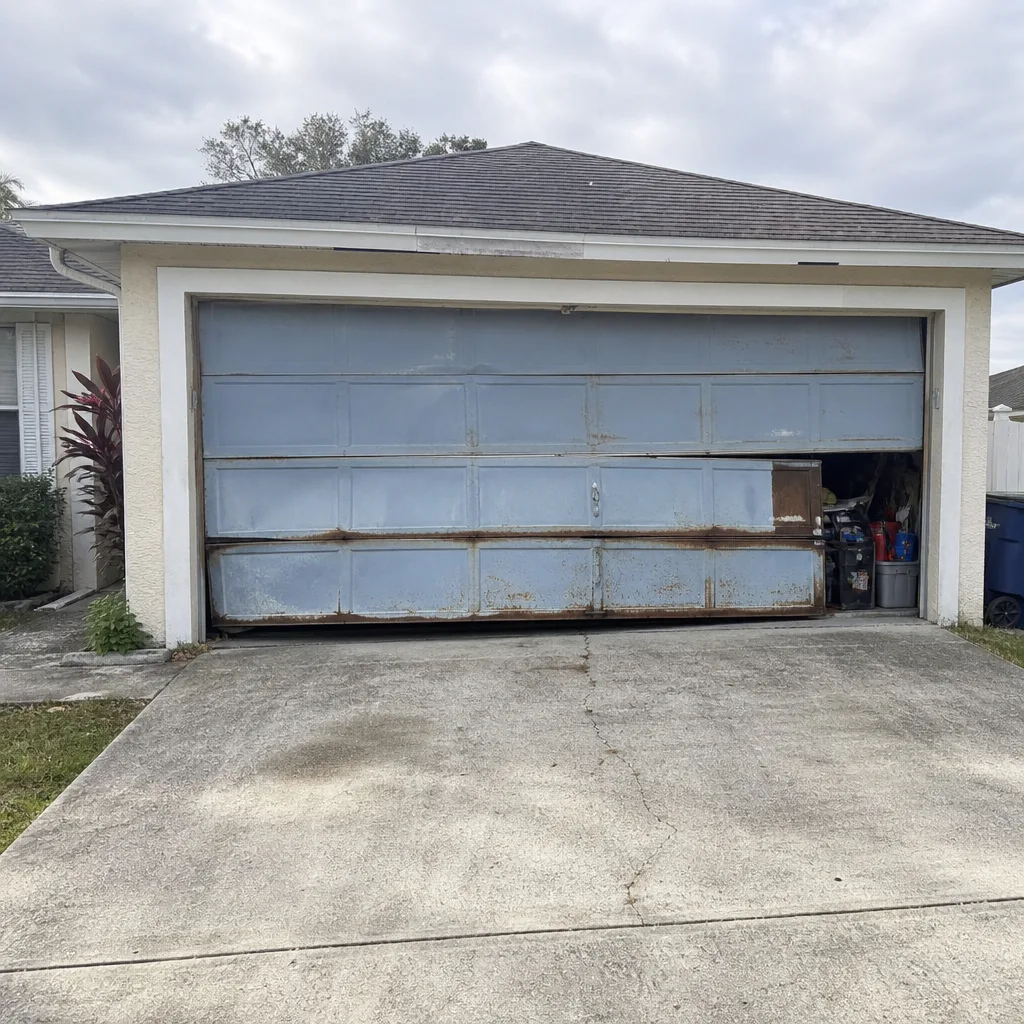 Before
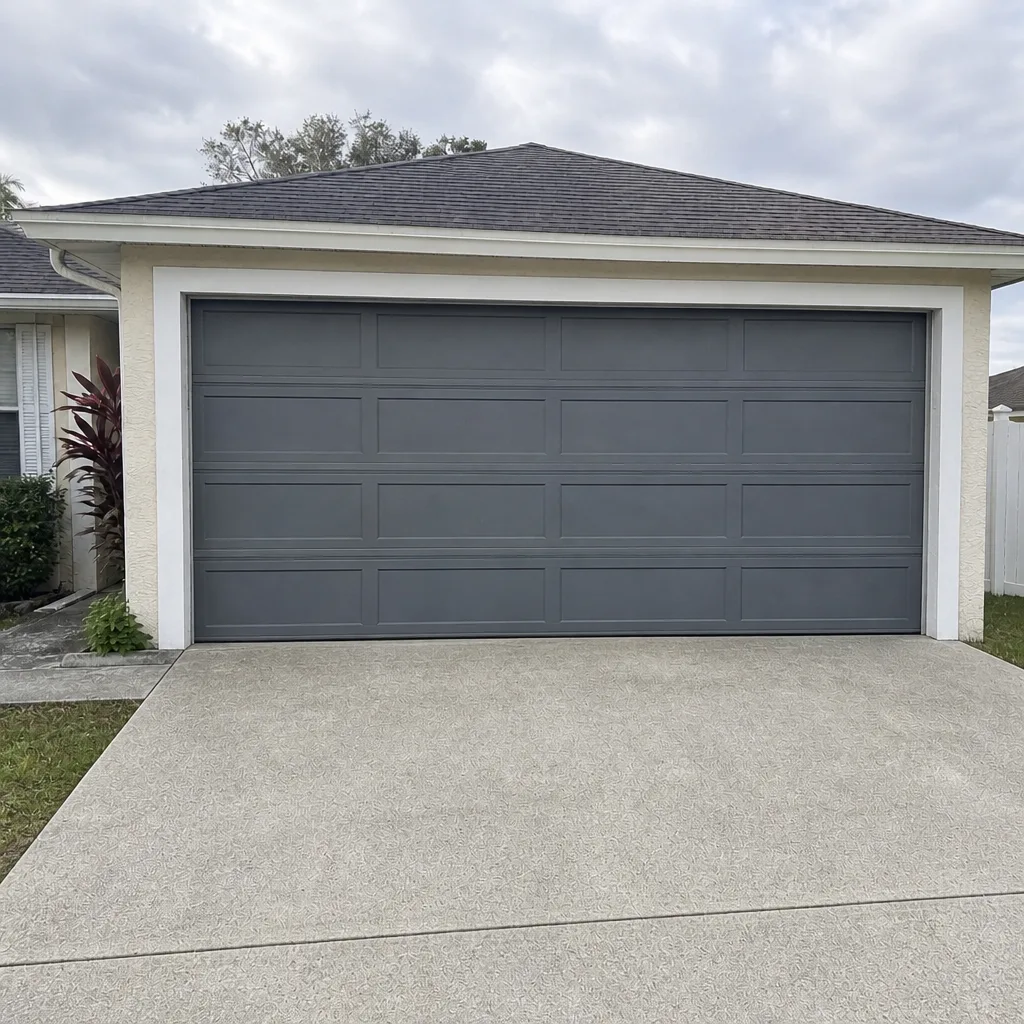 After
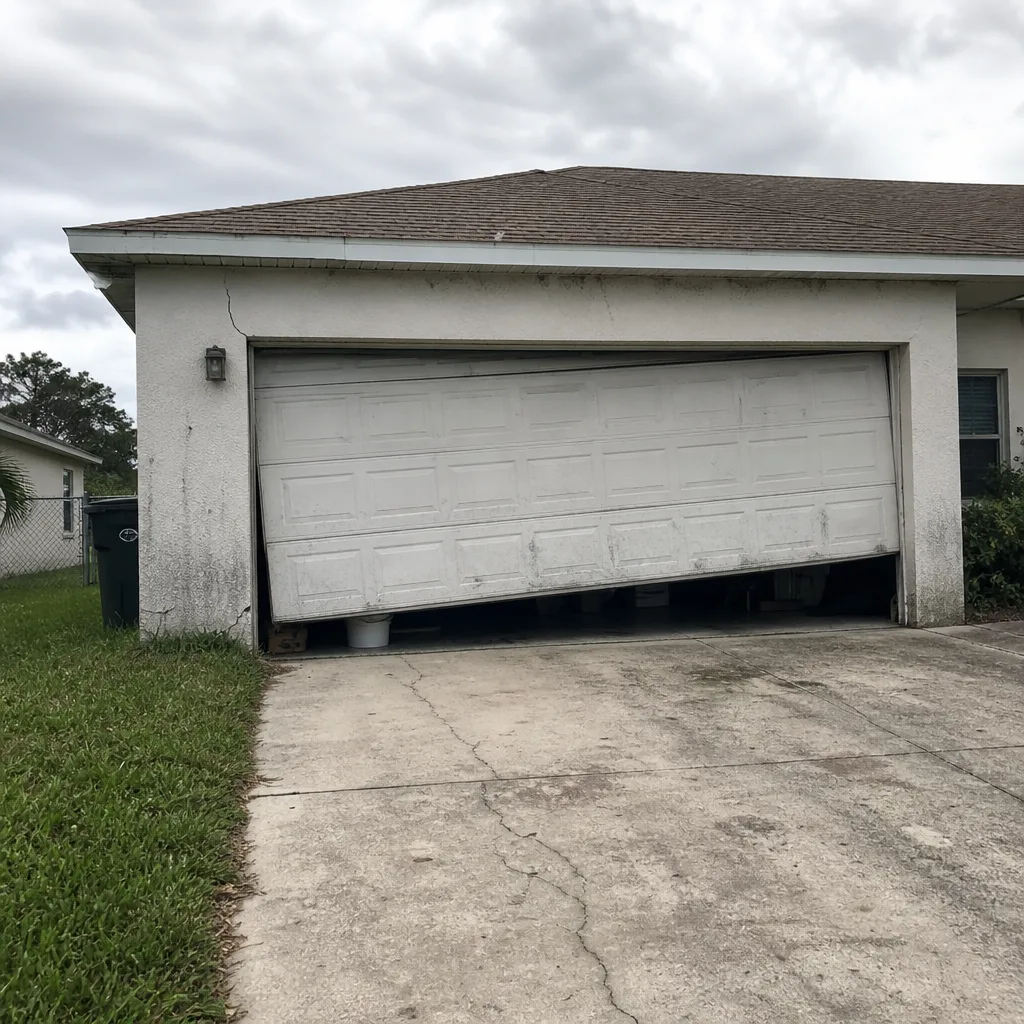 Before
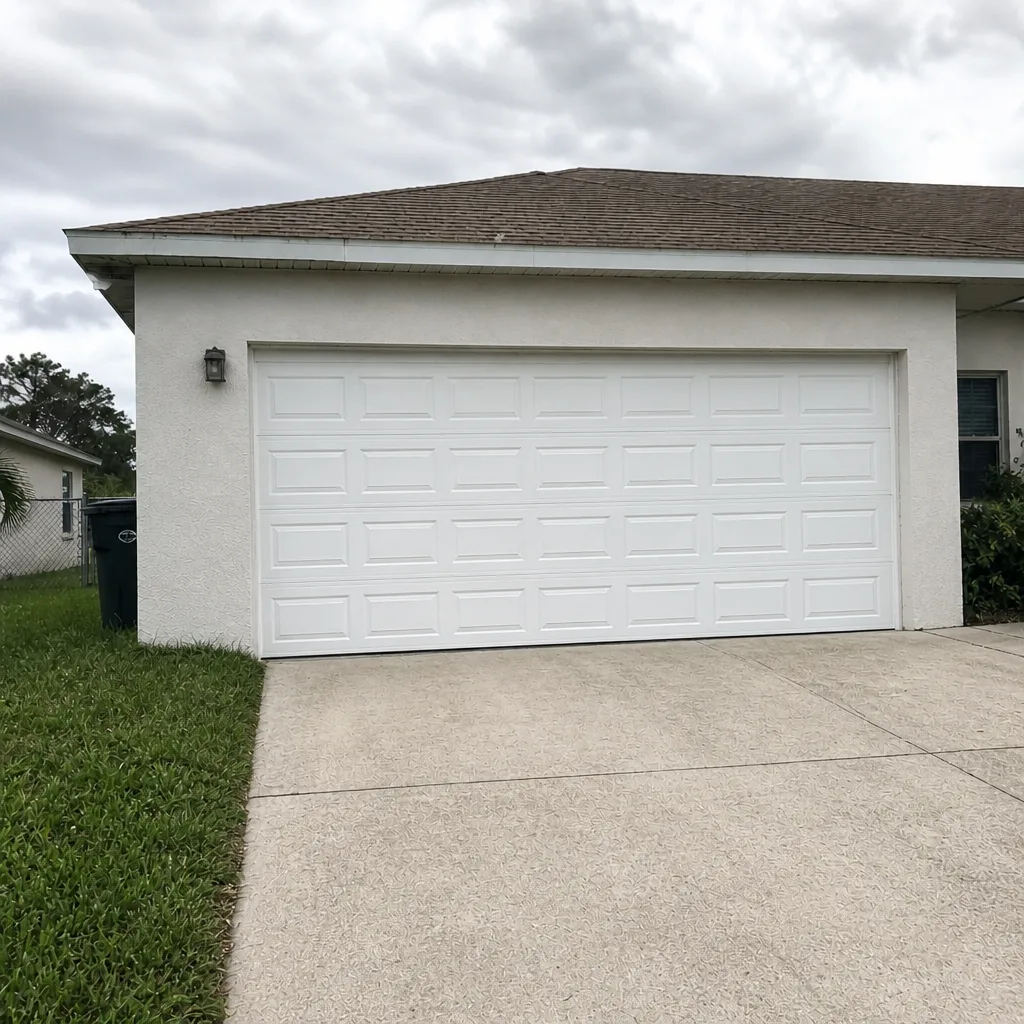 After
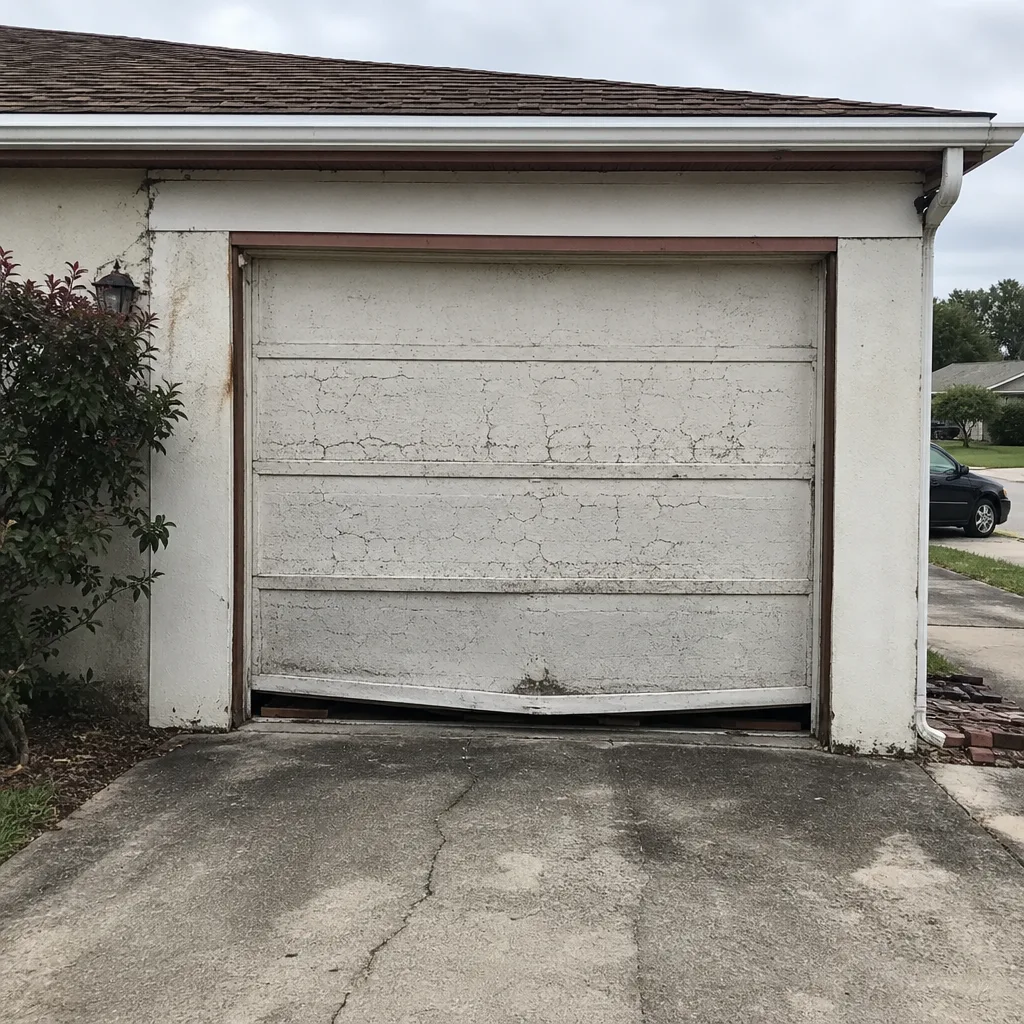 Before
 After
Common Mistakes to Avoid
We’ve seen the same handful of maintenance missteps turn small issues into big repairs. Here are the ones to steer clear of.
- Using the wrong lubricant. Thick grease on tracks or rollers traps grit in Palm Bay’s humidity and grinds the moving parts down. Stick to silicone or white lithium, applied sparingly.
- Ignoring the bottom seal until it fails. A worn seal lets rain and humid air in and sets up rust and water damage. Check it after the first big rain each season, not once it’s already letting water through.
- Assuming the sensors are fine because the door works. A door can work while the safety sensors are misaligned. If they fail at the wrong moment, someone can get hurt. Test them monthly.
- Trying to adjust or replace a spring yourself. Springs are under extreme tension and are the highest-risk part of any door. This is the one maintenance task that should always go to a professional.
- Skipping the post-storm check. Wind and power surges can shift tracks and scramble an opener without any obvious symptom at first. A quick look after a storm catches both early.
- Forgetting to test the manual release. If the door has to be opened by hand in an outage, a release that’s rusted or stiff won’t do its job. Test it now and then so you know it works when you need it.
- Putting off a squeal or a shudder. Noise and vibration are early warnings of a roller or balance problem. Waiting shortens the life of the parts and can strand the door.
When to Call a Professional
Some tasks belong on your list and some belong to a pro. Call us when a spring has snapped or shows a visible gap, when a cable is frayed or slack, when the door is crooked or won’t close flush, or when the opener reverses without being told to or won’t reverse at all. Call us after any storm that shifted the door or tripped the breakers. And call us if the door is simply getting hard to open, since that usually means a balance issue in the springs or rollers. The most dangerous problems in this trade, springs and cables, are exactly the ones to leave alone.
At Palm Bay Garage Door Repair Co, we handle all of it. Our technicians have up to 13 years of experience, we service eight major brands including LiftMaster, Chamberlain, Genie, Clopay, Amarr, Wayne Dalton, Craftsman, and Raynor, and we run a dedicated garage door spring repair service because that’s the failure most homeowners face. We offer free estimates in Palm Bay, and the price is set by a written estimate before any work begins. Call (833) 762-4168. We answer 24/7. Fast dispatch from 7am to 7pm, Sunday through Friday.
Frequently Asked Questions
Every 90 days through the wet season, and at least every six months the rest of the year. Palm Bay’s humidity breaks down ordinary lubricants faster than in dry climates, so a 90-day interval during the humid months keeps moving parts protected. Use a silicone- or lithium-based product, not heavy grease. If your door starts squeaking between services, that’s a sign to re-lubricate sooner. Call (833) 762-4168 for a professional tune-up if the noise doesn’t clear up.
Check the track for bends or shifts, the panels for popped alignment, the bottom seal for water intrusion, and the auto-reverse and safety sensors for proper function. Power surges are common in Brevard County during storm season and can scramble an opener, so test the reverse and sensors after any major system passes. If the door looks crooked or won’t close squarely, stop using the opener and call us. We answer 24/7 at (833) 762-4168.
No. Garage door springs are under extreme tension and cause serious injury when handled without the right tools and training. This is the one maintenance task that should always go to a professional. If you see a gap in a spring or the door won’t lift, don’t touch it. Our dedicated spring repair service is designed for exactly this, and our technicians have up to 13 years of experience. Call us for a free estimate.
Look for a visible gap in the spring, heavy rust, or a stretched and uneven coil. The door may also start to feel heavy or move unevenly. These signs usually appear before a full break, which is why the monthly visual check matters. If you spot any of them, avoid operating the door and call us. A snapped spring can leave your car trapped and your home unsecured, and we treat it as a time-sensitive repair.
A silicone-based spray for hinges, rollers, and tracks, and white lithium grease applied sparingly to the spring assembly and opener rail. These resist moisture and don’t trap grit the way thick grease does. Avoid WD-40 as a long-term lubricant and never use cooking oil or motor oil. A purpose-made garage door lubricant is worth the small extra cost here. Call (833) 762-4168 if you want us to handle it.
Repair first if the panels, frame, and opener are sound and only a spring, roller, or seal is failing; those are normal wear items. Replacement makes more sense when panels are dented or rusted through, the frame is failing, or repairs keep stacking up across several systems. We handle both, so there’s no need to call a second company. We’ll give you a straight recommendation and a written estimate, and you decide. Free estimates in Palm Bay, at (833) 762-4168.
The Bottom Line
Garage door maintenance in Palm Bay isn’t a twice-a-year checkbox; it’s a calendar built around the wet season, storm season, and the dry-season contraction that follows. Do the five-minute visual check every month, lubricate with a moisture-resistant product every 90 days through the humid months, inspect the bottom seal after the first big rain, and test the auto-reverse and sensors every month and after any power surge. Those habits catch the vast majority of failures before they strand you. For the dangerous parts, springs and cables, and for any door that’s crooked, noisy, or misbehaving after a storm, that’s our job. Our technicians have up to 13 years of experience and work on the brands you already own, from LiftMaster and Chamberlain openers to Clopay and Amarr doors.
If something on your checklist doesn’t look right, or you’d rather have a pro handle the whole routine, we’re here. Palm Bay Garage Door Repair Co connects you with experienced local professionals for garage door repair and garage door spring repair, along with opener service and full installation through Palm Bay Garage Door Repair Co. We also handle garage door opener repair when a storm has knocked the electronics out of whack. The price is quoted and agreed before any work starts, so there are no surprises. Call (833) 762-4168 for a free estimate. We answer 24/7. Fast dispatch from 7am to 7pm, Sunday through Friday.
Written by the team at Palm Bay Garage Door Repair Co.