
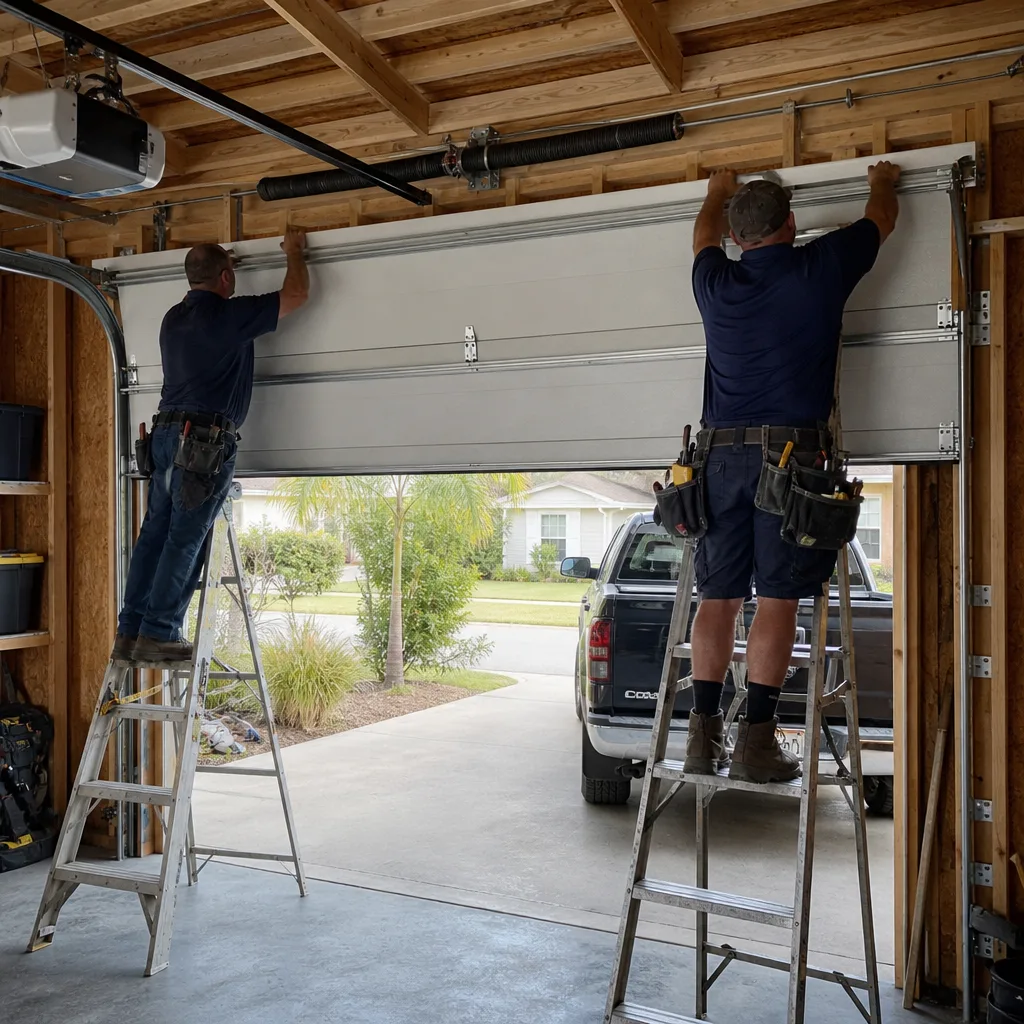
Last updated November 21, 2026
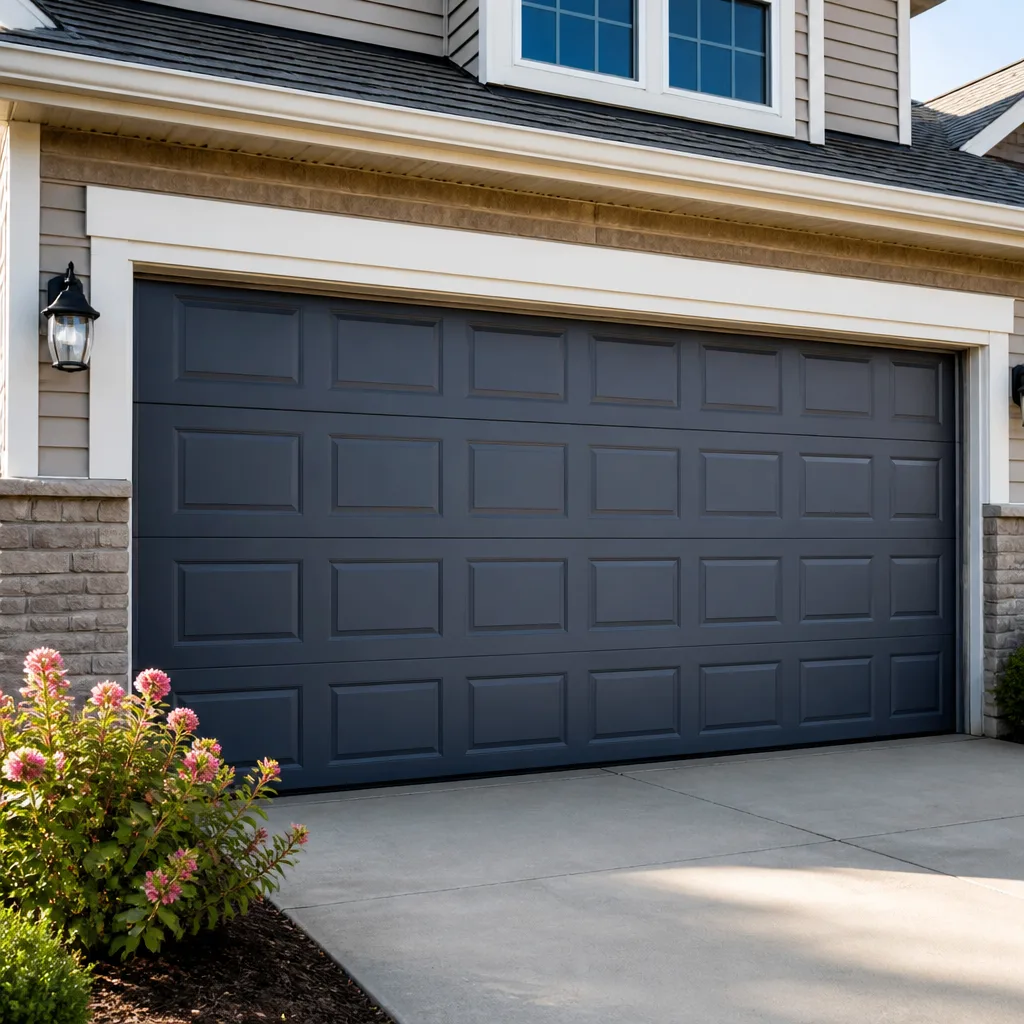 Raised-panel steel
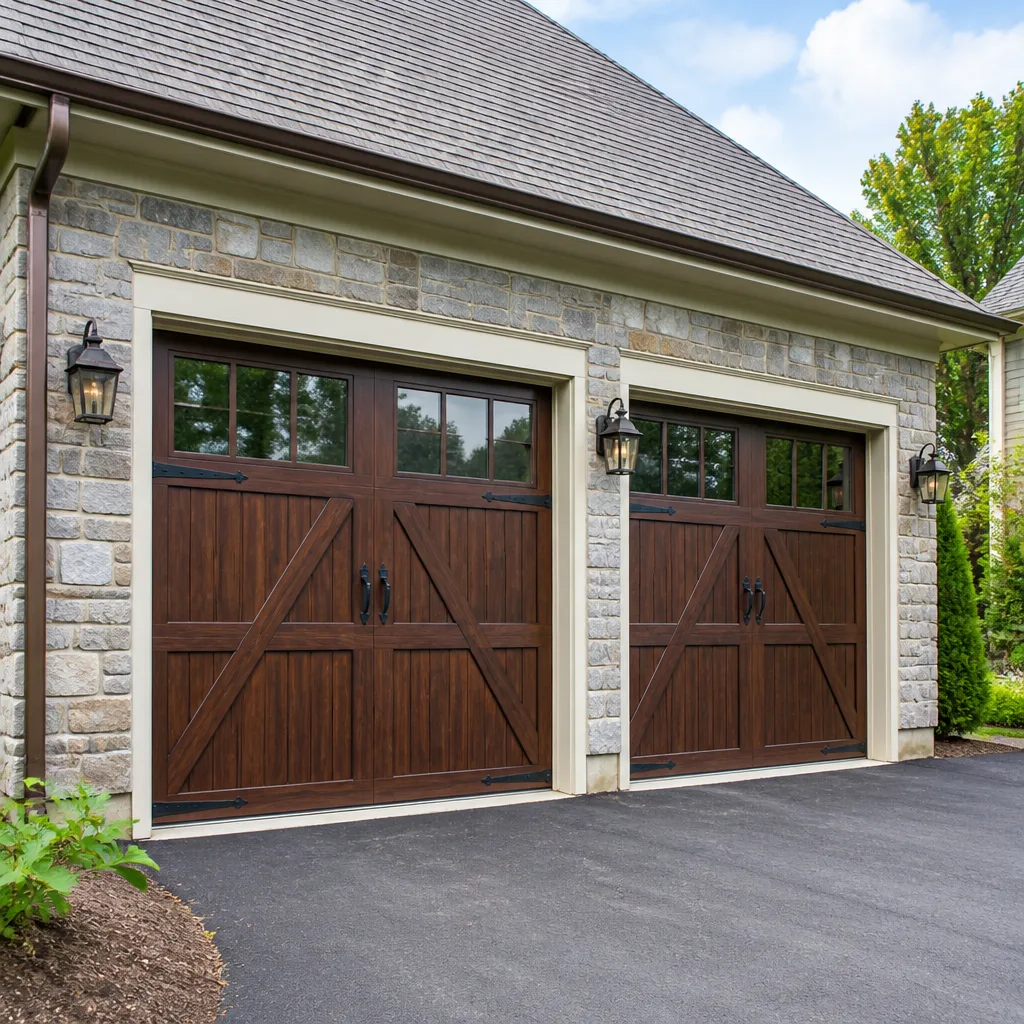 Carriage house
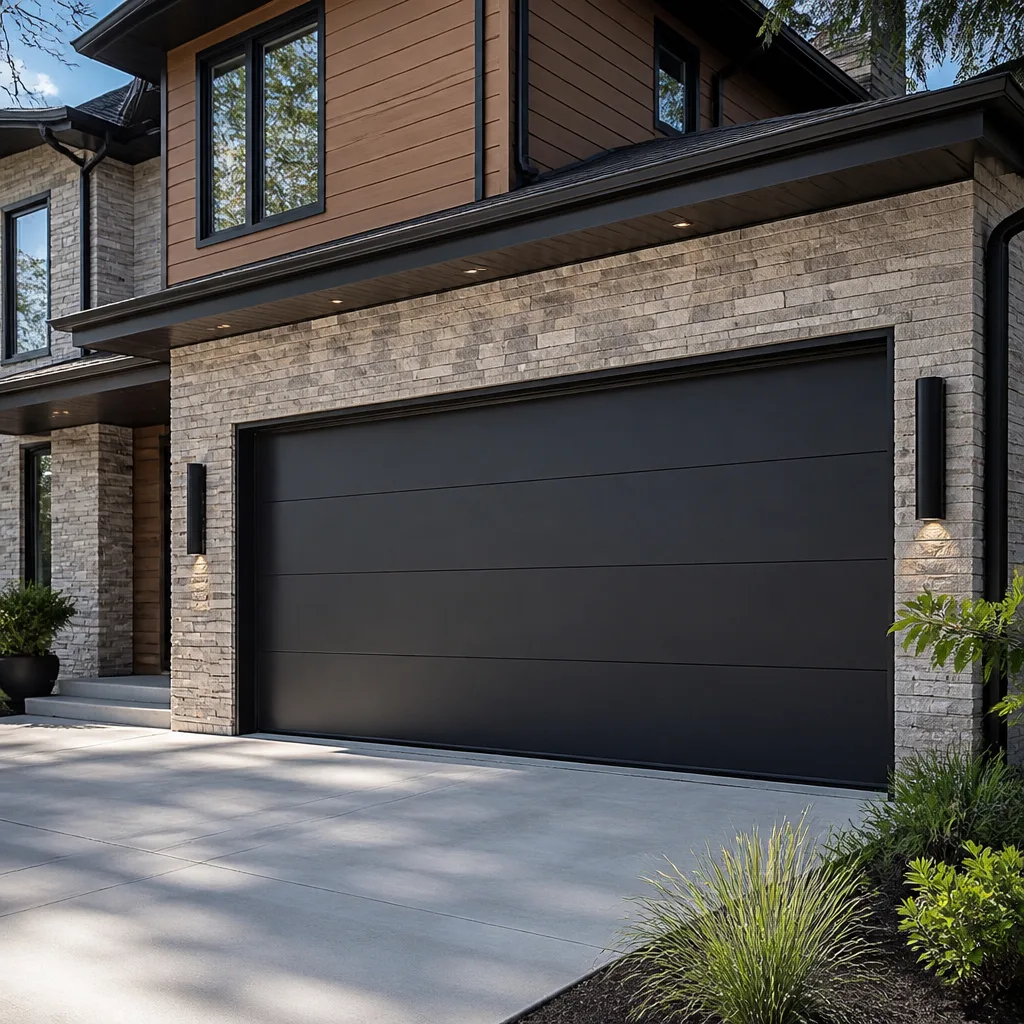 Modern flush
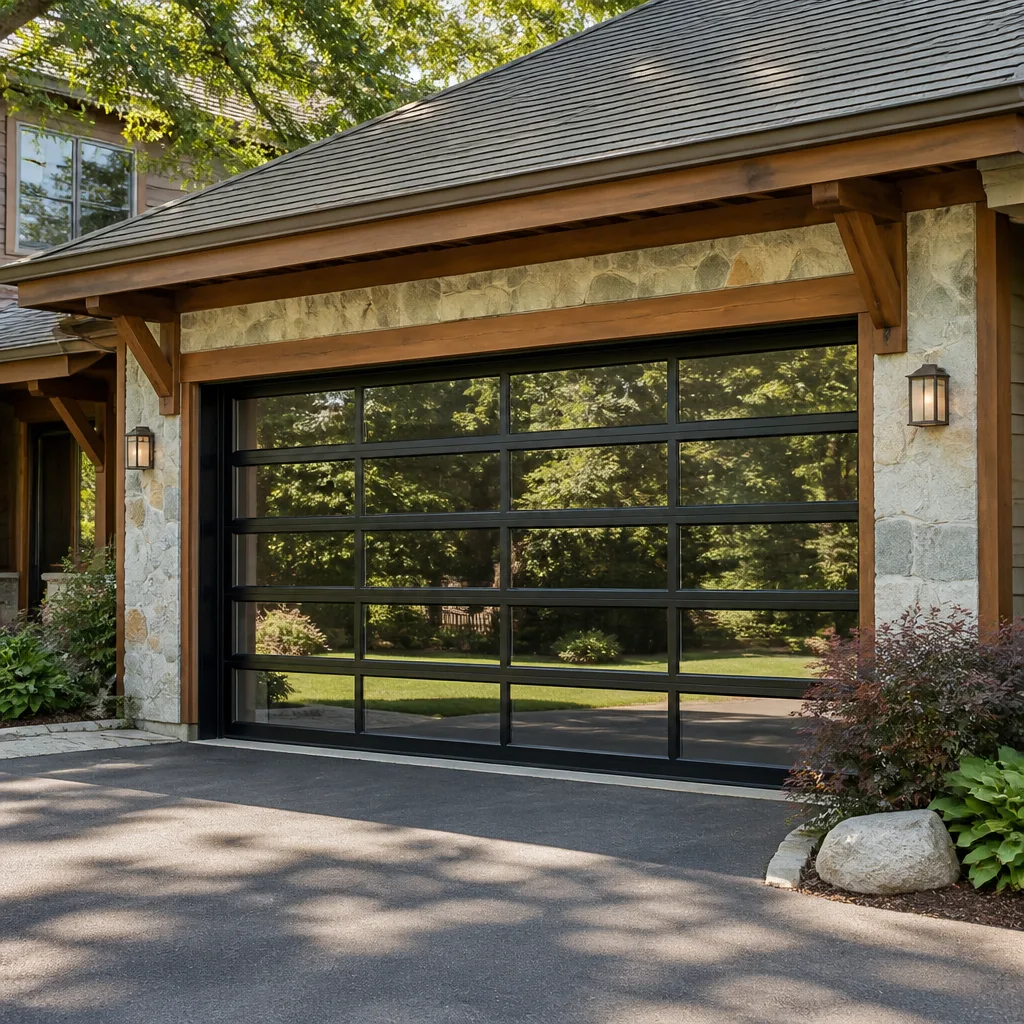 Full-view glass
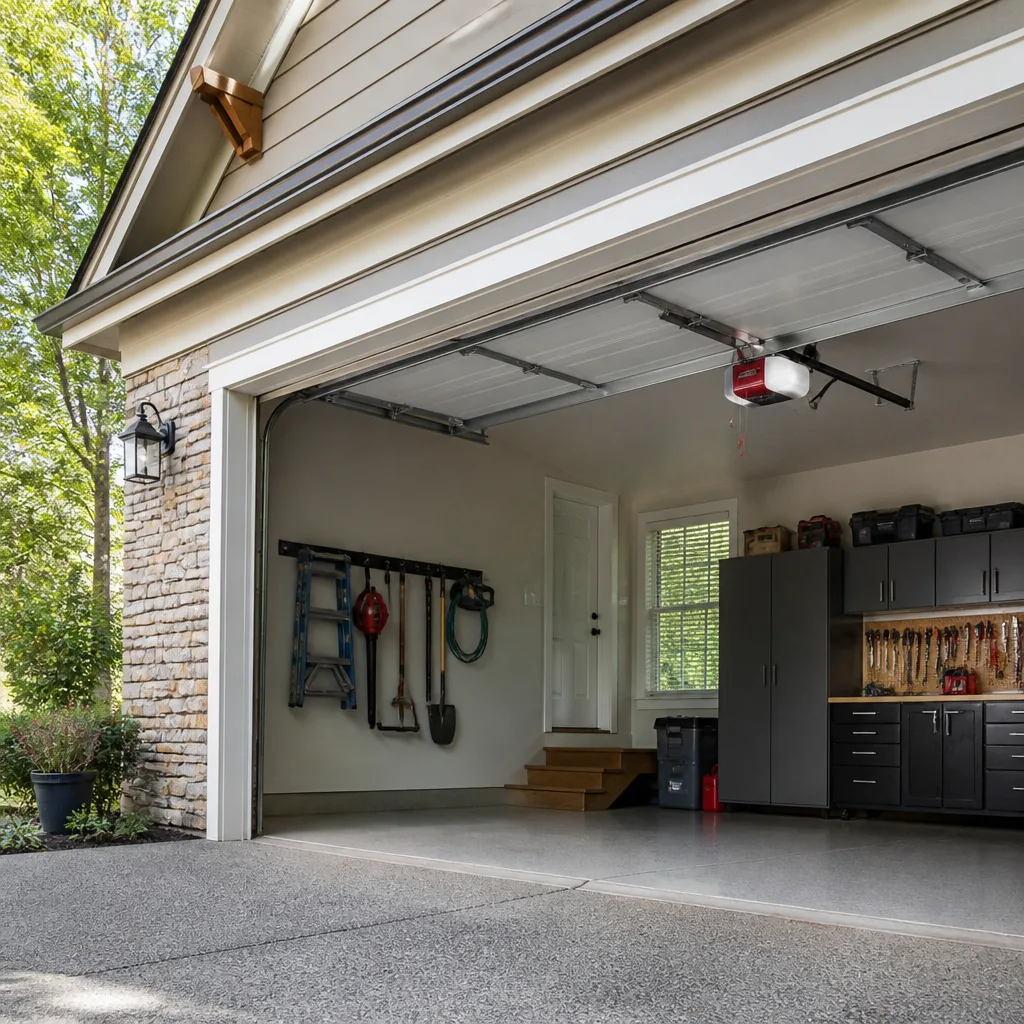 LiftMaster openers
 Chamberlain openers
Full 25-point door and opener safety check with every visit - springs, cables, rollers, tracks, and your LiftMaster or Chamberlain opener included
You get a price before we start. It does not change when the pro arrives.
Get your free estimateGarage Door Repair Maintenance Schedule: What to Do and When
If your garage door opens and closes four times a day, it completes over 1,400 cycles a year. A spring rated for 10,000 cycles won’t last ten years. It’ll last seven, and it won’t warn you before it snaps. That’s the piece most maintenance checklists miss. They hand you the same calendar-based schedule whether you use your door twice a week or a dozen times a day, and that’s simply not how the parts wear out. In this guide we’ll walk through a realistic, cycle-based schedule for Palm Bay homeowners, covering what to check monthly, what to tighten quarterly, and what to have inspected every year, plus the local conditions that speed up wear here.
Quick Answer
Base your garage door maintenance on how often the door cycles, not just the calendar. A door that runs two to four times a day needs monthly visual checks, quarterly hardware tightening, and a professional inspection every year, while heavy-use doors need that annual inspection brought forward. In Palm Bay, heat, humidity, and coastal air also speed up corrosion and weatherstrip wear, so those checks deserve extra attention.
Styles & brands we work with
- Raised-panel steel
- Carriage house
- Modern flush
- Full-view glass
- LiftMaster openers
- Chamberlain openers
Table of Contents
- Why Cycle Count Beats the Calendar
- What Palm Bay Conditions Do to Your Door
- The Monthly Five-Minute Check
- The Quarterly Hardware Pass
- The Annual Professional Inspection
- Which Lubricants Work in Florida Humidity
- Tracking Spring Life Before It Fails
- Common Mistakes to Avoid
Why Cycle Count Beats the Calendar
A garage door part doesn’t wear out because a month passed. It wears out because it moved. Every open-and-close is one cycle, and the components that carry the load – springs, rollers, hinges, the opener’s gears – are all rated in cycles, not years. A torsion spring rated for a set number of cycles doesn’t count birthdays. It counts lifts.
This matters because two identical doors in the same Palm Bay neighborhood can have wildly different maintenance needs. One household leaves for work and back, maybe two cycles a day. Another runs a home business with deliveries, or has teenagers coming and going, and hits ten cycles before dinner. Same door, same street, same weather. Different wear by a factor of five.
The practical fix is simple: know your number. For a week, jot down how many times the door goes up and down each day, then average it. That average tells you which maintenance tier you’re in:
- Light use (under 2 cycles a day): monthly visual checks, quarterly hardware pass, annual inspection.
- Typical use (2 to 4 cycles a day): same schedule, but don’t skip months. Roughly 1,000 cycles a year adds up.
- Heavy use (5 or more cycles a day): keep the monthly and quarterly checks, and move your professional inspection up to twice a year.
That’s the whole idea behind a usage-based schedule. It’s honest about how these systems actually degrade, and it saves you from either over-maintaining a barely-used door or under-maintaining one that’s working hard. When we look at a door in Palm Bay, the first question isn’t how old it is. It’s how much it moves.
What Palm Bay Conditions Do to Your Door
South Brevard County has a climate that’s gentle on some parts of a garage door and hard on others. Understanding the local pressures helps you know where to look first.
Heat and humidity
Long, humid summers do two things. First, they swell wood and cause metal to expand and contract through the day, which loosens fasteners over time. Second, they keep the air damp enough that bare steel wants to oxidize. A hinge, a track bolt, or a roller stem that would stay clean in a dry climate can start to show surface rust here within a season. That’s why our quarterly hardware pass matters more in Palm Bay than it might in Arizona.
Coastal air
If you’re anywhere near the Indian River or the beaches, salt in the air accelerates corrosion on anything exposed. Springs, hinges, track, and the bottom brackets all feel it. Doors closer to the water tend to show rust at fastener points and on the bottom section first, because that’s where moisture and salt collect. Inspect those areas on a schedule instead of waiting for red streaks to appear.
Afternoon thunderstorms
Summer storm moisture finds its way into the same places. The weatherstripping along the bottom and sides is your first line of defense, and when it hardens or cracks, water and pests get in. A quick press of the seal tells you a lot: it should feel springy and sit tight against the floor, not stiff or crumbly.
Sun exposure
UV does a number on rubber and vinyl weatherstrip. On a door that faces the afternoon sun, the bottom seal can degrade faster than the rest. When it does, you get drafts, water intrusion, and a door that doesn’t seal right. Checking the seal every few months and replacing it when it stiffens is cheaper than dealing with what gets past it.
The Monthly Five-Minute Check
Once a month, take five minutes and look at your door the way a mechanic glances under a hood. You’re not fixing anything at this stage. You’re spotting what’s changing so it doesn’t become a surprise.
- Listen to it. Open and close the door while standing in the garage. It should sound smooth and steady. Grinding, squealing, or a rattle that wasn’t there last month is your cue to look closer.
- Watch the travel. The door should rise and lower evenly, without one side lagging or shimmying. A door that racks slightly is telling you something’s off balance.
- Check the balance by hand. Disconnect the opener (pull the release), lift the door halfway, and let go. A properly balanced door stays put. If it drifts down or slams up, the springs or cables need attention – and that’s a call-a-professional situation, not a DIY one.
- Look at the rollers and hinges. Glance along the track. Rollers should turn freely and sit in the track without wobble. Hinges shouldn’t be loose or rusty.
- Test the safety reverse. Put a roll of paper towels or a scrap of wood in the door’s path and close it. The door should reverse on contact. Then test the photo-eye by waving something through its beam while the door closes. This is a safety feature, and it needs to work every time.
- Check the weatherstrip. Press the bottom seal and run a hand along the sides. If it’s stiff, cracked, or pulling away, note it.
That’s it. Five minutes, once a month, and you’ll catch most problems while they’re still small. When you do find something – a sound, a wobble, a seal that’s gone hard – call (833) 762-4168. We answer 24/7, and fast dispatch from 7am to 7pm gets a technician out to take a look.
The Quarterly Hardware Pass
Every three months, spend a little more time going over the hardware. This is the pass that keeps a Palm Bay door from loosening itself apart through a year of heat cycling and vibration. A socket set and a screwdriver are all you need for most of it.
- Tighten the track bolts. The brackets that hold the track to the wall work loose from vibration. Snug them, but don’t crank them so hard you bend the track. The track should stay straight and parallel.
- Check the hinges. Look for loose screws and stripped holes. A wobbly hinge puts strain on the panel and the roller it carries.
- Inspect the rollers. Steel rollers wear flat spots. Nylon rollers can crack. Either way, a roller that doesn’t spin freely is dragging on the door and the opener. Note which ones need replacing.
- Look at the cables. Check for fraying, kinks, or slack. Cables are under high tension – if one looks damaged, don’t touch it or try to adjust it. Stop and call a professional.
- Check the springs for rust. Surface rust on a torsion spring is a warning sign. So is a spring that looks stretched or has a visible gap. Don’t try to adjust springs yourself; they’re the most dangerous part of the whole system, and that’s a job for trained hands.
- Lubricate the moving parts. Hinges, rollers, and the torsion spring get a light coat of the right lubricant (more on which one below). Don’t oil the track itself – it attracts dirt.
The quarterly pass is also a good time to eyeball the opener. If you have a LiftMaster or Chamberlain unit, check that the rail and chain or belt look clean and that the motor doesn’t sound strained. When the electronics act up, that’s when opener repair becomes its own job, and we handle those across the major brands.
The Annual Professional Inspection
Once a year, have a trained technician go over the whole system. This isn’t about finding a problem to sell you. It’s about catching the things that aren’t obvious from the floor – the spring that’s nearing the end of its rated life, the cable that’s starting to fray inside the drum, the opener gear that’s wearing.
What a proper annual inspection covers:
- Spring tension and condition. A technician measures and tests the springs, checks for fatigue, and estimates remaining life based on cycles.
- Cable and drum inspection. The parts you can’t safely see up close get a real look.
- Balance and travel adjustment. The door is tested and adjusted so it runs true and the opener isn’t working harder than it should.
- Roller, hinge, and track condition. Worn parts get flagged before they fail.
- Opener health. Motor, gears, limit settings, safety reverse, and photo-eye function all get checked.
- Weatherstrip and seals. The seals that keep water and pests out get evaluated for replacement.
For a door in Palm Bay that sees typical daily use, an annual inspection is the right cadence. For a heavy-use door, twice a year makes more sense. If your door is a Clopay, Amarr, or Wayne Dalton model, or really any brand, the inspection is about the system as a whole, not the logo on the panel. We work across the major brands, so whatever you own, we’ve seen it before and know what to look for.
Which Lubricants Work in Florida Humidity
This is where a lot of well-meaning homeowners go wrong. The instinct is to grab the can of WD-40 from the shelf and spray everything that moves. In a humid Florida climate, that’s close to the worst thing you can do to your garage door.
WD-40 is a solvent, not a long-term lubricant. It cuts through grease and displaces water, but it evaporates. Worse, it leaves a thin residue that attracts dust and grit, which then turns into a grinding paste on your rollers and hinges. In a place where the air is already damp and dusty, that residue does more harm than the lubrication does good.
What actually works:
- For hinges, rollers, and the torsion spring: a white lithium grease or a silicone-based spray. These stay put, resist moisture, and don’t attract grit the way oil-based products do. A little goes a long way.
- For the tracks: nothing, or a very light wipe with a clean, dry cloth. Tracks should be clean, not greasy. Grease on the track collects dirt and makes the rollers drag.
- For the spring specifically: a light coat of lubricant helps with corrosion in a coastal climate, but the spring also needs to be inspected – lubrication doesn’t fix a fatigued spring, it just slows surface rust.
- Avoid: WD-40, cooking oil, motor oil, and anything that leaves a sticky film. These all have a way of backfiring in humidity.
A dedicated garage door lubricant, applied two to four times a year depending on use, is the simplest habit. If you’re not sure what’s right for your setup, ask us when we’re out – we’d rather you use the right product than the wrong one twice.
Tracking Spring Life Before It Fails
Springs are the most dangerous and the most commonly failed part of any garage door. They’re also the part most homeowners know least about, because you can’t really see them working and they don’t announce their age. A spring under tension can snap with a sound like a gunshot, and it almost always picks the worst moment.
Torsion springs are rated in cycles, so the planning is straightforward if you know the number. Say your door sees four cycles a day. That’s about 1,460 cycles a year. A spring rated for 10,000 cycles will get you roughly seven years of that use, not the ten you might assume. If you use the door more, you get less. The useful habit is to note the install date, estimate the cycles, and plan to have the springs inspected ahead of the expected failure – not after.
Signs a spring is getting tired:
- The door feels heavier to lift by hand than it used to.
- The opener seems to struggle or runs longer to lift the door.
- The door lifts unevenly, or won’t stay up when you let go halfway.
- You can see gaps, stretch, or heavy rust on the spring.
- You hear a bang from the garage with no explanation.
The tricky part is that a spring can look fine right up until it snaps. That’s why a professional inspection that measures tension and factors in cycles is worth more than a visual glance. If you’re past the expected cycle life, it’s worth having springs looked at before they fail. Springs are the most dangerous part of any garage door, so we handle them carefully and won’t ask you to test tension yourself. When they do let go, our spring repair service is built for exactly that job.
Common Mistakes to Avoid
- Treating maintenance like an oil change. A fixed calendar interval ignores how often your door actually cycles. A heavily used Palm Bay door can wear out twice as fast as one that barely moves, and a monthly-only schedule won’t catch it.
- Spraying WD-40 on everything. It’s the wrong tool for a garage door in a humid climate. It leaves a residue that collects grit on rollers and hinges and makes things worse, not better.
- Ignoring rust near the coast. Salt air speeds up corrosion on springs, hinges, and track. Waiting for red streaks to appear before inspecting means you’ve already lost time on the parts that matter.
- Adjusting springs or cables yourself. These parts are under high tension and can cause serious injury. A balance check by hand is fine; adjusting or replacing a spring or cable is a job for a trained professional.
- Butting off weatherstrip replacement. A cracked bottom seal lets in water, pests, and drafts. It’s a cheap, quick part to replace and a costly thing to ignore in thunderstorm season.
- Skipping the safety reverse test. The photo-eye and reverse-on-contact are there to protect people and pets. A door that doesn’t reverse could seriously hurt someone, so test it monthly.
- Calling a general handyman for a garage door. A door isn’t a general home repair item. It has springs, cables, and opener electronics that need specific knowledge, and that’s the difference between a fix and a callback.
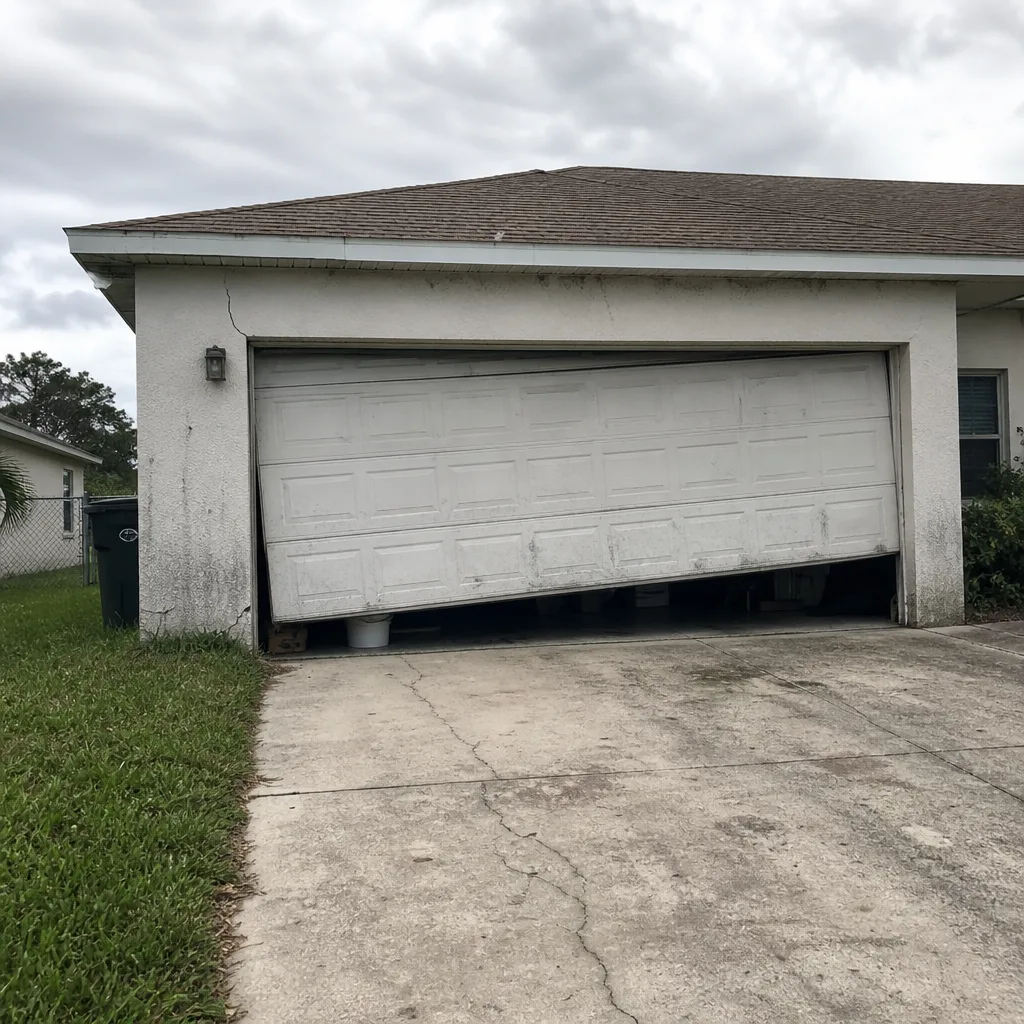
See the difference
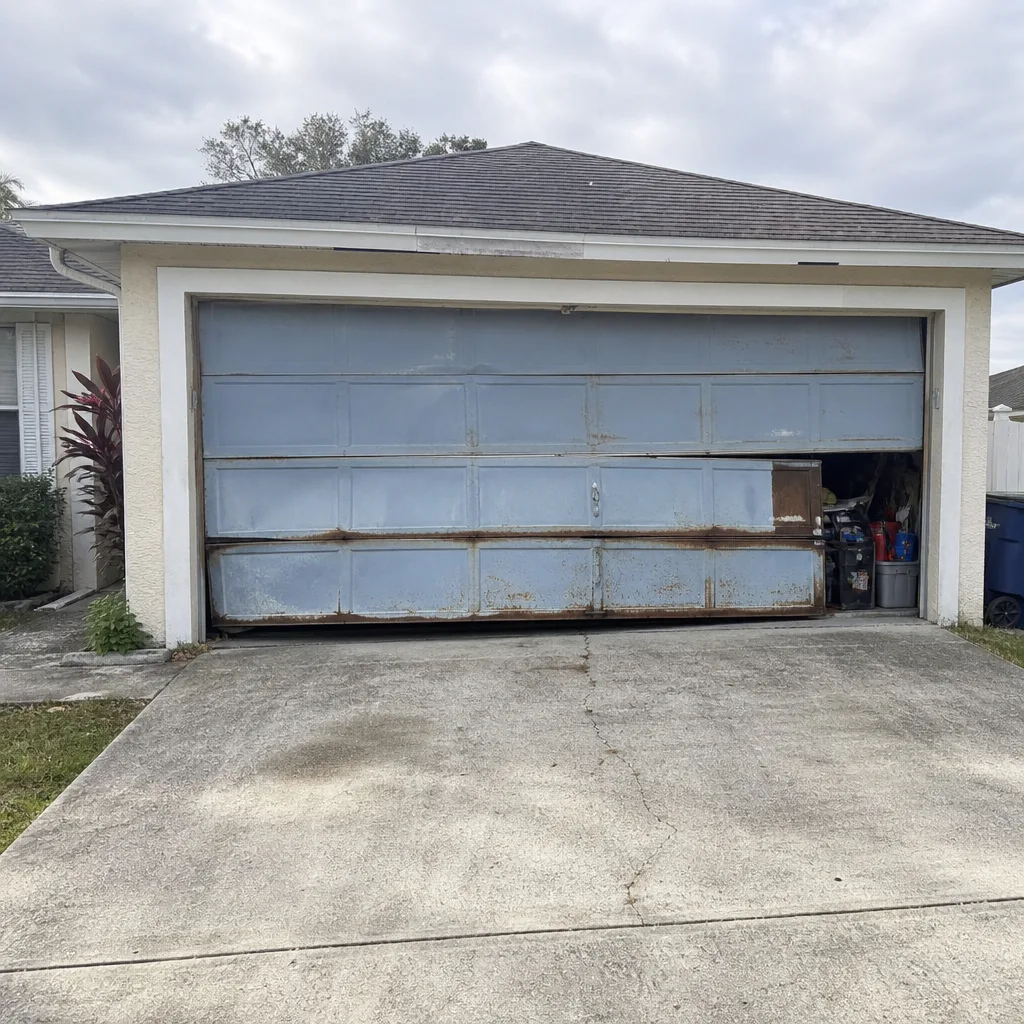 Before
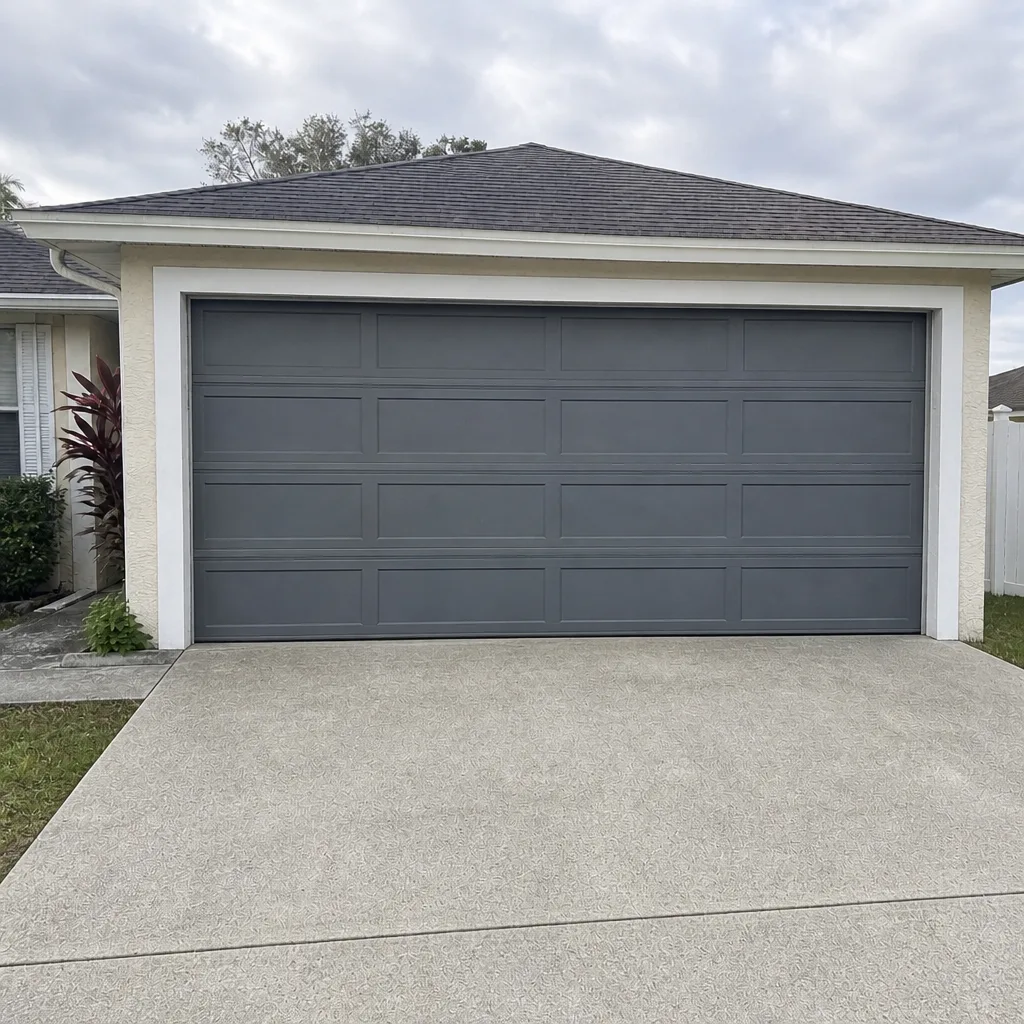 After
 Before
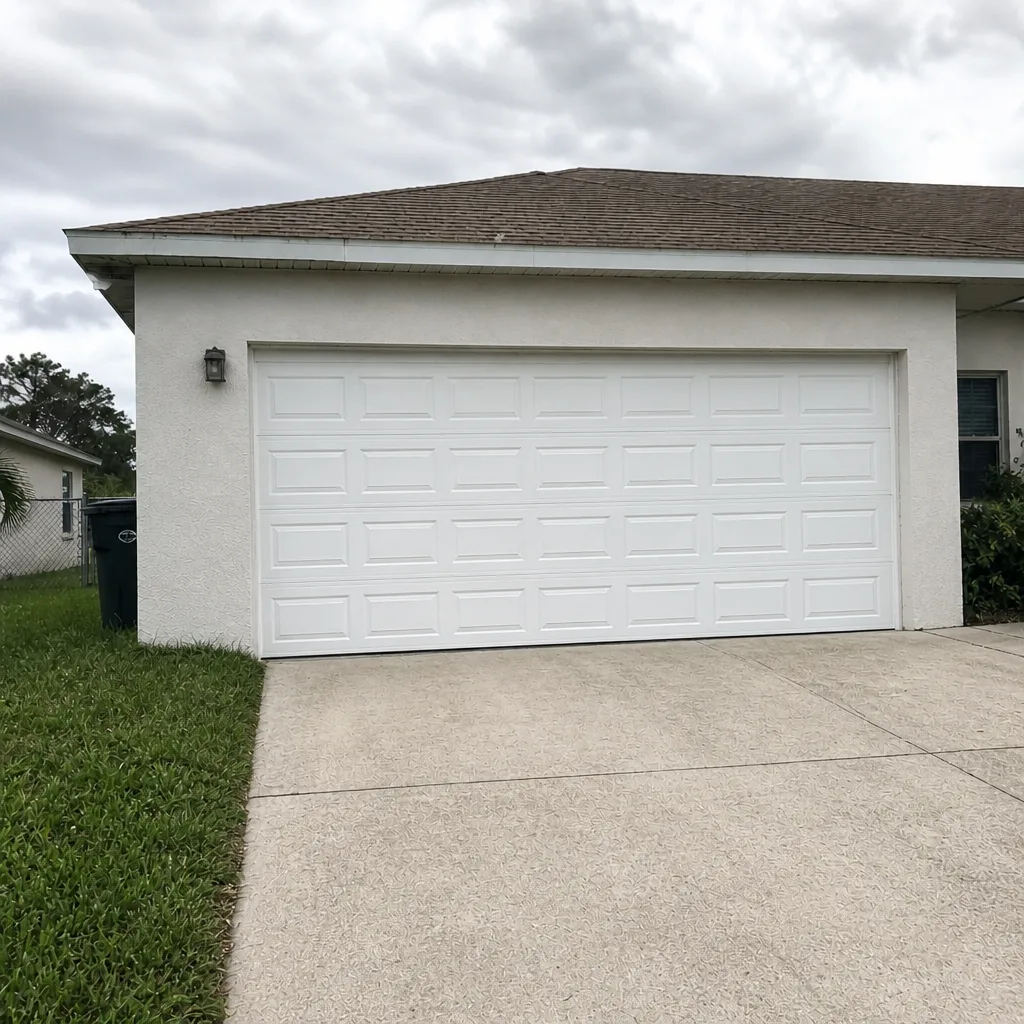 After
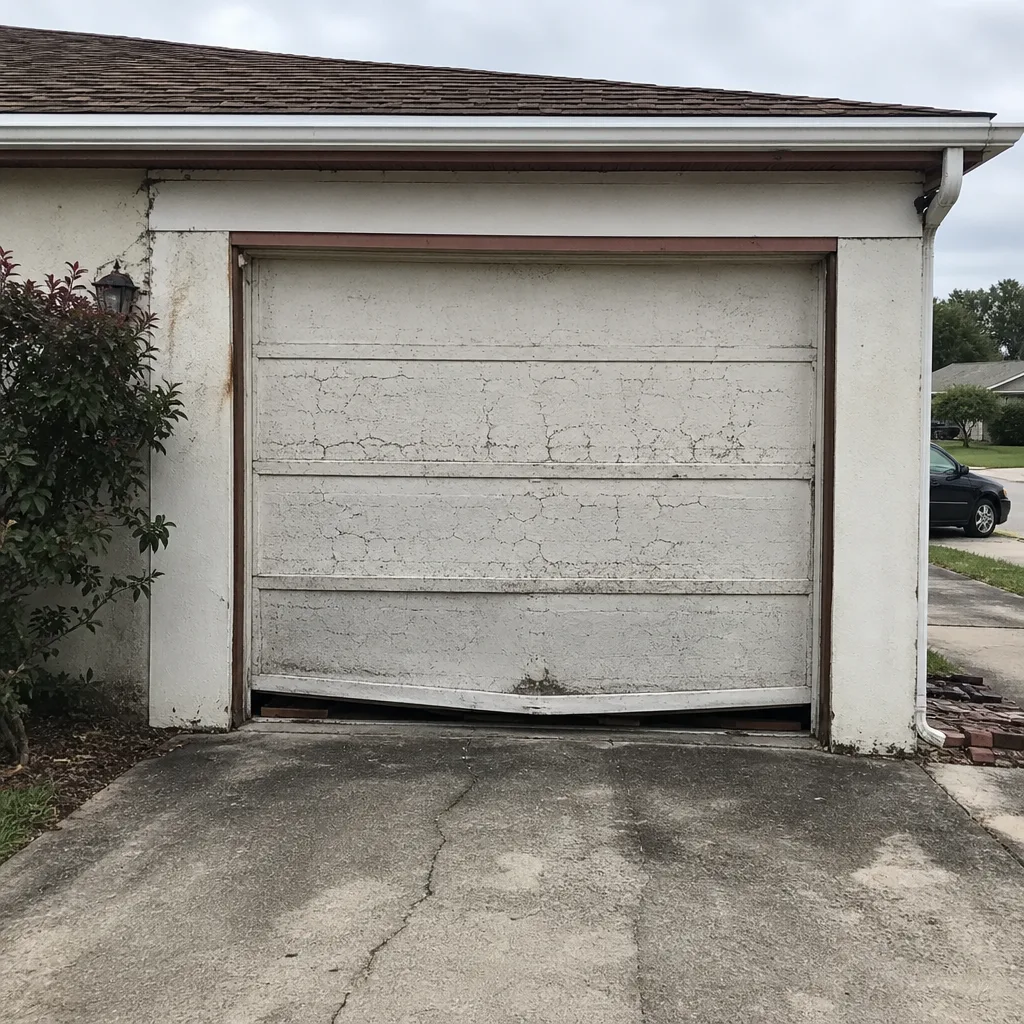 Before
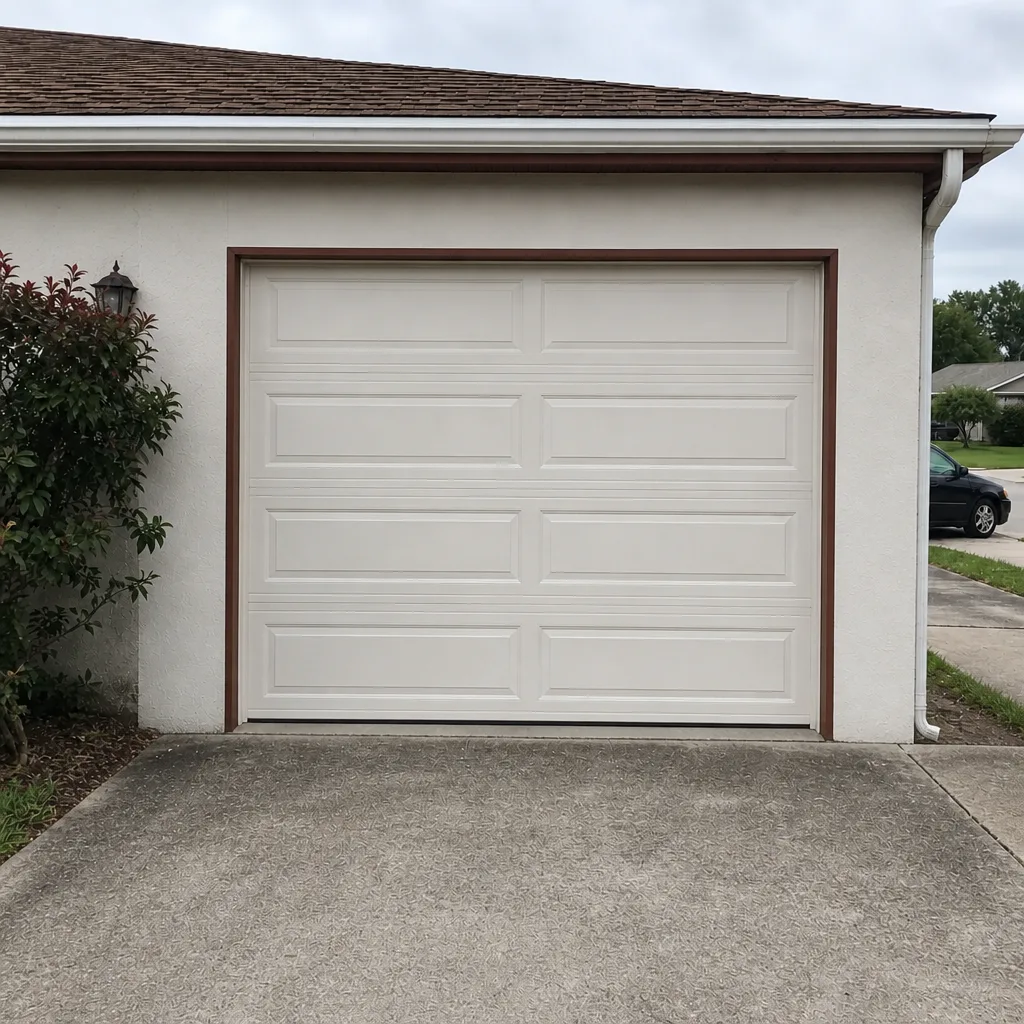 After
When to Call a Professional
Some things are worth a hands-on look before you call. Others aren’t. Call us when a spring has snapped, when the door won’t balance, when a cable looks frayed or slack, or when the door won’t open or close at all. Those are the situations where a trained technician needs to handle the high-tension parts safely. Call us too if your opener is acting strange – running the door partway and stopping, losing its remote memory, or making a grinding sound. When the door won’t move, we do. Palm Bay Garage Door Repair Co offers free estimates in Palm Bay, so the price is quoted and agreed before any work starts. Call (833) 762-4168. We answer 24/7. Fast dispatch from 7am to 7pm, Sunday through Friday. We’re closed Saturday.
Frequently Asked Questions
Do monthly visual checks, quarterly hardware tightening, and a professional inspection once a year for a door that’s used a few times a day. In Palm Bay, the humidity and coastal air speed up corrosion and weatherstrip wear, so those checks deserve extra attention. Heavy-use doors should get a professional inspection twice a year.
The monthly check is a quick visual and listening pass to spot what’s changing. The quarterly pass is where you tighten track bolts, check hinges and rollers, and lubricate the moving parts. Both are things you can do yourself, and neither involves touching the springs or cables.
No, WD-40 is the wrong choice here. It’s a solvent that evaporates and leaves a residue that attracts grit, which is especially bad in a humid climate. Use a white lithium grease or silicone-based spray on the hinges, rollers, and spring instead, and keep the tracks clean and dry.
Springs are rated in cycles, so the first step is estimating how many cycles your door runs a year. A spring rated for 10,000 cycles on a door that runs about 1,400 cycles a year will get you roughly seven years. Add signs like a heavy-feeling door, an uneven lift, or visible rust, and it’s worth a professional inspection before the spring fails.
Yes, same-day service is available for a door that won’t close or open. Call (833) 762-4168 and we’ll get a technician dispatched fast. We’re closed Saturday and open Sunday through Friday, 7am to 7pm, so a call outside those hours is booked into the next opening.
Yes. We work across the major brands, including LiftMaster, Chamberlain, Genie, Clopay, Amarr, Wayne Dalton, Craftsman, and Raynor. From opener remote to full panel replacement, we handle repair and installation on the systems Palm Bay homeowners already own.
The Bottom Line
The real schedule for your garage door depends on how much it cycles, not just what month it is. A door that runs four times a day wears out its parts years before a door that runs twice a week. So measure your usage, then match it to a maintenance tier: monthly visual checks, quarterly hardware tightening, and an annual professional inspection – twice a year if the door works hard. In Palm Bay, add heat, humidity, coastal air, and UV to the list of things that speed up wear, and check your weatherstrip and springs more closely. If anything feels off, that’s a call. Call (833) 762-4168 for a free estimate. We answer 24/7. Fast dispatch from 7am to 7pm, Sunday through Friday, and we’re closed Saturday.
Written by the team at Palm Bay Garage Door Repair Co.