
Last updated November 21, 2026
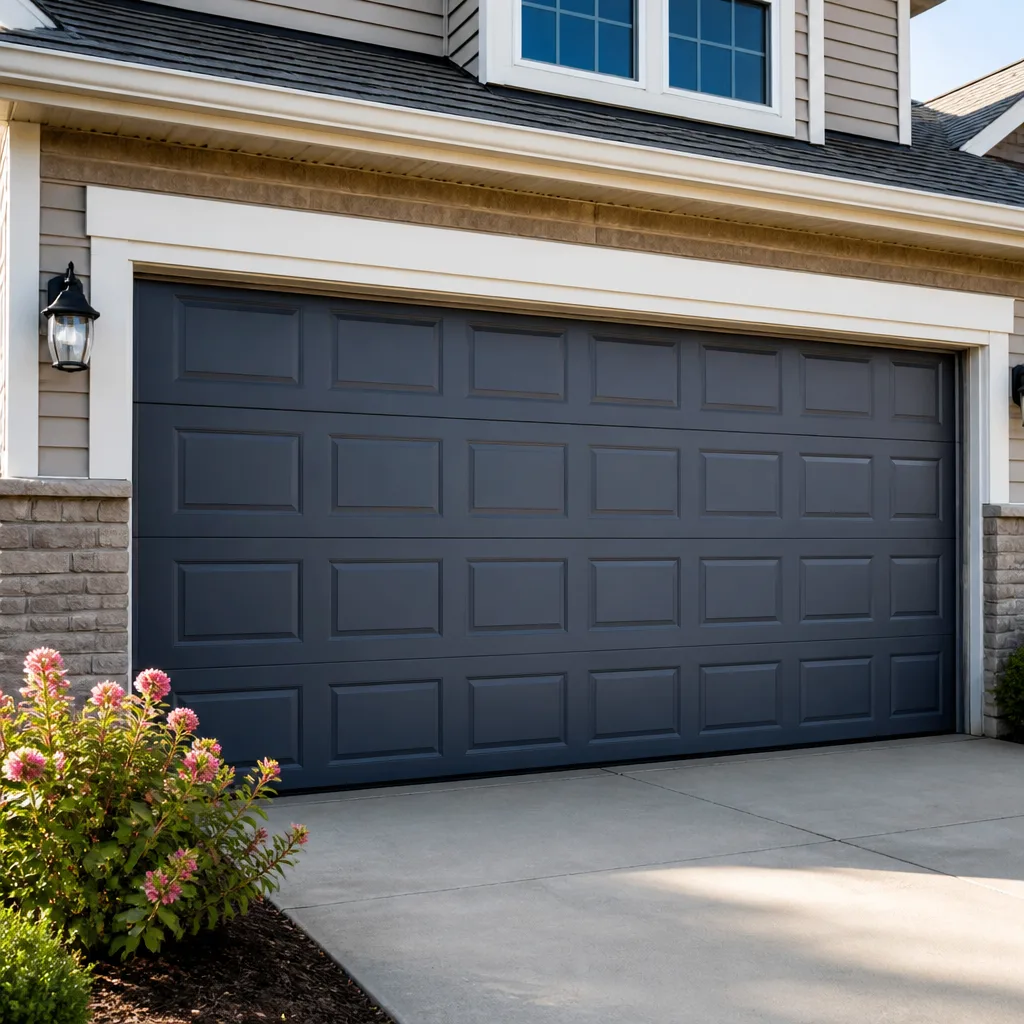 Raised-panel steel
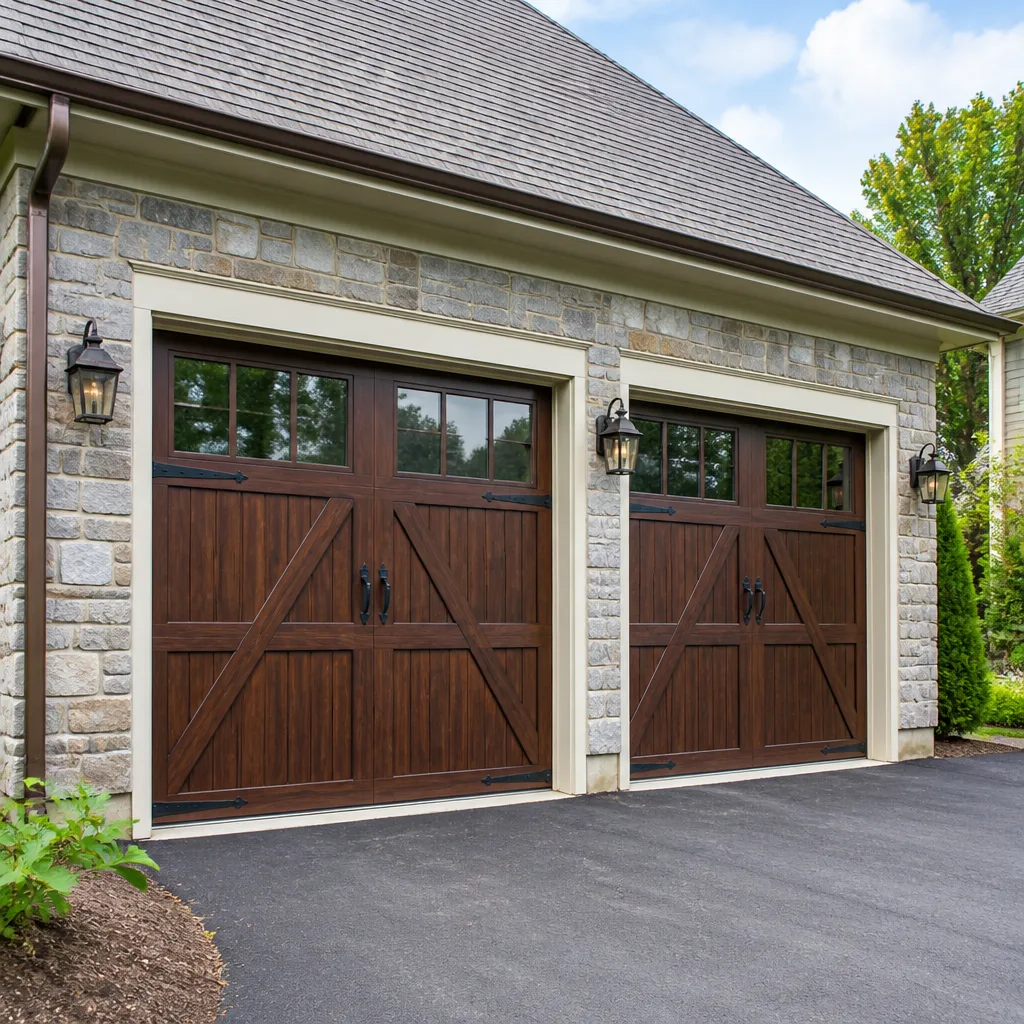 Carriage house
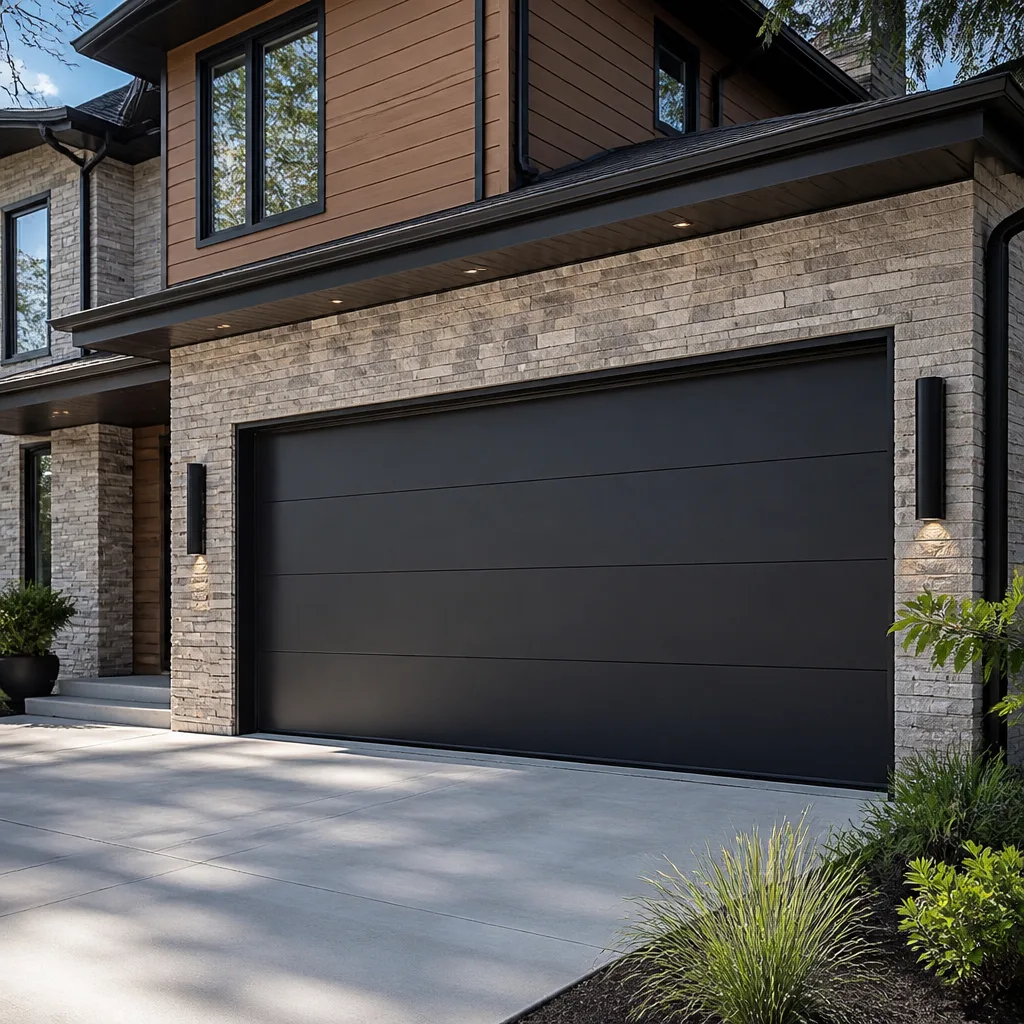 Modern flush
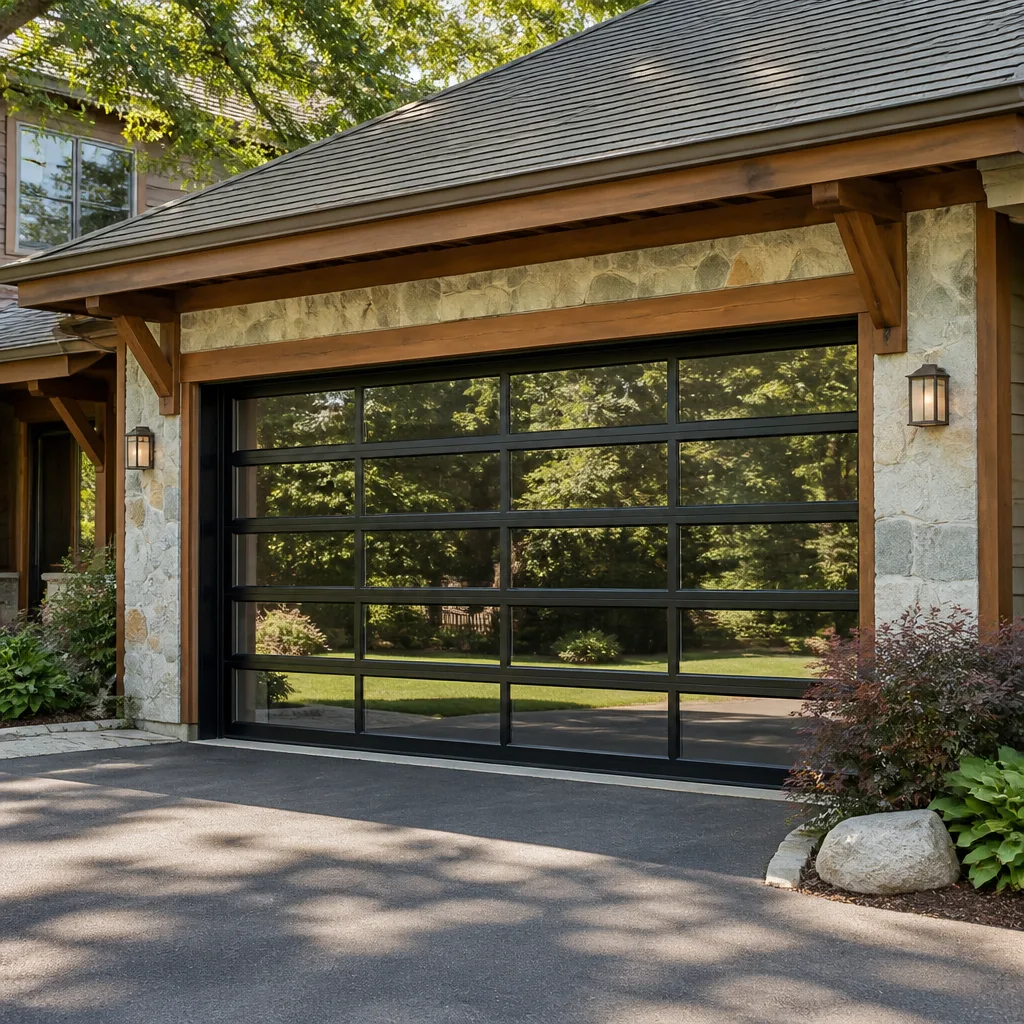 Full-view glass
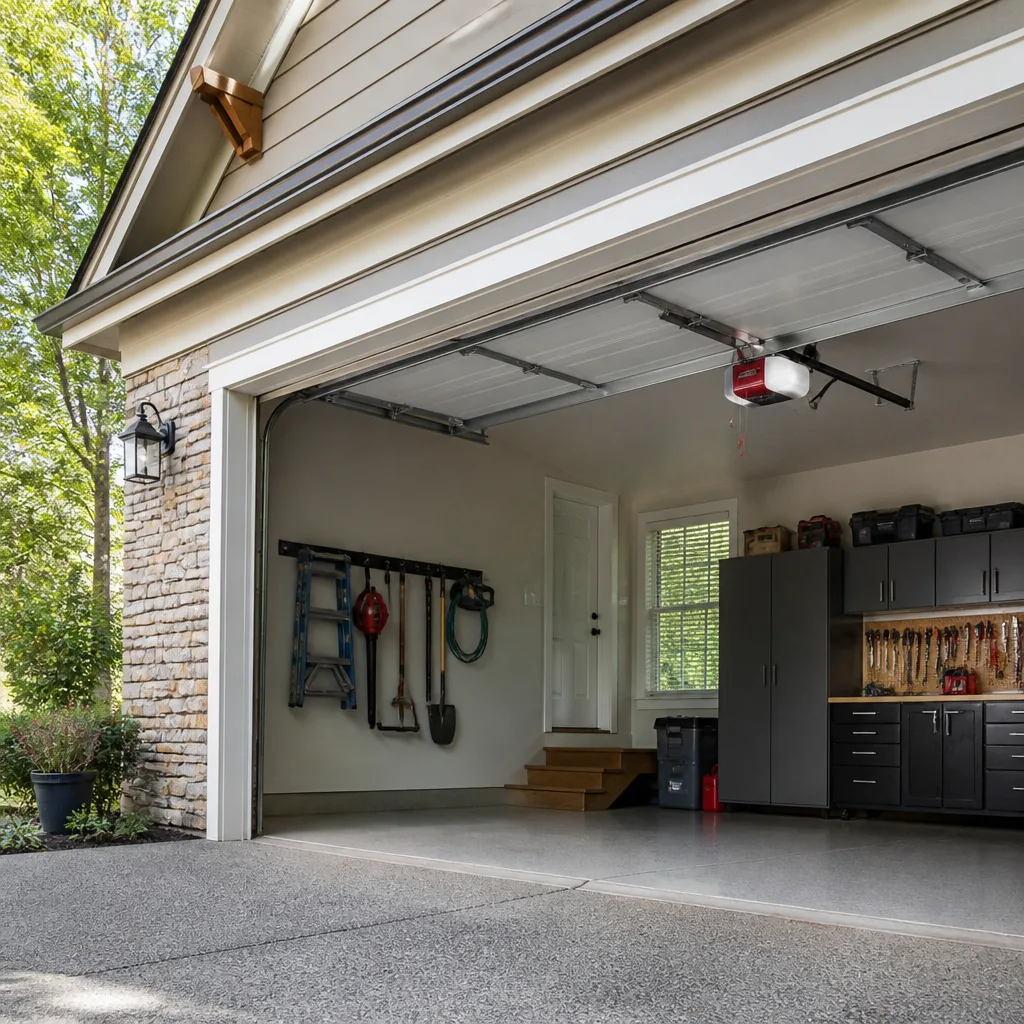 LiftMaster openers
 Chamberlain openers
Full 25-point door and opener safety check with every visit - springs, cables, rollers, tracks, and your LiftMaster or Chamberlain opener included
You get a price before we start. It does not change when the pro arrives.
Get your free estimateGarage Door Warning Signs: A Palm Bay Homeowner’s Reference Guide
A door that’s a little slower than it used to be sounds like a minor annoyance. In many cases, though, that slowness is a torsion spring losing tension under a load of 150 pounds or more, and the gap between “watch it” and “it’s about to snap” isn’t something most homeowners can see from the driveway. The trick to reading a garage door isn’t spotting the obvious symptom; it’s knowing which symptom points to which part, and which combination of signs means stop using the door right now. This guide breaks down what each sound, streak and sag is telling you, with the humidity and storm patterns of Palm Bay in mind, so you can sort a small fix from a real hazard before the door decides for you.
Quick Answer
Garage door warning signs fall into three buckets: sounds (grinding, popping, squealing, banging), visuals (coil gaps in the springs, rust streaks, frayed cables, a sagging door) and behavior (a door that jerks, reverses, or won’t close all the way). Any single sign is worth a look. Three signs together mean stop using the door and get it inspected before something fails under tension.
Styles & brands we work with
- Raised-panel steel
- Carriage house
- Modern flush
- Full-view glass
- LiftMaster openers
- Chamberlain openers
Table of Contents
- What Each Sound Is Telling You
- Reading Spring Wear in Palm Bay’s Humidity
- Opener Strain or Mechanical Resistance?
- Visual Signs on the Door Face and Hardware
- Storm, Flood and Humidity Warning Signs
- Three Signs That Mean Stop Using the Door
- Brand-Specific Notes: Craftsman, Raynor, LiftMaster, Chamberlain
- Common Mistakes to Avoid
- When to Call a Professional
What Each Sound Is Telling You
Noise is the first thing a door gives you, and the type of noise is more useful than the volume. A door that’s always been loud hasn’t told you anything new. A door that has changed its sound has told you a part is wearing. Here’s how we read the four most common sounds.
- Grinding. Usually track or roller related. A roller with a worn bearing, or a track with a burr or debris in it, produces a steady grinding scrape as the door travels. It’s often the cheapest of the four to fix because the part is small, but ignoring it wears the track and eventually the door’s hinges.
- Popping. A sharp pop or snap, especially when the door first moves, points to a torsion spring that’s about to fail or a cable that has jumped. Popping can also come from a hinge that has pulled loose from the panel. This one is worth a professional look before you run the door again.
- Squealing. Metal on metal without grease, or a roller that’s seized and dragging. Squealing is usually a maintenance issue rather than a failure in progress, but a seized roller will chew through a hinge if it’s left long enough.
- Banging. The loudest and least subtle. A bang at the top of travel can mean a loose spring anchor or a door with too much gap in its panels. A bang on the way down can mean a bent track the door is dropping out of.
If you only remember one thing: a new sound is a signal. A sound that comes with a change in the door’s speed or balance is a stronger one. If you’re seeing more than one symptom, that’s the point to schedule garage door repair rather than wait for the next cycle.
Reading Spring Wear in Palm Bay’s Humidity
Springs are the part that does the work, and they’re the part most homeowners can’t see until they’re already failing. A torsion spring lifts a door that would otherwise weigh well over a hundred pounds, and it does that with stored tension. When it lets go, it lets go fast, and that’s why we treat spring inspection as the priority over everything else on the door.
In Palm Bay, the humidity shows up on springs in a few specific patterns. Look for these:
- Rust bloom along the coil. The springs are the most rust-prone part of the assembly. A light dusting that wipes off is normal. Flaking rust that leaves pitting in the steel is a sign the coil is losing its roundness and its strength together.
- Gaps between coils. On a closed door, a healthy torsion spring’s coils should be even and tight. If you see a visible gap between coils, or a section that’s wound much tighter than the rest, the spring is fatigued.
- Frayed or twisted cables. The cables take the load the springs apply. A cable with visible bird-caging, a broken strand or a kink is a stay-off-the-door sign, not a maintenance note.
- A spring that looks “stretched.” Extension springs that have lost tension appear longer than their partner, and the door will hang crooked on that side.
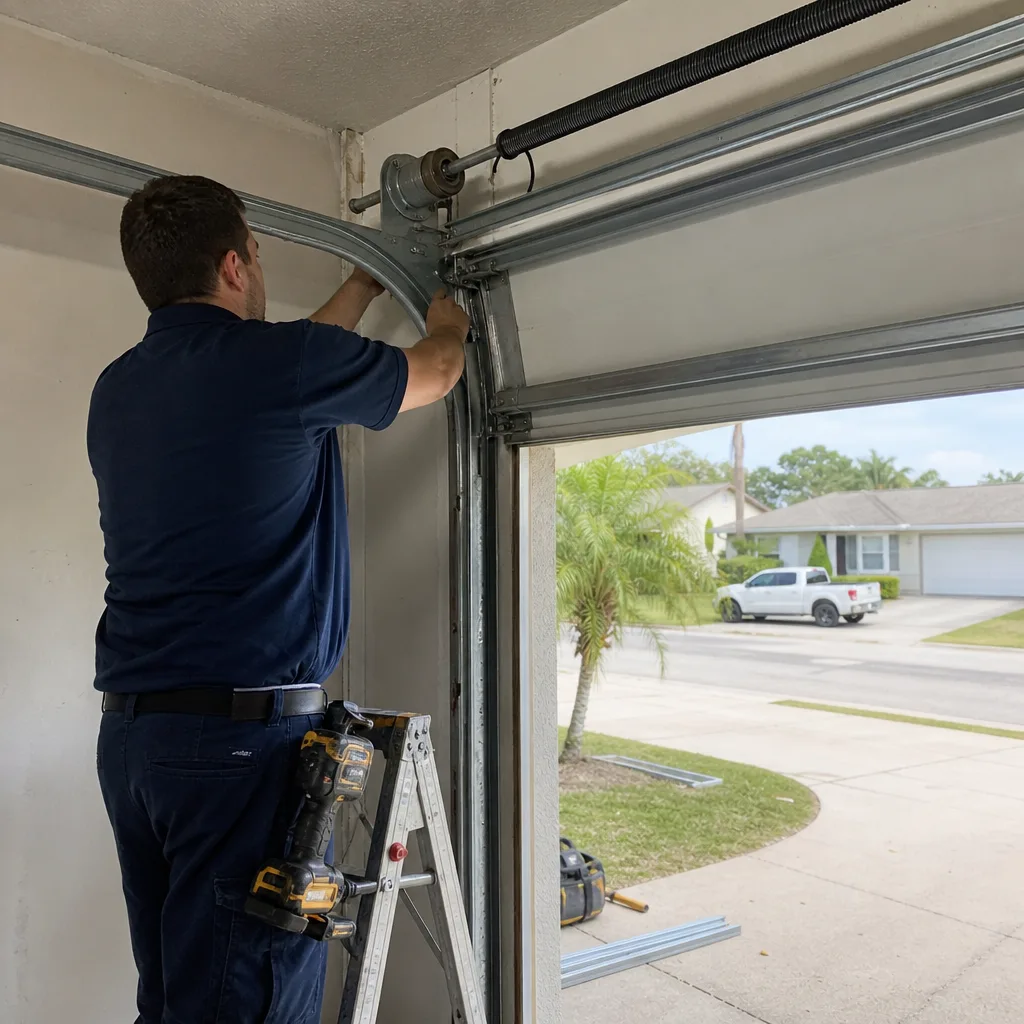
We’ve seen a lot of spring wear, and the pattern is consistent: humidity-driven rust accelerates the fatigue, and the springs fail faster than the door’s other parts. That makes garage door spring repair a regular call in this climate, not an unusual one. It’s also the one item on the door we never suggest you touch. A torsion spring under tension can injure a homeowner in a way that no other part of the door can. If a spring is visibly worn, the right move is to call and let a trained technician with the correct winding bars handle it.
Opener Strain or Mechanical Resistance?
This is the distinction that most affects what the repair ends up costing, and it’s the one homeowners miss. The opener is a small motor doing the lifting. The door is a big heavy panel riding on rollers and springs. If the opener is straining because the motor is failing, the fix is on the opener side. If it’s straining because the door has become hard to move, the fix is on the door side, and running the opener against a hard door burns the motor out too. Same symptom, two completely different repairs.
Here’s a simple test that separates them, without tools:
- Pull the emergency release cord so the door is disconnected from the opener. Do this with the door closed, and with nothing under it.
- Lift the door by hand about halfway and let go. A balanced door should stay roughly where you left it. A door that sags or slams down is a mechanical problem, not an opener problem.
- Push the door up the rest of the way by hand. It should move with modest effort. If it feels heavy or binds, the springs, rollers, or track are the issue.
- Pull the release back toward the opener to reconnect. If you can’t reconnect it, stop there and call.
If the door moves smoothly by hand but the opener still groans, the strain is on the opener side. That’s usually the motor, the logic board, the drive gear or a worn belt. That’s an opener issue, and it’s worth knowing that a failing opener on a door that’s balanced isn’t dangerous the way a failing spring is. If the door is heavy by hand, though, stop running the opener until the mechanical issue is corrected. Fighting a binding door is how openers get destroyed in a few cycles. If the opener is the problem, we handle it as garage door opener repair, and it’s worth confirming the model before you call.
Visual Signs on the Door Face and Hardware
Sounds tell you what’s moving. Visuals tell you what’s standing still and waiting. A quick walk-around of the door, track and hardware once a month will catch most of these before they become a repair.
- Rust streaks on the door face. Streaking that runs down the panel from a hinge or a roller is water traveling along the metal. On a steel door in Palm Bay’s humidity, streaks are a sign hardware is rusting through and needs attention. Surface rust on a painted panel is cosmetic; rust blooming from a screw hole is structural.
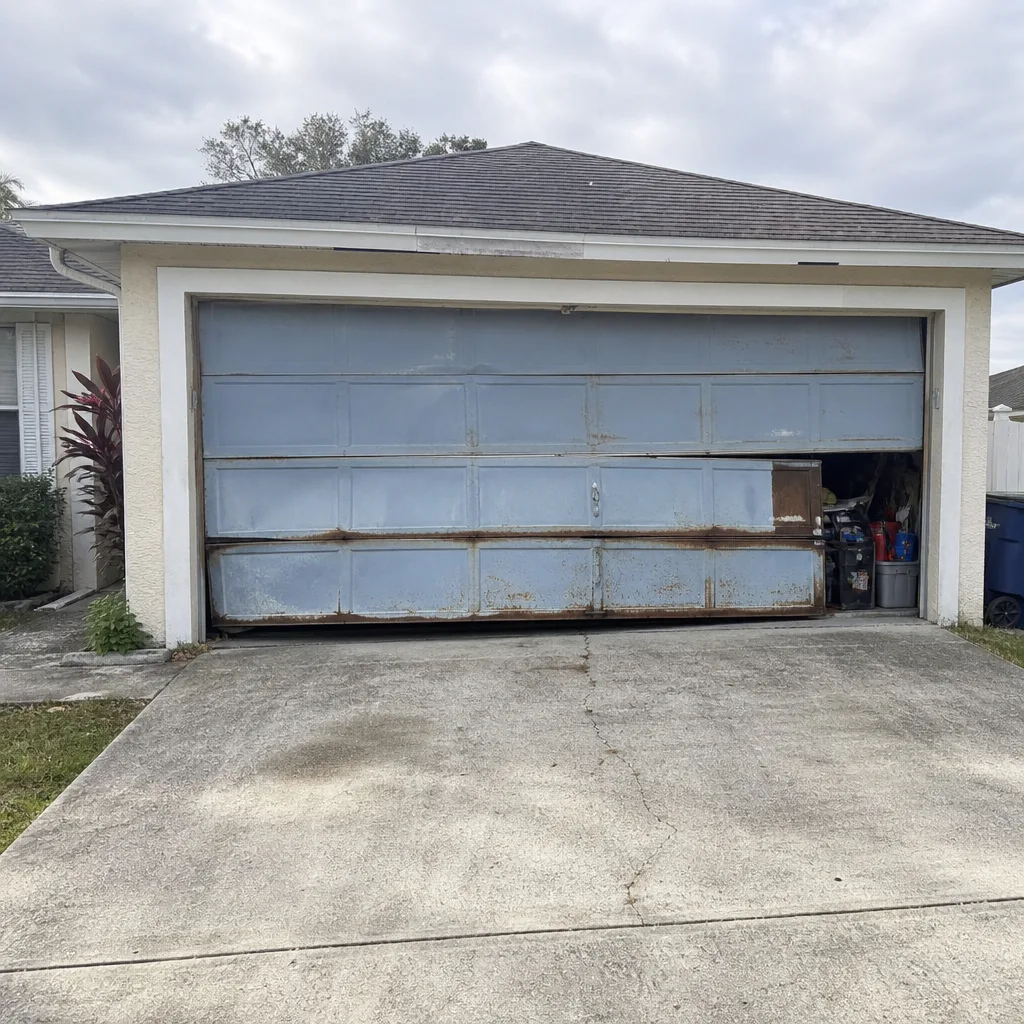
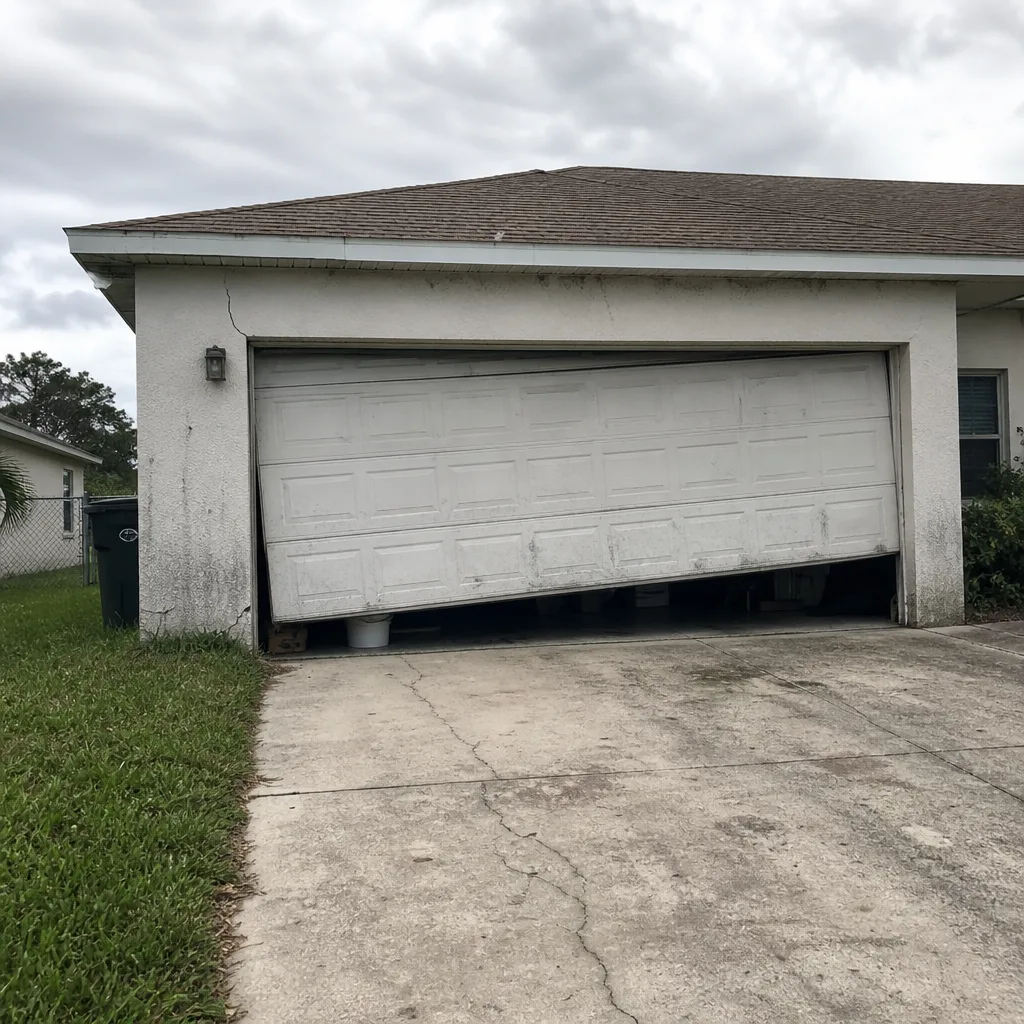
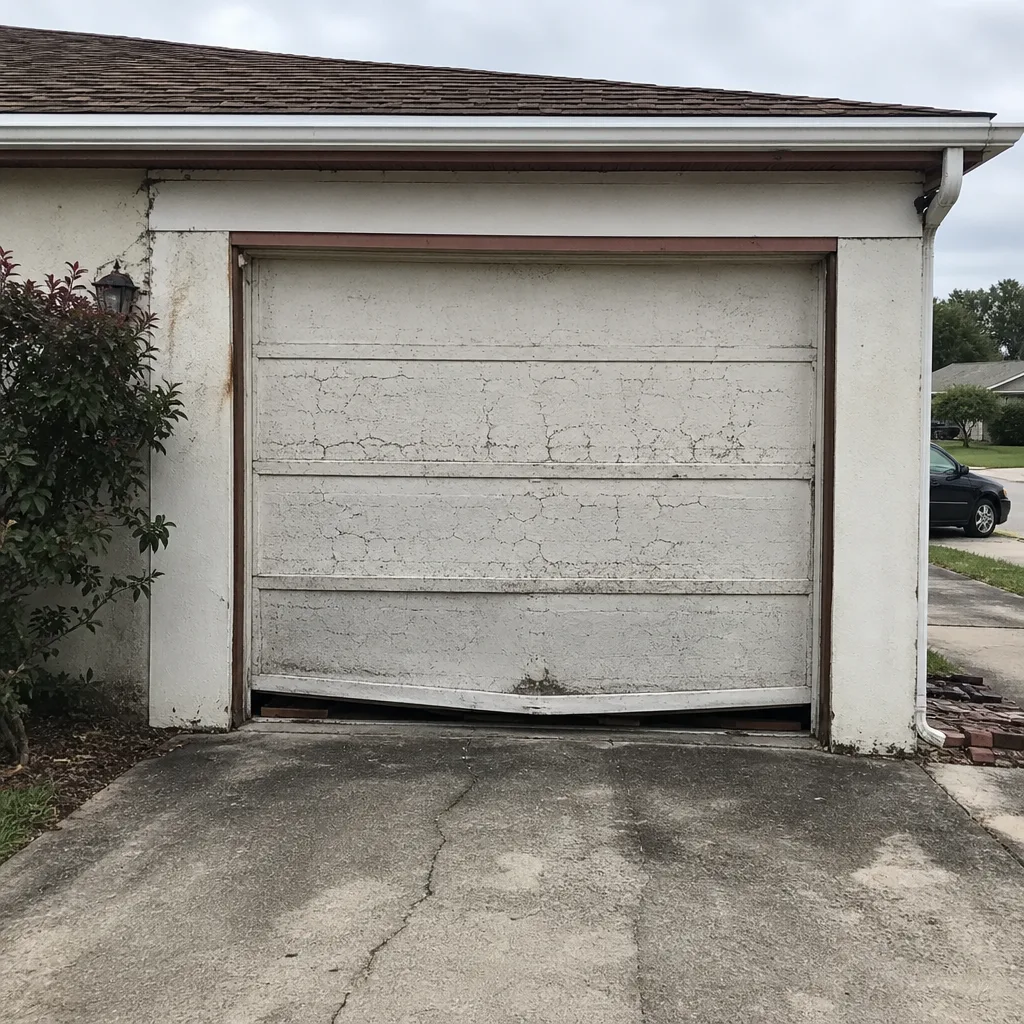
- A sagging or bowed door. Lay a straight edge, or simply your eye, along the top edge of the door. A door that has lost its shape is under strain from a bad spring, a bent track, or a panel that’s come apart. Don’t force it through a cycle.
- Track dents and misalignment. Look at the vertical and horizontal tracks from the side. Any kink or inward dent will catch rollers and wear them. A track that’s been hit, by a car or a ladder, is a stop-and-call sign.
- Loose hinges and bolts. Give each hinge a light tug. A hinge that wiggles in the panel is one that’s about to strip out of the door.
- Bottom seal gaps. Squat down and look at the seal along the floor. Any light coming through, or a seal that’s flat and hard, is a weather and pest issue and often the first sign of water getting under the door.
- A door that reverses on its own. If the door starts down and reverses before touching the floor without anything in the way, the safety sensors or the travel limits need attention.
Check these once a month and after any storm. It takes a few minutes, and it catches most problems before they turn into a broken door.
Storm, Flood and Humidity Warning Signs
Palm Bay’s weather is mild in winter and wet in summer, and the door takes the worst of it. Humidity is the slow problem, and standing water after a heavy storm is the fast one. Both leave a specific trail on the door, and the trail tells you how urgent the repair is.
The slow problem is the humidity. Springs, hinges, cables, rollers and the bottom seal are all metal or rubber, and all of them live in air that’s damp for months at a time. That shows up as surface rust on the hardware, a bottom seal that’s swollen and soft, and a spring coil that’s rusting from the inside out. A swollen bottom seal is worth replacing quickly; it doesn’t just let water in, it distorts the door’s travel and puts strain on the opener. Rust on the track is worth cleaning and re-lubricating before it wears a roller flat.
The fast problem is water. After a storm that pushes water up the driveway, look at the bottom of the door and the floor inside. If the seal is saturated, dry it and inspect it for tearing. If the door’s panels have absorbed water and the door is heavier than it was, the springs are now under a load they weren’t sized for. And if the door doesn’t close flush after a storm, stop using it until you find out why. A door that doesn’t seal after a storm is a door that’s either been knocked out of square or has a bent track.
There’s a related sign that’s easy to misread: streaking on the door face. After a summer of humidity, streaks running from the hinges down the panel are almost always rust deposits being carried by condensation. If the streaks are red-brown, inspect the hardware. If they’re clear, it’s just water and worth a wipe and a light coat of lubricant on the hinges.
Three Signs That Mean Stop Using the Door
Most warning signs mean “schedule this soon.” Three of them mean “stop using the door now, and call for service today.” Don’t test the door to see if it still works after any of these.
- A broken or visibly gapped torsion spring. A torsion spring that has snapped leaves a gap between the coils and a door with no lift assist. The door is now being held by the opener alone, and the opener will fail under that load. A door with a broken spring is a door that should stay down until a technician is on it. The spring is under extreme tension, and a homeowner touching one without the right tools is at risk of a serious injury.
- A frayed, kinked or slack cable. The cables carry the spring’s load. A cable with broken strands, a kink, or one that’s gone slack means the door is no longer being held on that side. The door can drop or twist out of the track. Stay clear of the door, and don’t try to lift it by hand.
- A door that falls or slams on its own. If the door comes down fast, drops a few inches with a bang, or won’t hold at the halfway point, the balance has failed. That’s usually a spring or cable, and it’s the most dangerous of the three because the door could come down on someone under it.
There’s a fourth sign that’s specific to Palm Bay: a door that’s hanging crooked after a storm, with one side lower than the other. That’s a failed component on one side, and it needs to stay shut until a technician sees it. Call (833) 762-4168. We answer 24/7. Fast dispatch from 7am to 7pm, Sunday through Friday.
Brand-Specific Notes: Craftsman, Raynor, LiftMaster, Chamberlain
Warning signs read slightly differently depending on what’s on the door. A Craftsman opener that’s old enough to be past the point of parts availability behaves differently from a newer LiftMaster or Chamberlain system, and a Raynor door has spring and hinge patterns that aren’t the same as other panels. Knowing your brand matters because a technician who knows the platform can read the symptoms faster, and because parts availability differs by brand.
We work on all of the widely installed brands, and a few notes on the ones we see most in Palm Bay:
- Craftsman. Craftsman openers are common on doors installed in the 1990s and early 2000s. On those, the warning signs to watch are a remote that only works close to the door, a motor that hums without moving the door, and a light that flickers. Those usually mean the logic board or the drive gear. Parts can be hard to source for older units, so a repair-first approach is worth confirming before you assume a full replacement.
- Raynor. Raynor doors often use torsion springs and heavier panels. The spring signs above apply directly, and the door’s hinges are worth a look because they take more load on the heavier configurations. A Raynor door that’s suddenly hard to lift is usually a spring, not a track issue.
- LiftMaster. A LiftMaster opener with a smart-home connection can be a great source of warning signs because it logs them. If the app shows the door reversing, or the opener cycling more than usual, that’s a signal to check the physical door before assuming the app is glitchy. Newer LiftMaster units also have battery backup, and a battery that’s aging can make the door behave strangely on the first cycle after a power dip.
- Chamberlain. Chamberlain openers share a lot of electronics with LiftMaster. The common warning is a door that won’t close and the light flashes a set number of times. Count the flashes before you call, since that count points directly at the safety sensor circuit or the travel limit, and it saves a step.
Whatever brand is on your door, the fastest path to an accurate diagnosis is to tell us what it is when you call. We work on the major brands, and we’re not guessing at the platform.
Common Mistakes to Avoid
- Greasing the springs. It’s a common instinct: quiet the noise with lubricant. On torsion springs, grease traps grit against the coil and accelerates the wear. Fluid film on the track, the hinges and the rollers is fine; the springs are left alone. Springs are the most dangerous part of any garage door, and they shouldn’t be touched by a homeowner at all.
- Running the door to “see if it’s still broken.” If the door is heavy, dragging, or making a new sound, each cycle adds wear to the part that’s already failing and risks damaging the opener. If you’re unsure, disconnect it and leave it down.
- Calling the wrong trade. A handyman can reattach a hinge, but a garage door is a tension system, and a generalist without spring tools can make things worse. Palm Bay Garage Door Repair Co is a garage door company, and we stay in that one trade for that reason. For the same reason, we don’t take on other home repairs.
- Treating a swollen bottom seal as cosmetic. In Palm Bay’s humidity, the seal swells and the door’s travel changes. A warped seal puts strain on the opener and lets water in. Replace it before the opener pays for the delay.
- Assuming a slow door is a slow door. A door that’s slower than it used to be is often showing the first sign of a fatigued spring. If the door is also heavy by hand, the slowness is a warning, not a setting.
- Ignoring a safety sensor that’s been nudged. A sensor knocked a half inch out of alignment will reverse the door at the floor. It’s a five-minute fix, but leaving it is how a door gets cycled hundreds of times with its safety feature disabled.
- Waiting for a snapped spring to “see how bad it is.” A broken spring has already failed. The only question is how quickly a technician gets to it. Call the same day; the door isn’t safe to run.
When to Call a Professional
Call a professional when the door has one of the three stop signs above, when the sound has changed and stayed changed, when the door is visibly out of balance or out of shape, or when you can’t tell whether the strain is on the opener or the door. A spring under tension and a cable holding a door’s weight are both genuinely hazardous, and a trained technician is the right person for both. The same goes for anything involving the opener’s internal electronics or its wall wiring, since the electrical side of the trade is not a homeowner fix either.
Palm Bay Garage Door Repair Co offers free estimates in Palm Bay. Call (833) 762-4168. We answer 24/7. Fast dispatch from 7am to 7pm, Sunday through Friday, and we book a call outside those hours into the next opening. When the door won’t move, we do: emergency garage door service is available for a door that’s stuck, broken or unsecured. The price is set by the written estimate and agreed before any work starts. Our technicians have up to 13 years of experience, and we work on the major brands, including Craftsman, Raynor, LiftMaster and Chamberlain.
See the difference
 Before
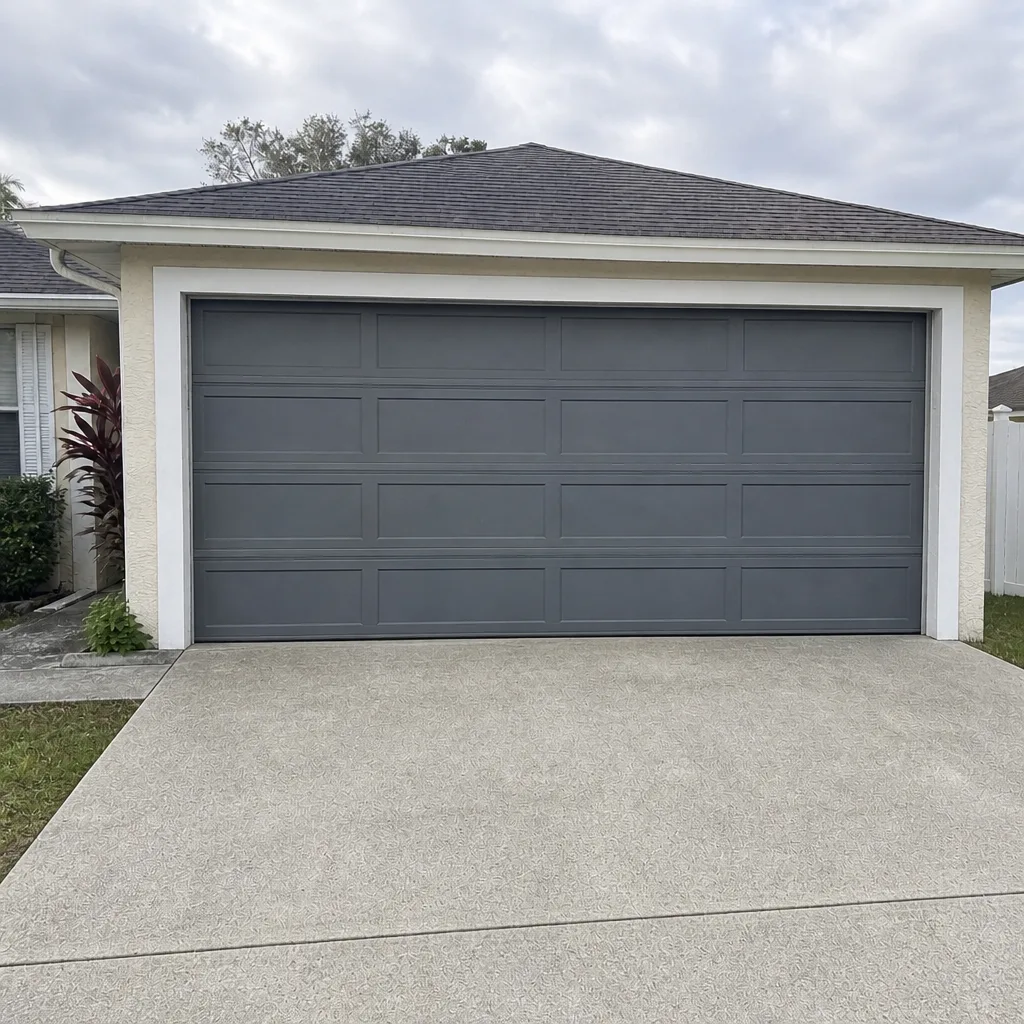 After
 Before
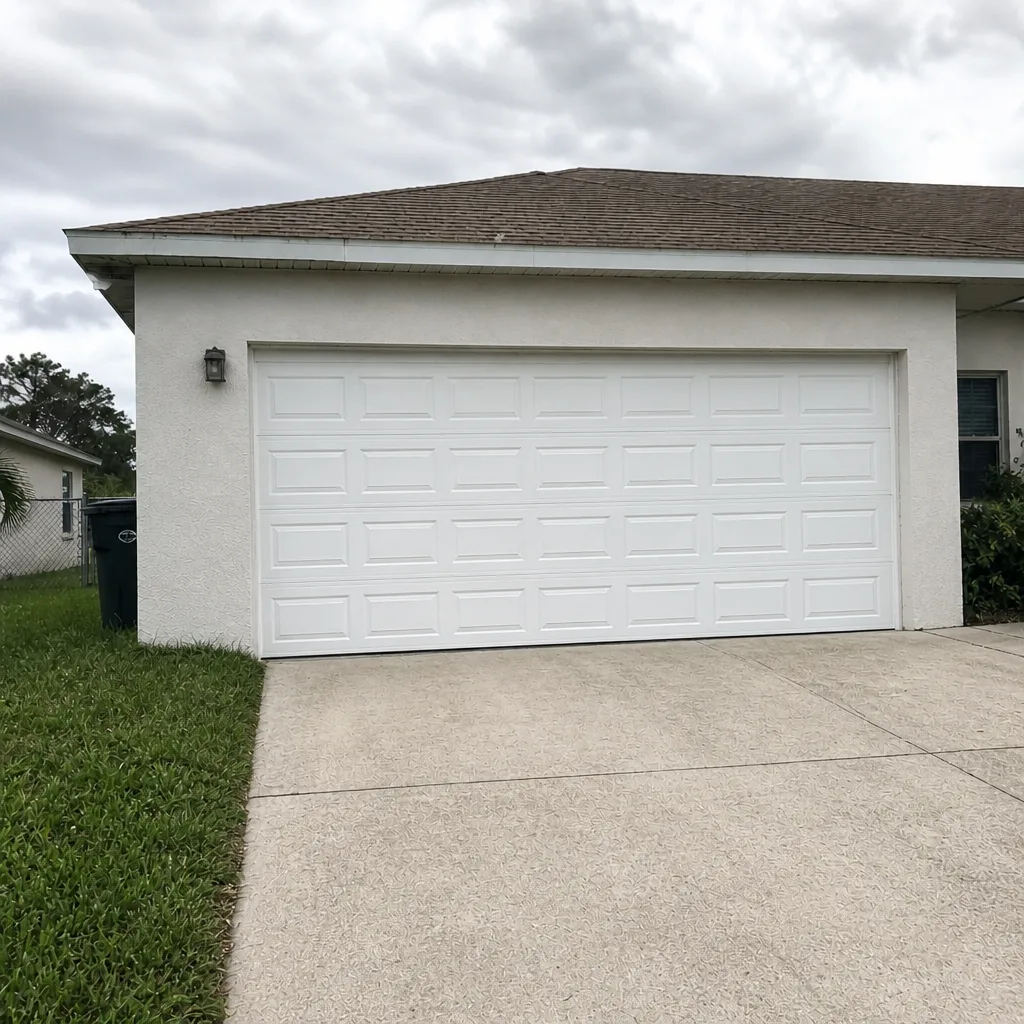 After
 Before
 After
Frequently Asked Questions
The first sign is usually a change in the door’s sound and speed rather than a visible break: a slight grind on the first inch of travel, a door that feels heavier by hand, or a popping sound at the start of a cycle. Look for coil gaps or flaking rust on the spring itself. If you see either, stop using the door and call (833) 762-4168 for an estimate.
Pull the emergency release and lift the door by hand. A balanced door stays roughly where you leave it; a door that sags or slams is a door-side problem, not an opener problem. That test separates a repair on the opener from a repair on the springs, track or rollers, and it’s the most useful thing a homeowner can do before calling. Call (833) 762-4168 with the result.
A new noise is worth a look; an old noise that hasn’t changed usually isn’t. In Palm Bay’s damp air, the hardware and springs rust faster than in drier climates, so a grinding or popping sound combined with visible rust on the hardware is a stronger signal than the sound alone. If you’re seeing both, get it checked. Call (833) 762-4168 for a free estimate.
Stop completely if you see a gap in the torsion spring, a frayed or slack cable, or a door that falls or slams on its own. Any one of those three means the door’s balance or its lift assist has failed, and it’s not safe to cycle. We answer 24/7, and a call outside dispatch hours is booked into the next opening, Sunday through Friday, 7am to 7pm.
Lubricant on the hinges, rollers and track can quiet a squeal, but it doesn’t fix a spring, a cable or a bent track, and it shouldn’t be applied to the torsion spring. If the noise comes back within a few cycles, the part it’s coming from is wearing and needs replacement. Call (833) 762-4168 and describe what you’re hearing; estimates are free.
No. The price is set by the written estimate and agreed before any work starts. A technician inspects the door, explains what’s failing, and puts the price in writing before touching a tool. If the diagnosis changes on inspection, the new number is written down and agreed before the repair begins. Call (833) 762-4168 for a free estimate.
The Bottom Line
Warning signs on a garage door are only useful if you know what they mean. Sounds tell you which part is moving wrong: grinding means a roller or track, popping means a spring or cable, banging means something loose or bent. Visuals tell you what’s rusting, sagging or pulling apart, and in Palm Bay’s humidity, the springs and hardware are where those signals show up first. The one distinction worth remembering is opener strain versus door resistance, because that’s the difference between a small repair and a bigger one. And the three stop signs (a gapped spring, a frayed cable, a door that falls) are not “schedule it this week” signs. They’re “leave it down and call today” signs. A garage door is a tension system, and the right move on a warning sign is usually the fast one.
If you’re seeing any of these signs on your door, call Palm Bay Garage Door Repair Co at (833) 762-4168 for a free estimate. We answer 24/7. Fast dispatch from 7am to 7pm, Sunday through Friday.
Written by the team at Palm Bay Garage Door Repair Co.