
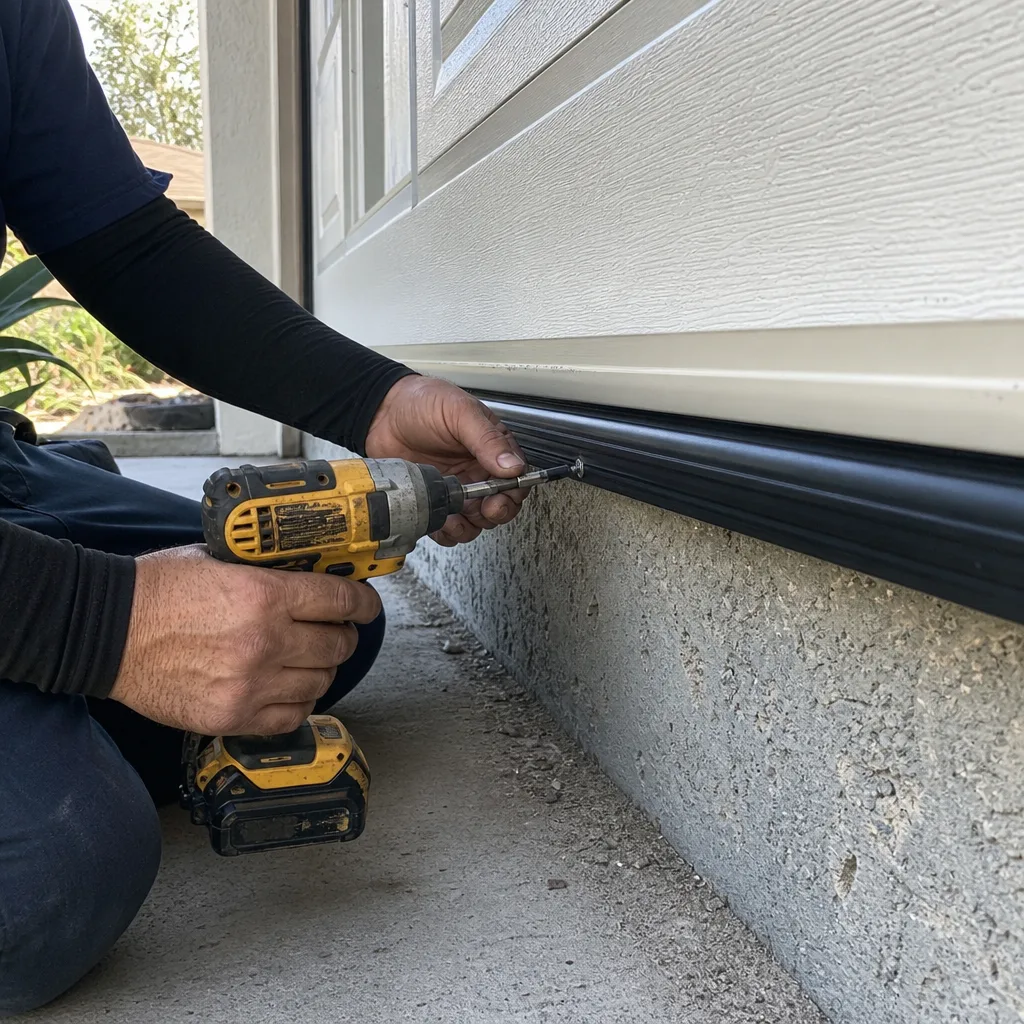
Last updated November 21, 2026
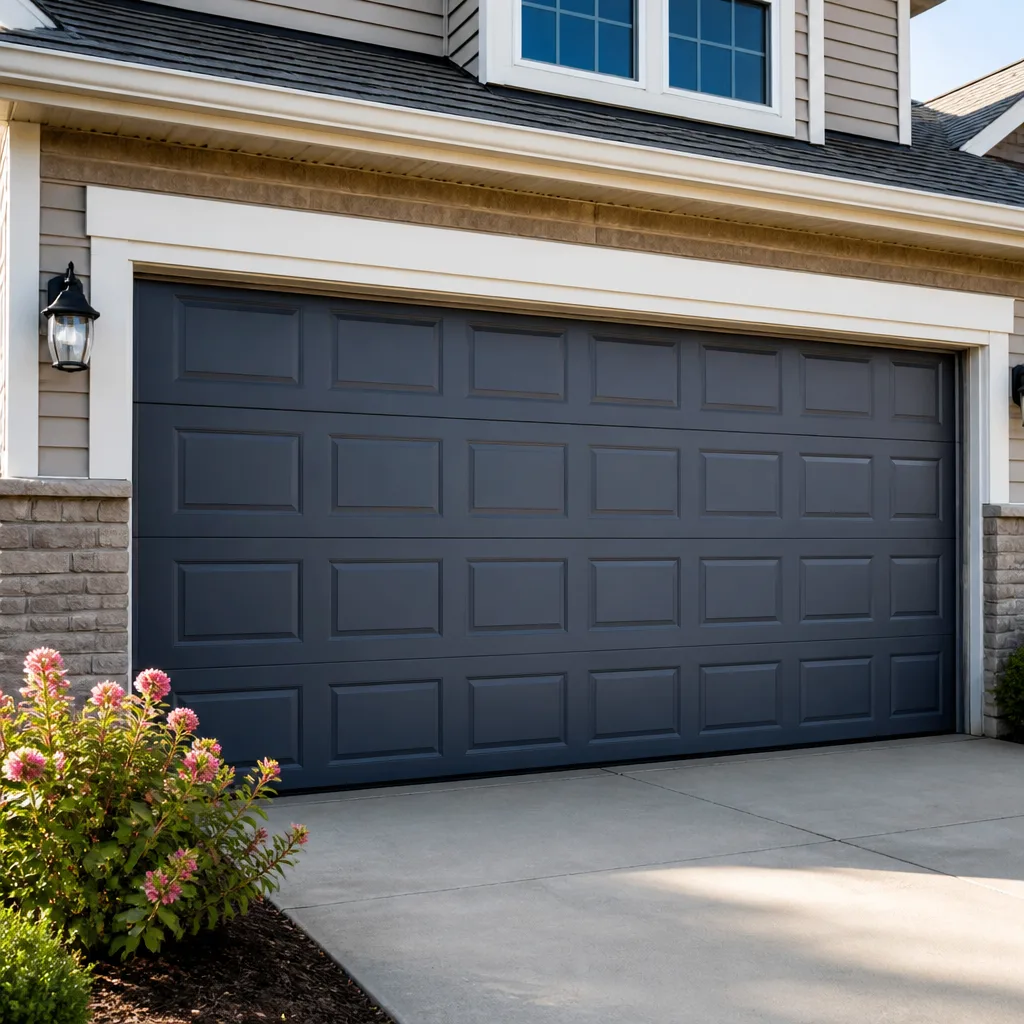 Raised-panel steel
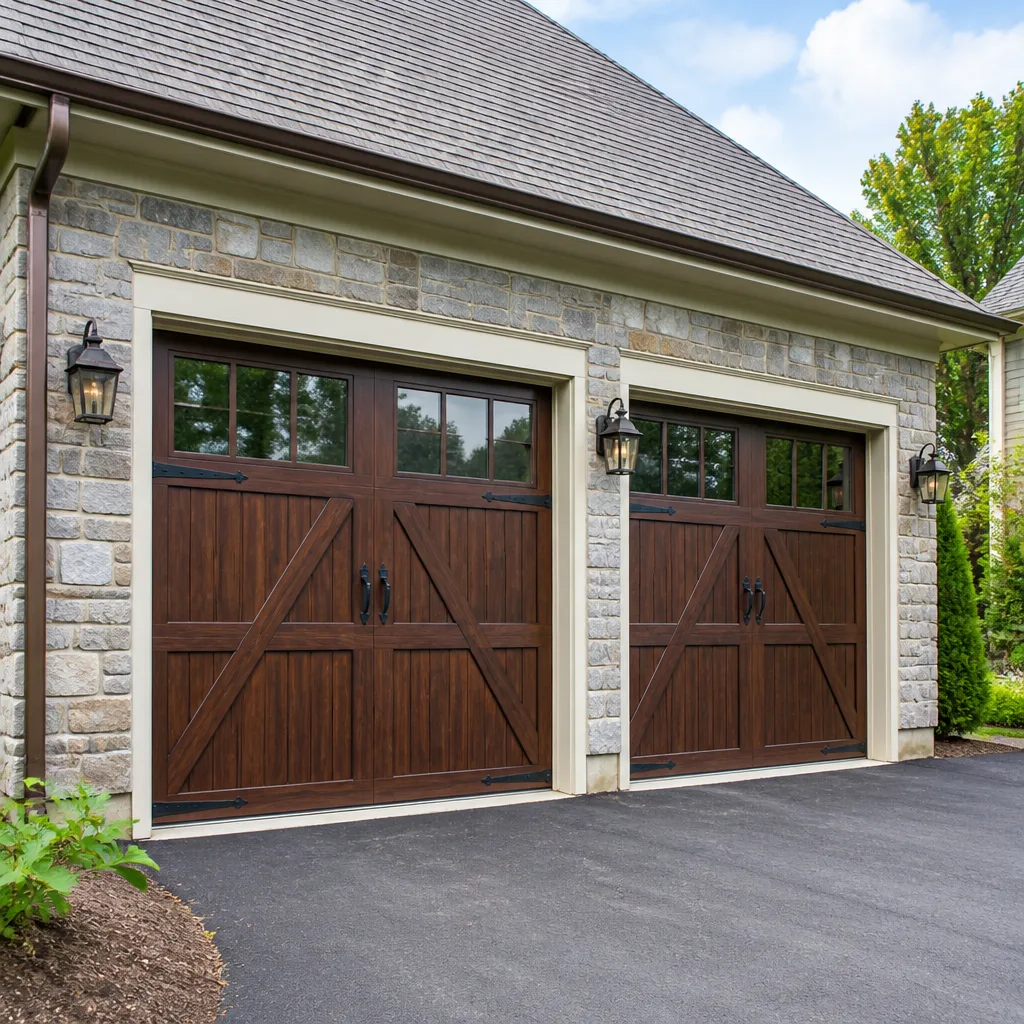 Carriage house
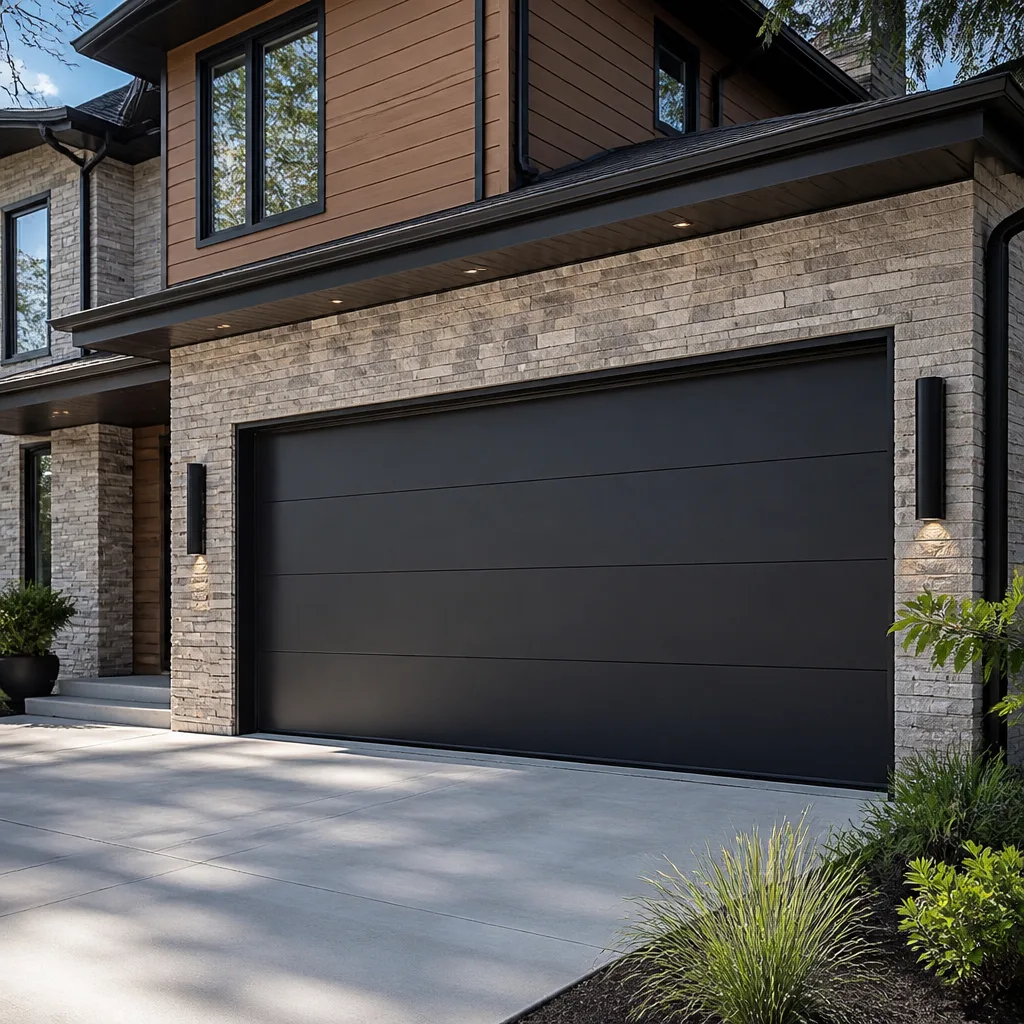 Modern flush
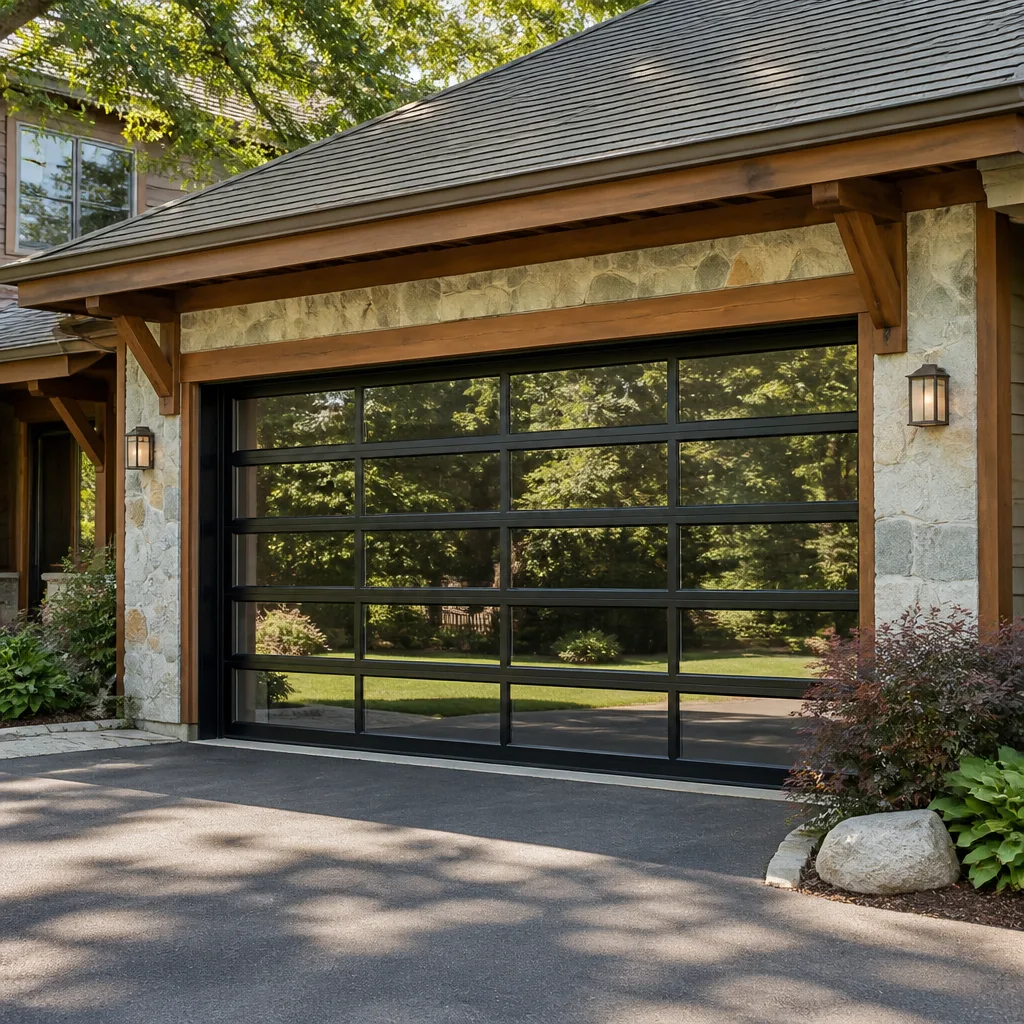 Full-view glass
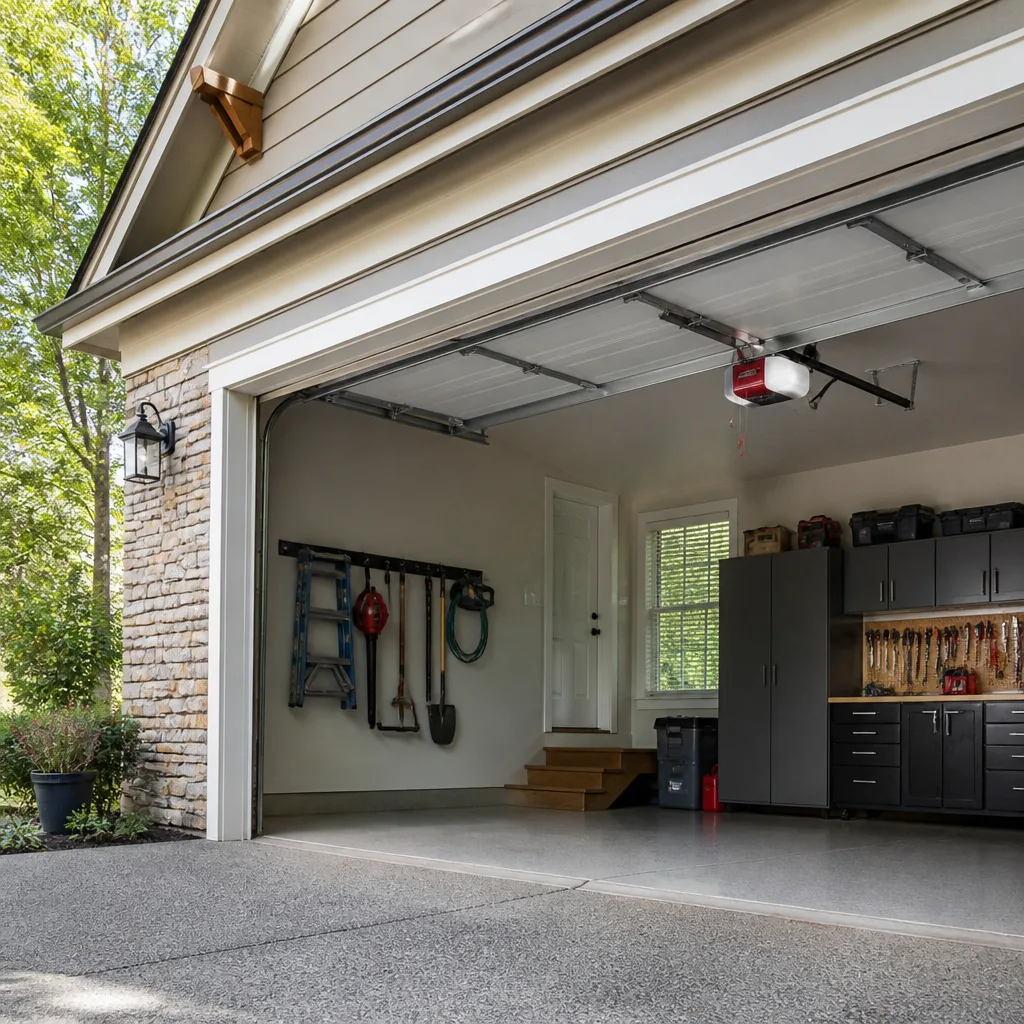 LiftMaster openers
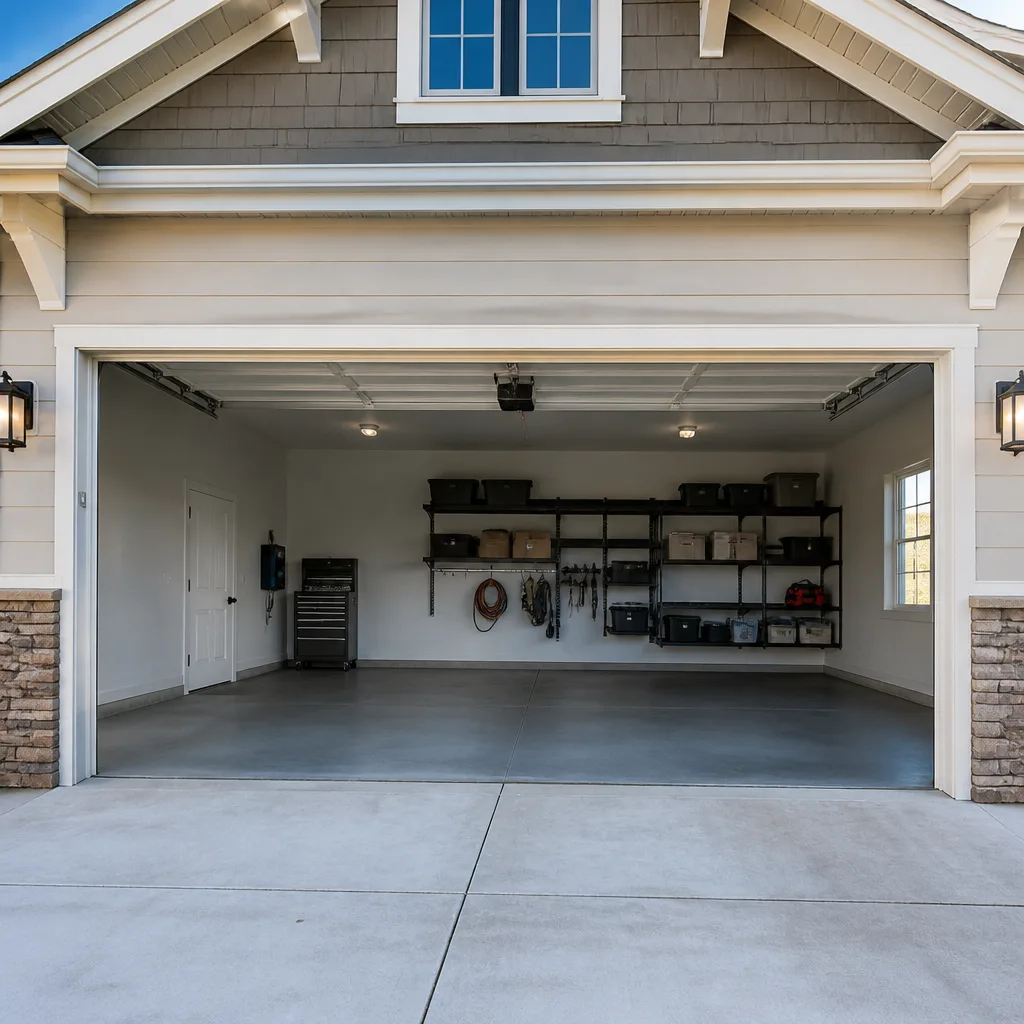 Chamberlain openers
Full 25-point door and opener safety check with every visit - springs, cables, rollers, tracks, and your LiftMaster or Chamberlain opener included
You get a price before we start. It does not change when the pro arrives.
Get your free estimateGarage Door Permits, Codes & Inspections in Palm Bay, FL: What You Need to Know
Replacing a garage door in Palm Bay with a “similar” model sounds straightforward until you learn that Brevard County requires a permit for most full-door replacements, and that the new door has to meet a specific wind pressure rating or it won’t pass inspection. That surprises a lot of homeowners. The door looks the same from the street, the opening hasn’t changed, so why would the county care? Because in Florida, a garage door is part of your home’s wind envelope, and the rules treat it that way. This guide walks through which projects in Palm Bay need a permit and which don’t, how wind ratings are decided for your address, what a Notice of Commencement is and when it applies, what inspectors actually check, and why skipping the paperwork can follow you to a home sale. We’ll keep it practical: what triggers a permit, what to ask your contractor, and where the real risks sit.
Quick Answer
In Palm Bay, most full garage door replacements require a Brevard County permit, and the new door must meet the wind-load requirements for your address. Simple repairs like spring, cable, roller or opener fixes generally don’t need a permit. Permit and code questions are best confirmed directly with the City of Palm Bay or Brevard County building department before work starts, since requirements can vary by address and door type.
Styles & brands we work with
- Raised-panel steel
- Carriage house
- Modern flush
- Full-view glass
- LiftMaster openers
- Chamberlain openers
Table of Contents
- Which Garage Door Projects in Palm Bay Need a Permit?
- Wind Ratings and Code Compliance at Your Palm Bay Address
- What Is a Notice of Commencement, and When Does It Apply?
- The Inspection Process for a New Garage Door in Brevard County
- Why Garage Door Inspections Fail (and How to Avoid It)
- How Unpermitted Work Affects Insurance and Home Sales in Florida
- Choosing a Garage Door Contractor Who Handles the Paperwork
- What to Check Before You Sign Anything
Which Garage Door Projects in Palm Bay Need a Permit?
The line between repair and replacement is where most confusion starts. In general terms, anything that keeps the existing door and opening in place is a repair. Anything that removes the door and installs a new one, or changes the opening, the tracks or the structural attachment, is closer to replacement and usually triggers a permit. That distinction matters in Palm Bay because Brevard County reviews replacements against wind-load requirements that don’t apply to a spring swap.
Here’s the practical breakdown we walk homeowners through:
- Usually no permit: spring replacement, cable replacement, roller replacement, hinge and bracket fixes, panel repair on an existing door, and opener repair or replacement on an existing door.
- Usually requires a permit: full door replacement, changing door size, changing door type (sectional to carriage style, for example), reinforcing or modifying the opening, and any work that touches the structural header or jambs.
- Depends on scope: changing from a manual door to an opener on a door never set up for one, or swapping a door of one weight class for a heavier one, since the springs and hardware change too.
We’ve seen homeowners assume that because the new door matches the old one, no permit is needed. That’s the single most common misread in Palm Bay. Like-for-like replacement can still require a permit because the county wants to confirm the new door carries a wind rating that meets the code for your location, and that the attachment details match the manufacturer’s instructions. The honest answer for any specific address is to call the building department and describe the job. They’ll tell you whether a permit applies before anyone touches the door.
Wind Ratings and Code Compliance at Your Palm Bay Address
Florida divides the state into wind zones, and the rules for your garage door flow from those zones. Some parts of Florida fall inside what’s called the High-Velocity Hurricane Zone (HVHZ), which carries the strictest requirements. Brevard County, as a whole, operates under the Florida Building Code with wind speed design criteria set by maps and address-specific data. That means the exact wind pressure a garage door must withstand in Palm Bay depends on where in the county you are, the exposure of the site, and how the door is anchored and reinforced.
What that looks like in practice:
- Every replacement door should come with manufacturer documentation showing its design pressure rating. You’ll want that paperwork for the permit and for your records.
- The rating has to meet or exceed what the code requires at your address. A door that passed in another county or another part of Brevard may not meet the requirement for your specific location.
- Reinforcement hardware matters as much as the door itself. Doors in wind-rated applications often use heavier hinges, additional struts, or specific anchor patterns that the manufacturer requires to achieve the rated performance.
- The installation has to follow the manufacturer’s published instructions. An inspector can ask to see that the door, hardware, and anchoring all match the documentation.
This is where brand matters less than documentation. A Craftsman or Raynor door from an older catalog may no longer be the model on the shelf, and the current version of the same style might have a different rating. You want the paperwork for the exact door going into your Palm Bay home. If your contractor can’t produce the manufacturer’s wind-load documentation before the permit is pulled, that’s a red flag worth paying attention to.
What Is a Notice of Commencement, and When Does It Apply?
A Notice of Commencement is a legal document recorded with the county that formally marks the start of a construction project. In Florida, it serves several purposes at once: it puts the public record on notice that work is beginning, and it establishes the framework for lien rights among the parties involved. For garage door work in Palm Bay, if a permit is required and the job meets the threshold set by state law, a Notice of Commencement typically needs to be recorded before the work begins.
When it applies:
- Any permitted garage door replacement where the project value exceeds the threshold set in Florida statute.
- Jobs where the homeowner wants clean lien protection under Florida law.
When it usually doesn’t:
- Simple repairs that don’t require a permit.
- Small jobs below the statutory threshold.
Here’s the part most homeowners miss: the Notice of Commencement is typically the homeowner’s responsibility to record, and the contractor can’t always do it on your behalf. A good contractor will tell you it’s needed, walk you through the form, and remind you to get it recorded before the crew arrives. If they skip it, the consequences can be significant. In Florida, lien protections get murky without a properly recorded Notice of Commencement, and a subcontractor or supplier working on your door could file a lien against your property even after you’ve paid your general contractor in full. That’s an unpleasant surprise at closing time.
Ask two direct questions before the job starts: does this project require a Notice of Commencement, and who’s recording it? An answer of “don’t worry about it” is not the answer you want.
The Inspection Process for a New Garage Door in Brevard County
For a permitted garage door installation in Brevard County, an inspector from the local building authority will come out to review the finished work. The inspection is usually scheduled after the door is installed and before it’s used as a finished product, so the contractor should be on site or available by phone when the inspector arrives. In our experience, a well-prepared job passes on the first try, and a rushed job often doesn’t.
Here’s what the inspection typically covers, in roughly the order it happens:
- Permit and paperwork check. The inspector confirms the permit matches the job and that the door’s product approval or wind-load documentation is available on site or on file.
- Door and hardware verification. The door model, reinforcement hardware, and anchoring are checked against the manufacturer’s installation instructions and the approved submittal.
- Physical attachment review. The inspector looks at how the door is fastened to the structure: bracket types, anchor spacing, and how the tracks are secured.
- Balance and operation. The door should open and close smoothly, sit level, and reverse or stop as required by its safety features. A door that drags or reverses poorly at an inspection is a sign the installation or spring tension isn’t right.
- Label and documentation check. The door’s product label, manufacturer’s paperwork, and any required warning labels should be visible and legible.
In our experience, most failures come down to two things: paperwork that wasn’t ready when the inspector arrived, and hardware that didn’t match what the submittal said would be there. That’s why we walk every Palm Bay customer through the documentation before the install day, not after. The door is the visible product, but the paperwork is what proves the door is code-compliant.
Why Garage Door Inspections Fail (and How to Avoid It)
Most inspection rejections we hear about follow a short list of familiar problems. None of them are catastrophic, but each one costs time and another inspection round. Knowing them ahead of time is the simplest way to keep the schedule tight.
- Missing or mismatched product approval. The door installed doesn’t match the door on the permit, or the wind-load documentation can’t be located. The fix is to confirm the exact model before the paperwork is submitted.
- Wrong reinforcement hardware. A door rated for a certain design pressure with a specific strut pattern gets installed with a common strut instead. The fix is to install the hardware the manufacturer’s instructions call for, not a generic substitute.
- Anchor pattern doesn’t match the submittal. The crew used a standard spacing when the wind-rated door called for something different. The fix is to follow the manufacturer’s table for the specific application.
- Balance or safety reverse issues. The door doesn’t reverse properly on contact or drags on the tracks. The fix is to adjust spring tension and travel limits before the inspection, not after.
- Paperwork not on site. The inspector arrives and nobody has the product data sheet, permit, or installation instructions. The fix is to have a folder ready at the job site.
- Notice of Commencement not recorded. The job is done but the notice wasn’t filed. The fix is to record it before any work starts, not at the end.
For Palm Bay specifically, we also see doors installed with fasteners meant for a different wall assembly. Brevard County homes vary in construction, and what works on one block doesn’t automatically work on the next. Ask your contractor how they’re confirming the anchor type against the substrate at your address. If they’ve never thought about that question, you’ve learned something useful.
How Unpermitted Work Affects Insurance and Home Sales in Florida
Florida home sales involve a specific set of disclosures, and unpermitted work is one of the fastest ways to complicate a closing. When a garage door replacement wasn’t permitted, a buyer’s inspector can flag it, the title process can stall, and the fix is not always cheap. Sometimes the door is fine, and the paperwork simply needs to be retroactively applied for. Other times the door’s wind rating doesn’t meet code, and the whole door has to come out and go back in with the right product.
On the insurance side, the risk runs deeper than a paperwork headache. Florida insurers ask about wind mitigation and the features of the home that contribute to wind resistance. An unpermitted garage door replacement sits in an awkward spot: the door may perform fine, but without permit documentation, there’s no paper trail proving the door meets the wind criteria for the address. If a claim ever arises, that gap can complicate the process and give the insurer a reason to ask questions.
What homeowners can do about it:
- Keep the permit, product approval, and inspection sign-off in your home records alongside your wind mitigation documentation.
- If you’re buying a Palm Bay home, ask the seller for garage door permit records, not just receipts.
- If a door was replaced without a permit, talk to the local building department about how to bring it into compliance before listing or making a claim.
This is the piece of the puzzle that gets the least attention before a job starts and the most attention when a home goes on the market. Pulling a permit up front is cheaper and simpler than fixing the paperwork later.
Choosing a Garage Door Contractor Who Handles the Paperwork
Picking a contractor comes down to more than the price on the estimate. On a permitted job, the right questions separate a specialist from someone guessing at the process. In Palm Bay, garage doors are what we do, which means we see the county’s expectations on every replacement. The questions below are the same ones we’d want asked of us.
- Do you pull the permit, or do I? On most replacement jobs, the contractor pulls the permit as part of the project. Make sure that’s in writing.
- What’s the design pressure rating on the door you’re proposing, and how does it compare to what’s required at my address? A contractor who can answer this quickly has done the work before.
- Can I see the manufacturer’s wind-load documentation before I sign? It should be available up front, not after the door arrives.
- Will you walk me through the Notice of Commencement? The right answer includes how it’s recorded and when.
- Who’s on site for the inspection? The answer should be the contractor or a technician familiar with the install, not a phone call from another county.
- What happens if the inspection fails? A straight answer here tells you whether the contractor owns the outcome or leaves it with you.
For repair work, the questions are different. A spring or opener failure is usually quick. That’s why we offer garage door spring repair as a dedicated service, and why our technicians handle garage door opener repair on the major platforms, including LiftMaster and Chamberlain. Repairs of that kind don’t involve permits, but they do involve a risk: garage door springs sit under extreme tension, and a DIY attempt with the wrong tools can cause serious injury. This is not a job to take on yourself. Any technician who works on springs should be experienced with the specific system, and we treat that as a baseline, not a selling point.
We work on your brand across the major names: LiftMaster, Chamberlain, Genie, Clopay, Amarr, Wayne Dalton, Craftsman, and Raynor. Our technicians have up to 13 years of experience, and we provide garage door repair across Palm Bay. Same door, fixed right, and a permit handled properly when the job calls for one.
What to Check Before You Sign Anything
Before a replacement contract gets signed in Palm Bay, there are a handful of documents and details worth verifying. None of them are exotic, and the right contractor will have them ready. Think of this as the pre-flight check.
- Written scope. The estimate should state the door model, the hardware package, and whether the permit is included.
- Wind-load documentation. Ask for the manufacturer’s product approval showing the design pressure rating.
- Permit responsibility. In writing, who pulls it and who coordinates the inspection.
- Notice of Commencement. Confirmation that it will be recorded if the job meets the threshold, and who is doing it.
- Inspection responsibility. Who is on site for the inspection and who owns a failed re-inspection.
- Price in writing. The written estimate sets the final price for the work described, with no surprises at the end.
- Warranty details. Manufacturer warranty on the door, and what the installer covers on labor.
A free measure and a written price are the two things we push for on every Palm Bay installation. The measure comes first because the opening, the substrate, and the required wind rating all factor into the estimate. The written price comes second so there’s no “we’ll figure it out on the day.” For a repair, the process moves faster, but the principle is the same: price quoted and agreed before work starts.
Common Mistakes to Avoid
- Assuming a like-for-like replacement skips the permit. It usually doesn’t in Brevard County. The new door still has to meet wind-load requirements for your address.
- Skipping the Notice of Commencement because the contractor said so. In Florida, this document protects the homeowner, and skipping it can leave you exposed to liens from suppliers or subs.
- Accepting a door without wind-load paperwork. A door without documentation can’t prove code compliance and can complicate insurance and closing down the road.
- Hiring a general handyman for a structural attachment. If the door is being swapped or the opening is being changed, the work falls in the garage door trade, not general repair.
- Ignoring the wall assembly question. Palm Bay homes vary in construction, and the anchor pattern that works on one home doesn’t automatically work on the next.
- Letting the inspection be the contractor’s problem alone. A scheduled inspection that no one is on site for is a wasted trip. Ask who’s showing up.
- Assuming the door is done because it opens and closes. The inspection and documentation close out the job, not the first cycle of the opener.
See the difference
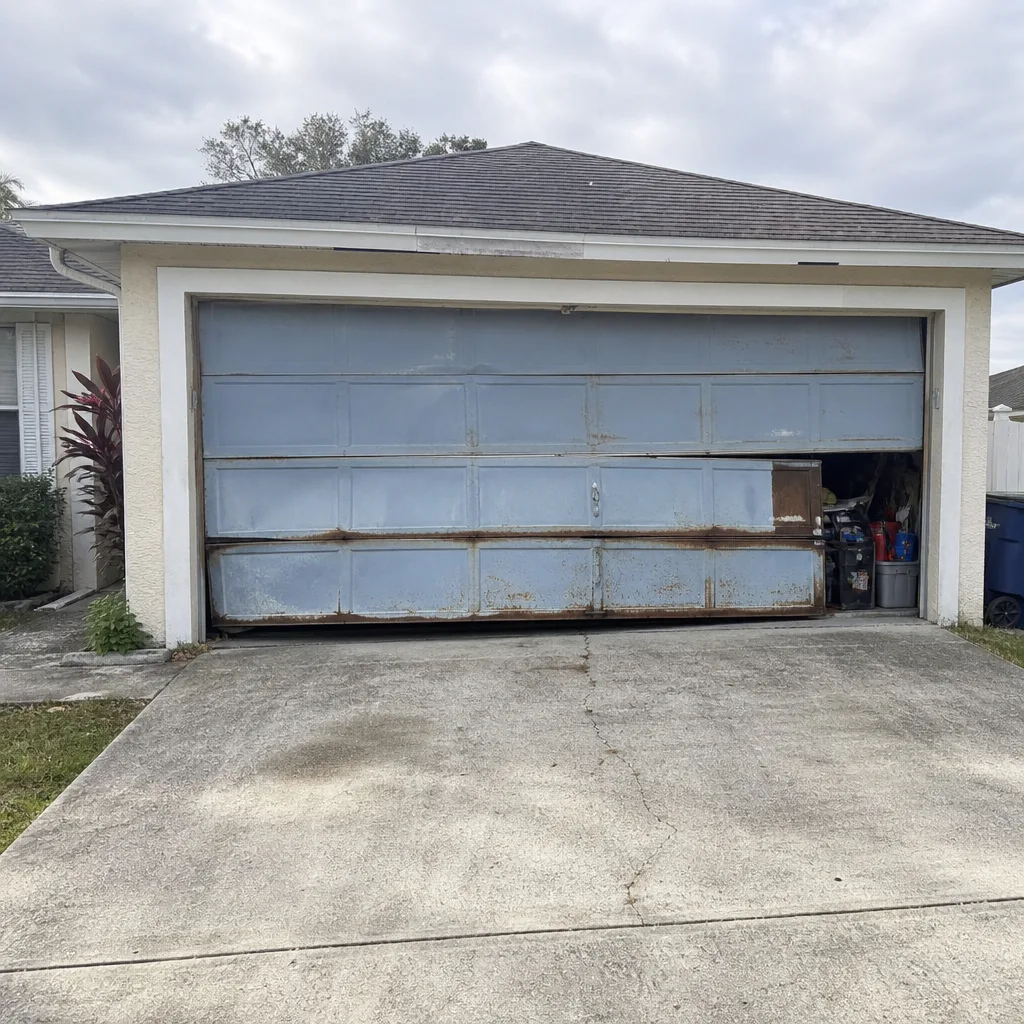 Before
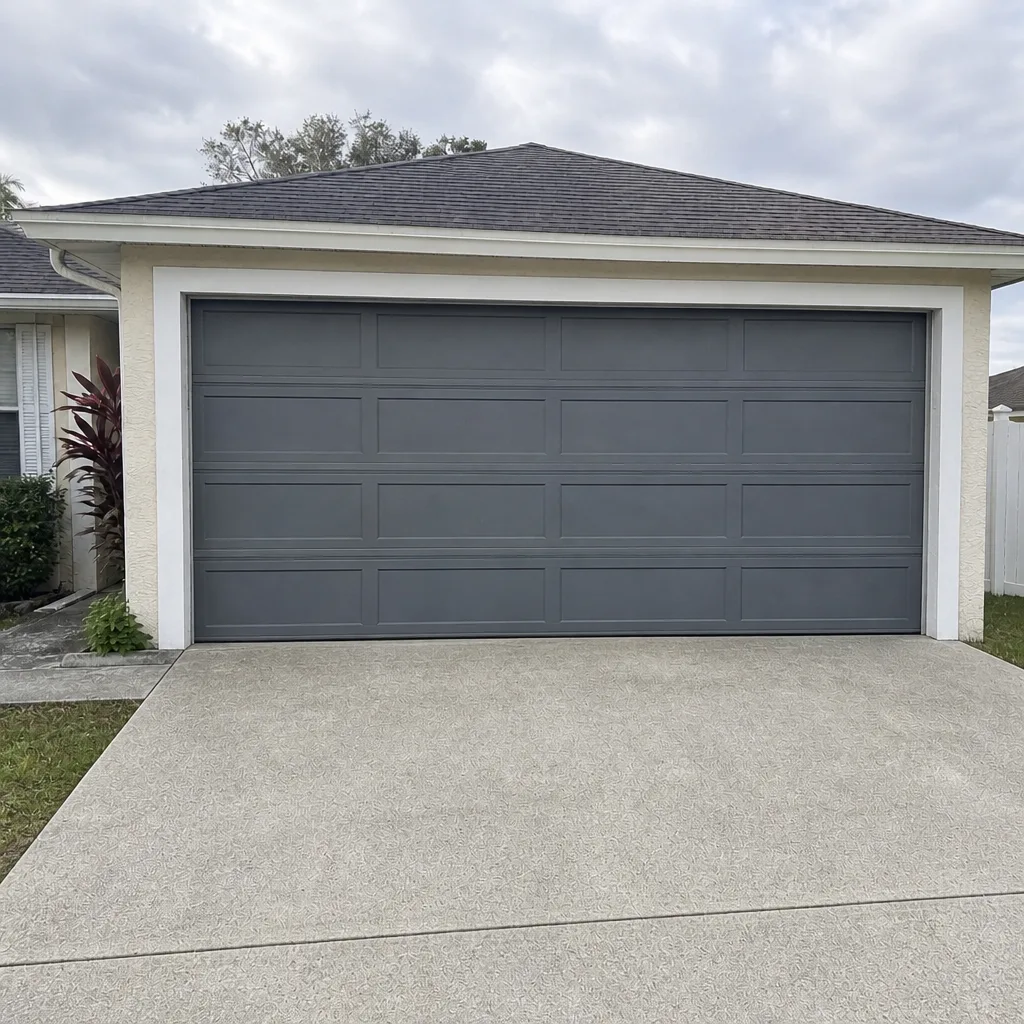 After
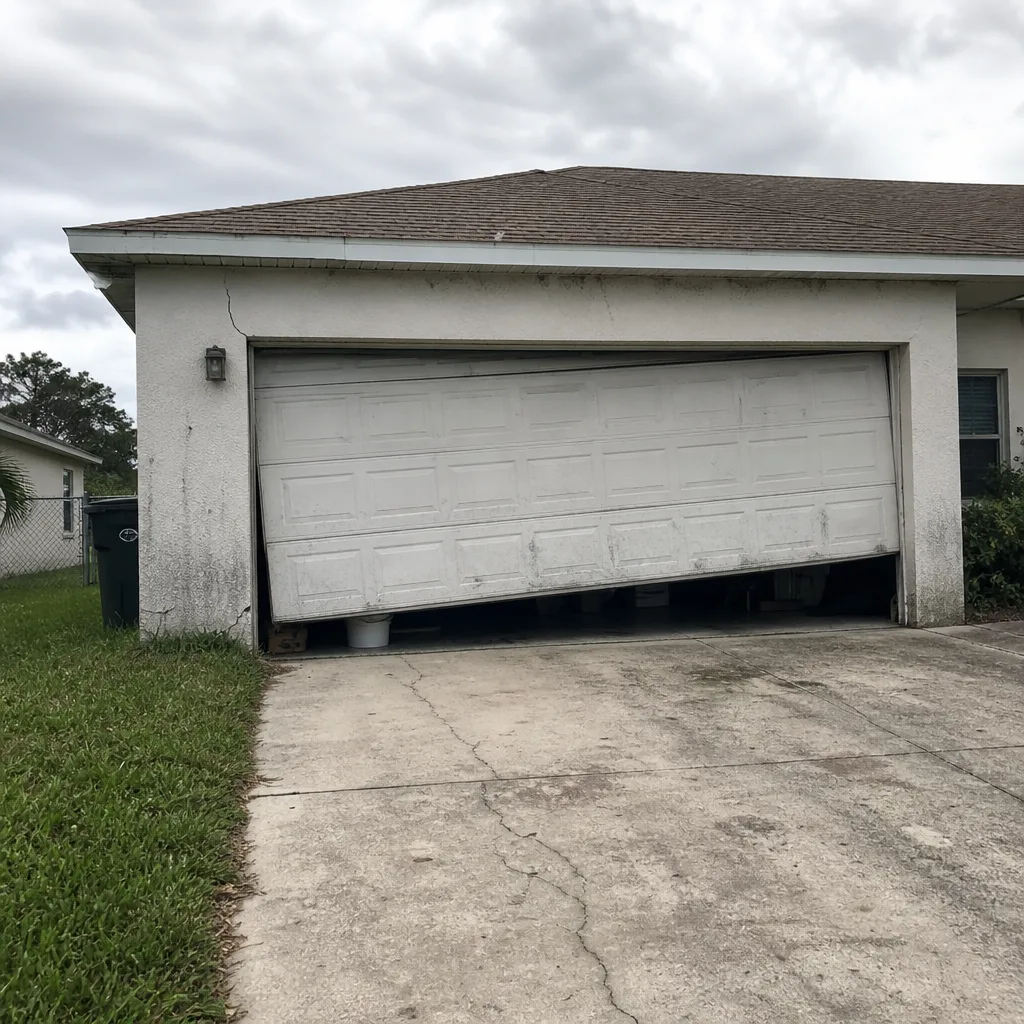 Before
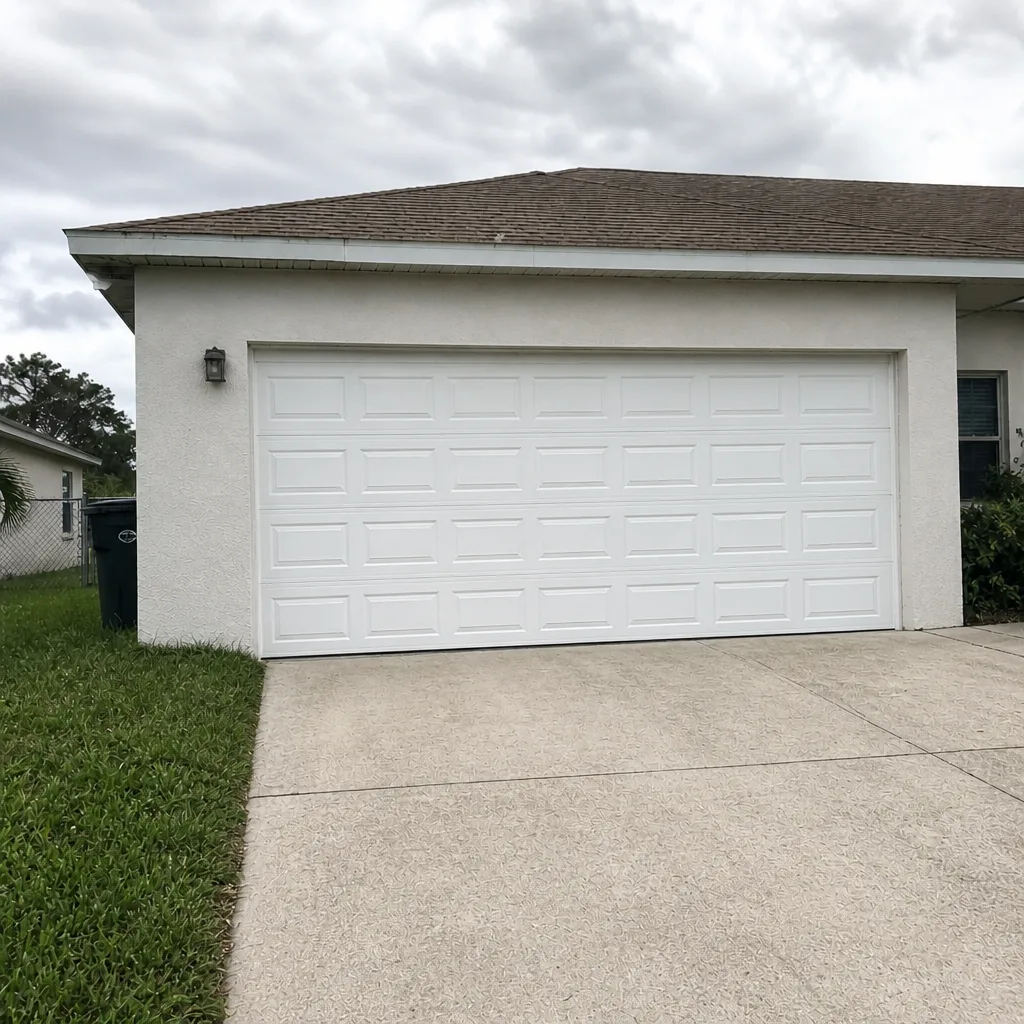 After
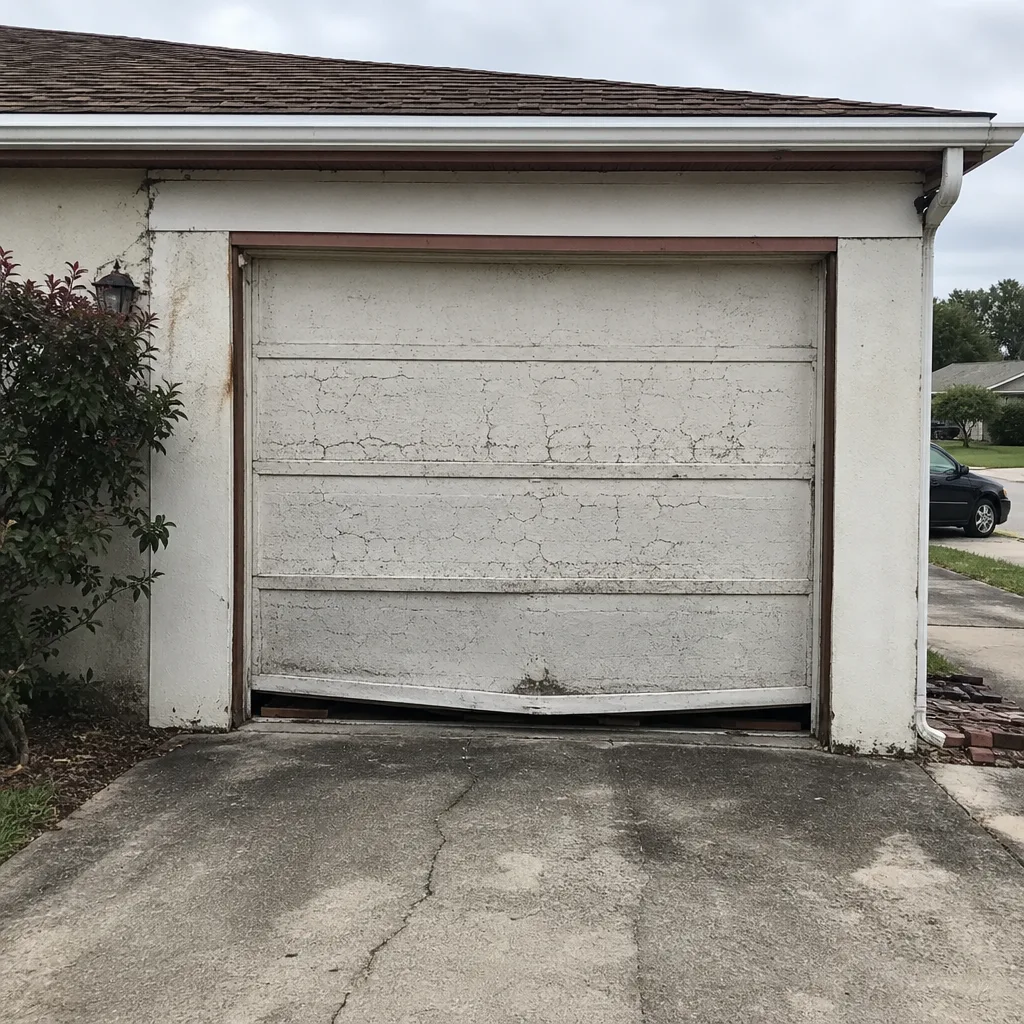 Before
 After
When to Call a Professional
Call a garage door professional when the door is being replaced, when the opening or attachment is being modified, when a spring or cable has failed, when the opener won’t move the door or won’t stop moving it, or when a door is stuck open and the house is unsecured. Springs sit under extreme tension, and the wrong move can cause serious injury; that’s work for a trained technician, not a weekend project. Call us when you’re planning a replacement and want the permit, the wind-load documentation, and the inspection handled side by side. Palm Bay Garage Door Repair Co offers free estimates in Palm Bay, and our technicians have up to 13 years of experience across Craftsman, Raynor, LiftMaster, Chamberlain and the other major brands. Call (833) 762-4168. We answer 24/7. Fast dispatch from 7am to 7pm, Sunday through Friday.
Frequently Asked Questions
In most cases, yes. Brevard County requires a permit for full garage door replacements in Palm Bay, and the replacement door must meet the wind-load requirement for your address. Simple repairs like spring, cable or opener fixes generally don’t need a permit. Confirm the specifics with the local building department before work begins, since requirements vary by address and door type. Call (833) 762-4168 if you want to talk through your project before scheduling.
No. Spring, cable, roller and opener repairs on an existing door are generally treated as repairs and don’t require a permit. What they do require is experience, because garage door springs sit under high tension and a mistake can cause serious injury. Our team handles garage door spring repair as a dedicated service, and the price is quoted and agreed before any work starts. Call (833) 762-4168 for a free estimate.
A Notice of Commencement is a document recorded with the county that marks the formal start of a construction project and protects lien rights under Florida law. For a permitted garage door replacement that exceeds the statutory threshold, it usually needs to be recorded before work begins, and it’s often the homeowner’s responsibility to file it. Ask your contractor to walk you through it before the install date. If your contractor dodges the question, call us at (833) 762-4168 for a straight answer.
It can. Florida insurers ask about wind mitigation and the features that contribute to a home’s wind resistance, and an unpermitted garage door replacement leaves a gap in the paper trail proving the door meets code. If a claim arises, that gap can complicate the process. The clean fix is to pull the permit at the time of installation and keep the inspection sign-off with your home records. For an estimate on a properly permitted replacement in Palm Bay, call (833) 762-4168.
The inspector checks the permit and product documentation against the installed door, verifies the reinforcement hardware and anchor pattern match the manufacturer’s instructions, and confirms the door is balanced and its safety reverse works properly. Missing paperwork is the most common reason for a failed inspection, followed by hardware that doesn’t match the submittal. A contractor who prepares the documentation before the install day is a contractor who passes on the first try. Call (833) 762-4168 to schedule a free measure and written price.
Yes, but changing the door size, type or opening usually means a permit, structural review, and confirmation that the new door meets wind-load requirements for your address. A style change from sectional to carriage door, for example, can require different hardware and a new submittal. This isn’t a same-day job; it’s a measure, order and schedule process. For a free measure and written price on a Palm Bay replacement, call (833) 762-4168.
The Bottom Line
In Palm Bay, the garage door rules come down to a simple idea: the door is part of your home’s wind envelope, and the county treats it that way. Most full-door replacements need a Brevard County permit, and the new door has to meet the wind-load requirement for your address, even when it’s a like-for-like swap. Simple repairs usually don’t need a permit, but the work still calls for a trained technician. The Notice of Commencement, the product documentation, and the inspection sign-off are all part of the job, and skipping any of them can follow you to an insurance claim or a home sale. Get those pieces right before the work starts, and the rest of the project is straightforward. Call (833) 762-4168 for a free estimate on your Palm Bay garage door project.
If your opener is the problem rather than the door, we also handle garage door opener repair across the major platforms, including LiftMaster and Chamberlain. And if you’re still sorting out which service you need, the team at Palm Bay Garage Door Repair Co is glad to point you in the right direction.
Written by the team at Palm Bay Garage Door Repair Co.