
Last updated November 21, 2026
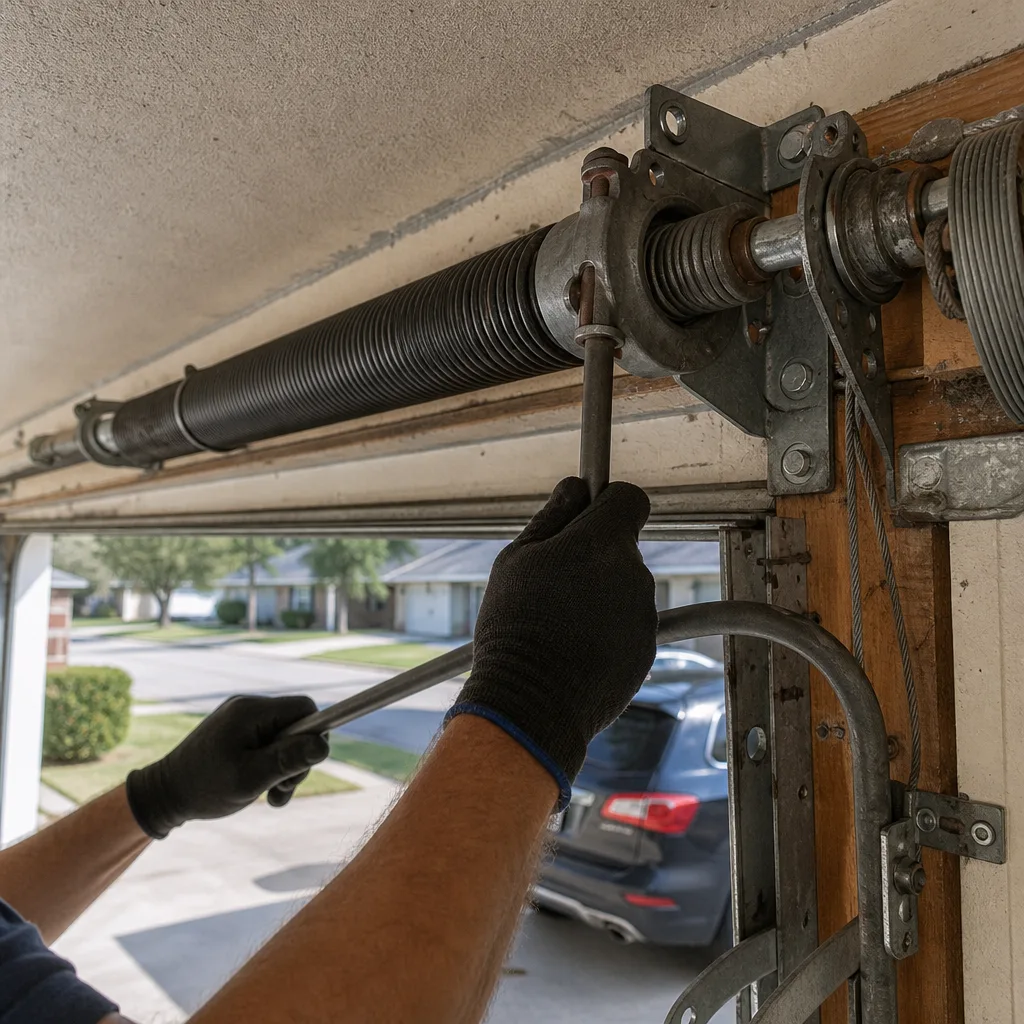
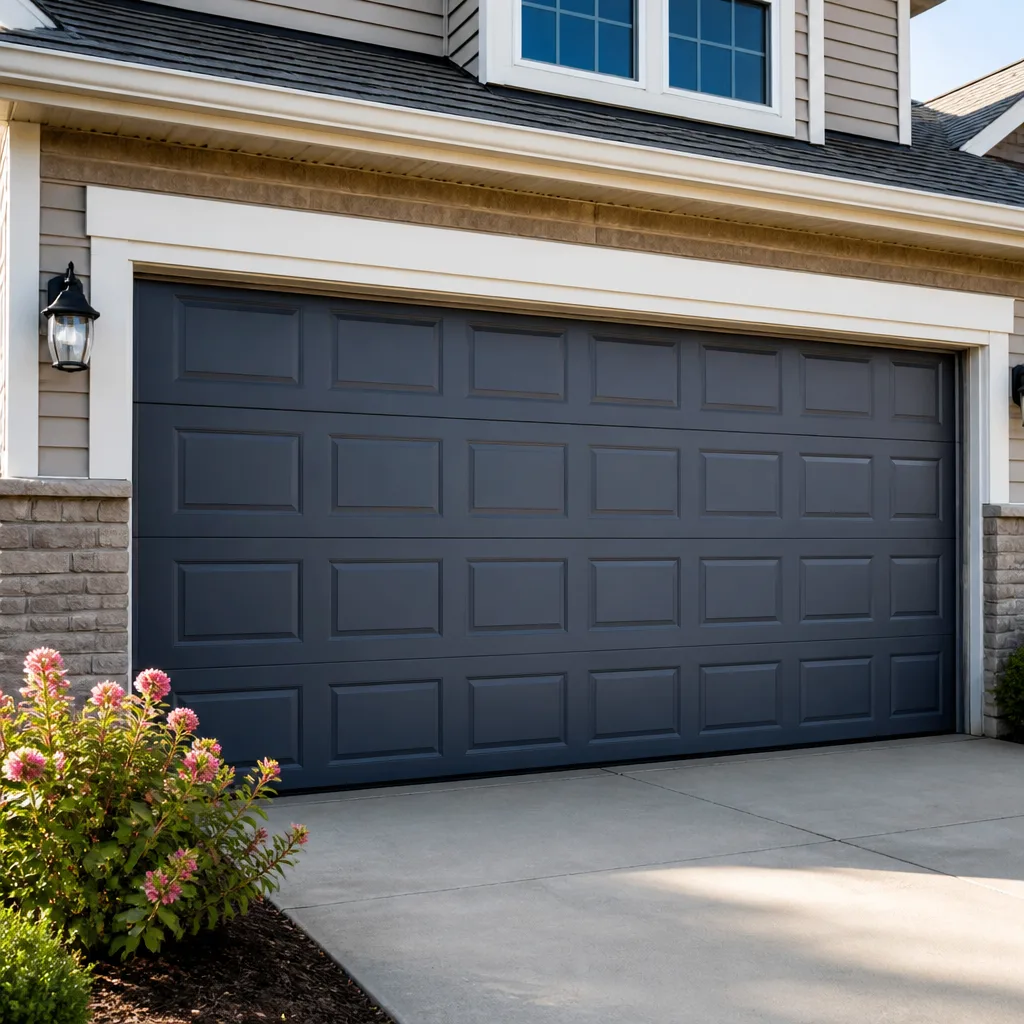 Raised-panel steel
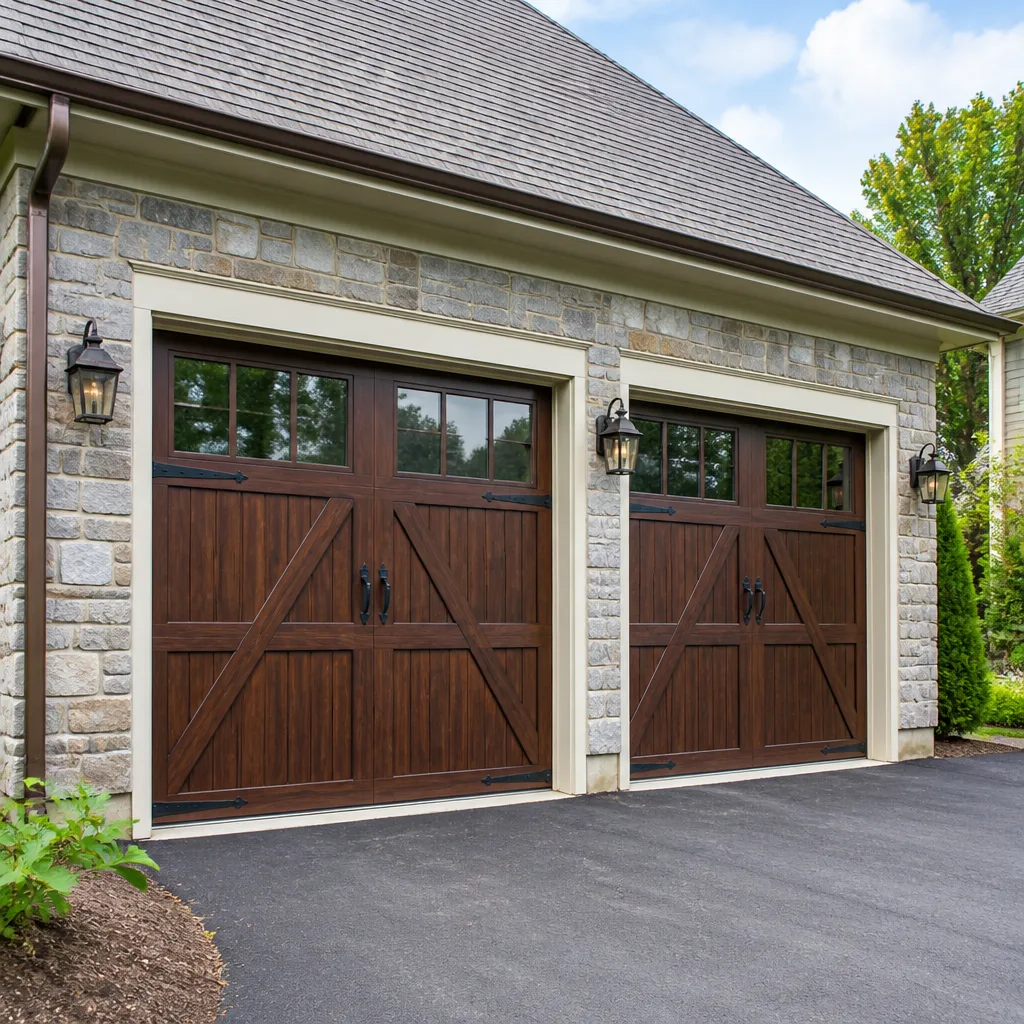 Carriage house
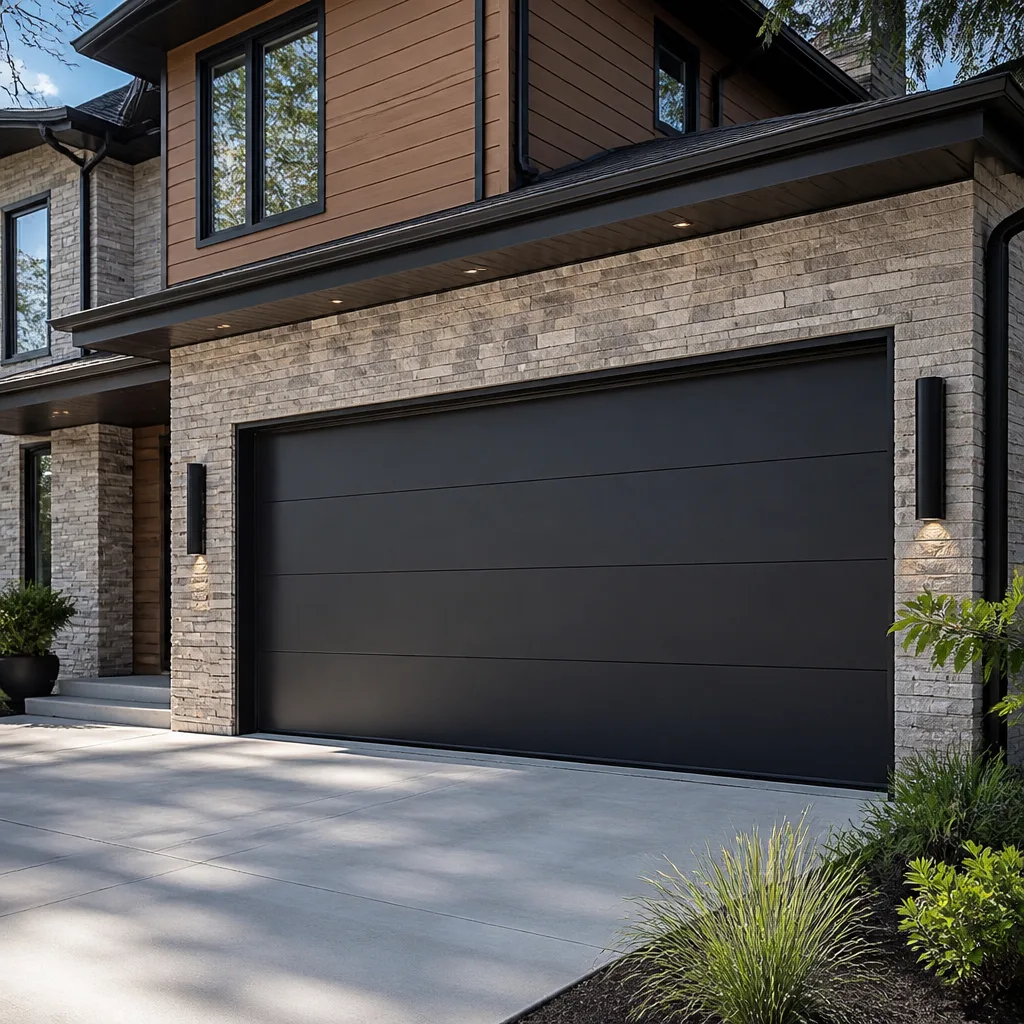 Modern flush
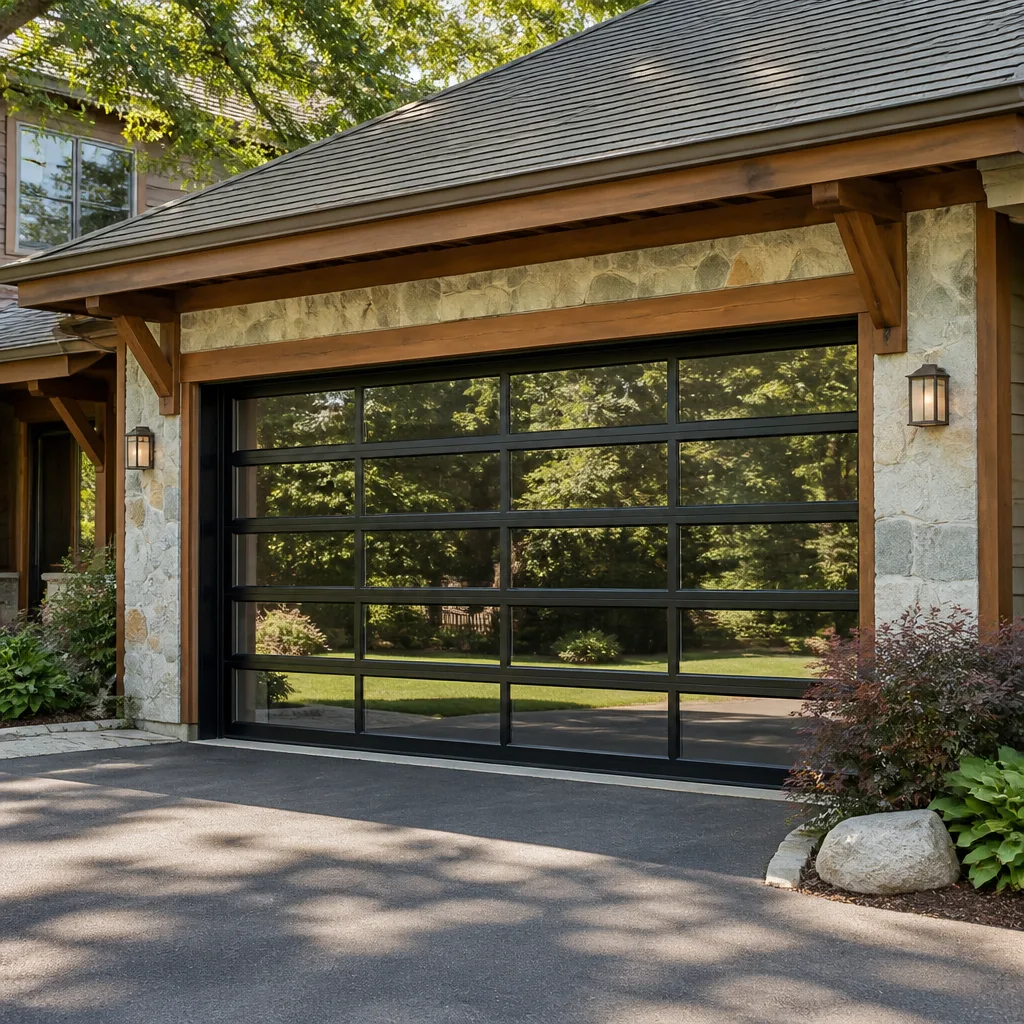 Full-view glass
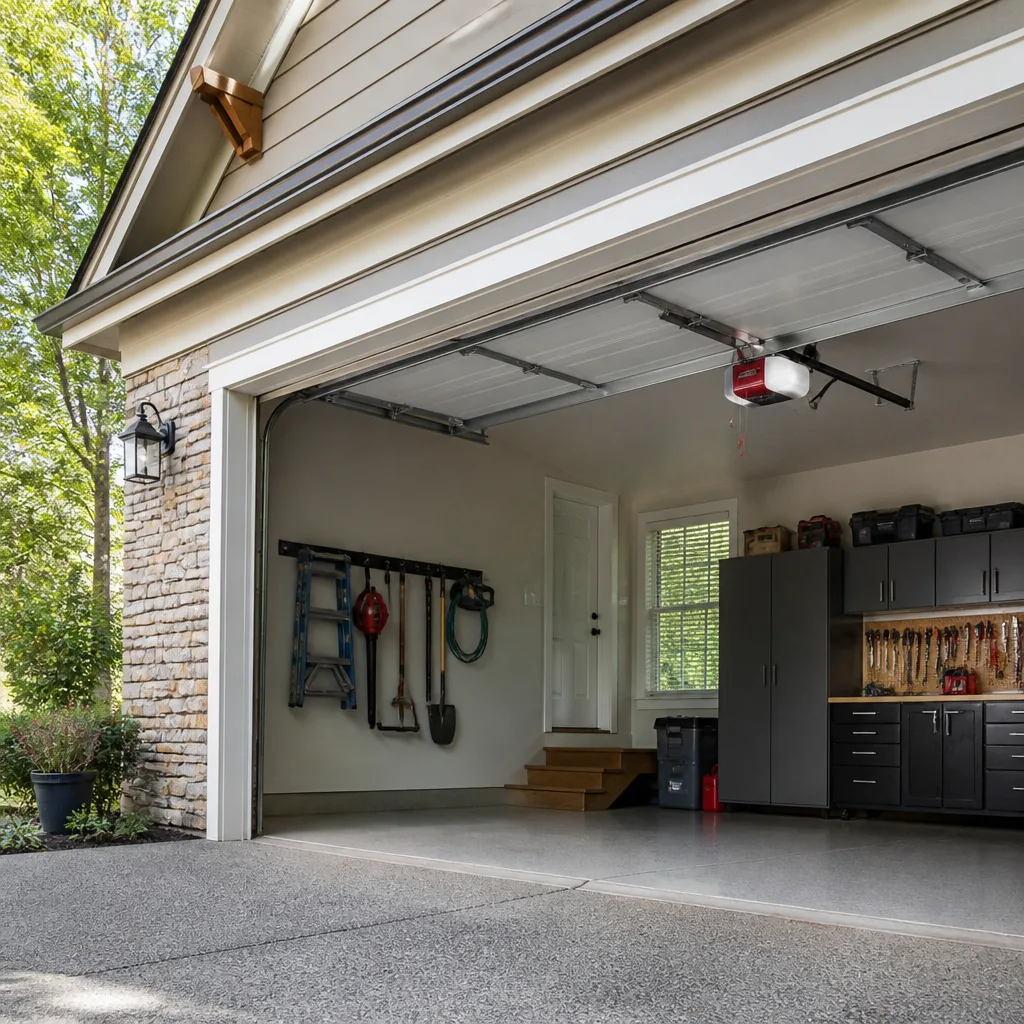 LiftMaster openers
 Chamberlain openers
Full 25-point door and opener safety check with every visit - springs, cables, rollers, tracks, and your LiftMaster or Chamberlain opener included
You get a price before we start. It does not change when the pro arrives.
Get your free estimateSeasonal Garage Door Care for Palm Bay: Year-Round Homeowner’s Guide
Most garage door maintenance calendars were written somewhere with a real winter. They tell you to prep in fall, recover in spring, and coast the rest of the year. If you follow that advice in Palm Bay, you’re working off a schedule built for a climate a thousand miles north of Brevard County, and your door is spending the months that actually stress it with no attention at all. The truth is that Palm Bay doesn’t hand you four tidy seasons. It hands you four maintenance windows: hurricane prep, post-storm recovery, dry-season contraction, and the long humidity stretch of summer. Each one loads a different part of your door. This guide walks through all four, in order, so you know what to check, when to check it, and when to stop and call someone.
Quick Answer
Garage door care in Palm Bay works best on four windows rather than four seasons: pre-hurricane checks in May, a post-storm inspection after any named storm or severe thunderstorm, dry-season tension and hardware checks from November through March, and a heavier lubrication routine from June through September. Two tasks belong on the calendar once a year no matter what: a cable inspection before rainy season and a battery backup test on the opener before hurricane season. Everything else is inspection and adjustment you can do yourself, plus the spring work that should always go to a trained technician.
Styles & brands we work with
- Raised-panel steel
- Carriage house
- Modern flush
- Full-view glass
- LiftMaster openers
- Chamberlain openers
Table of Contents
- Why Standard Seasonal Advice Doesn’t Fit Palm Bay
- The May Checklist: Getting Ready Before Hurricane Season
- Post-Storm Recovery: What to Inspect After a Named Storm
- Dry Season, November Through March: Metal Contracts, Springs Change
- Summer Humidity Protocol: June Through September
- The Two Annual Tasks With Palm Bay Timing
- A Neighborhood-by-Neighborhood Look at What Fails
- Common Mistakes to Avoid
Why Standard Seasonal Advice Doesn’t Fit Palm Bay
The seasonal guide you find on most garage door websites assumes a cold winter. It tells you to clear snow from the bottom seal, watch for ice in the tracks, and expect the door to strain in freezing temperatures. None of that applies here. What applies instead is heat, salt-free humidity, and storms that arrive with little warning and leave pressure changes behind them.
Palm Bay sits in a stretch of Florida where the real stress on a garage door runs from May through October, not December through February. That’s when humidity sits high for weeks, when afternoon thunderstorms roll through most days, and when the hurricane window is open. The cooler months aren’t a rest period so much as a contraction period: metal panels, tracks, and springs all shrink slightly as temperatures drop, and a door that ran quietly in August can start rattling or binding by January.
This matters because garage door failures rarely happen out of nowhere. They build. A torsion spring that’s been slowly losing tension through a dry winter snaps in July when the door is working hardest. A track that shifted two millimeters during a storm starts wearing the rollers unevenly, and six months later the door is jumping the track entirely. The four-window approach is about catching those slow problems while they’re still cheap to fix.
If you’re new to the area, or you’ve just bought a home with a door of unknown age, it’s worth a baseline look before you build a routine: garage door repair is often the fastest way to learn what shape your system is actually in.
The May Checklist: Getting Ready Before Hurricane Season
May is the month that matters most in Palm Bay. Hurricane season opens June 1, and the work you do in the four weeks before it either sets your door up to ride out a storm or leaves it as the weakest opening in your house. This checklist is the one we’d run on any door in the area.
- Find your door’s wind-load rating. Check the label on the door panel or the paperwork that came with the house. A garage door rated for a lower wind speed than your area requires is a problem you want to know about in May, not in August. If you can’t find a rating, that’s your answer: assume nothing and have it checked.
- Test the manual release. Pull the red handle to disconnect the opener, then lift the door by hand. It should move smoothly and stay where you put it. If it drops or feels heavy, the spring or cable is already compromised, and a storm isn’t the time to discover that.
- Reconnect and watch the door close. A door that closes with a visible gap at one corner has a track or alignment issue that pressure changes will only make worse.
- Inspect the weatherstripping. The bottom seal and the perimeter seal are what keep wind-driven rain out. Run your hand along the bottom edge. Cracks, flattening, or sections that peel away from the frame mean water is getting in during every storm, not just hurricanes.
- Test the opener’s battery backup. Unplug the opener from the wall and try the remote. If the door doesn’t move, the backup battery is dead or missing, and the door won’t work during a power outage, which is exactly when you need it to.
- Check the hardware you can reach safely. Hinges, brackets, and roller stems should be tight. Look for rust streaks, which point to water sitting where it shouldn’t.
Do all six and you’ve covered the failure points storms actually expose. If any of them turn up a real problem, that’s a good moment to get it handled rather than waiting. We work on the brands most Palm Bay homes already have installed, including Genie, Clopay, Wayne Dalton, and Amarr systems, so a pre-season inspection doesn’t turn into a hunt for parts that fit.
Post-Storm Recovery: What to Inspect After a Named Storm
A named storm doesn’t have to make landfall in Brevard County to leave your garage door out of alignment. Pressure changes alone can shift a track a fraction of an inch, and that’s enough to start wearing rollers unevenly. After any named storm or a severe thunderstorm that pushed through Palm Bay, walk out and look at the door before you hit the button.
Start with a visual pass from the ground:
- Are the vertical tracks still parallel and plumb? Look up the length of each one. If a track is bowing, the door will bind.
- Is the horizontal track still level where it turns back into the ceiling? Storm pressure and debris impact both shift these.
- Are there dents in the panels? A dented panel can still run, but it changes how the door sits against the frame, and that changes how the seal works.
- Is there debris lodged in the tracks? Small branches, leaves, and grit will chew up rollers fast.
- Does the bottom seal still sit flush across the threshold? If one end is lifting, the door is out of square.
Then test operation carefully. Stand clear and run the door through a full open-and-close cycle. Listen for grinding, popping, or a door that hesitates partway. Stop it immediately if anything sounds wrong; running a misaligned door is how a track problem becomes a panel replacement.
This is the point where water intrusion usually shows up too. If you see water pooled inside the garage after a storm, the seal or the threshold is the reason, and it’s worth fixing before the next one rather than after.
If a storm has left your door stuck open or off its tracks, that’s an emergency situation for two reasons: the door isn’t secure, and running it will cause more damage. When the door won’t move, we do. Call (833) 762-4168. We answer 24/7. Fast dispatch from 7am to 7pm, Sunday through Friday.
Dry Season, November Through March: Metal Contracts, Springs Change
Here’s the counterintuitive part. Palm Bay’s cooler months are when a lot of doors quietly go out of adjustment, and homeowners don’t connect the two. Metal contracts as temperatures drop. The steel in your tracks, panels, and springs shrinks slightly, and the tolerances that were tight in August loosen up. Springs that were under exact tension in July are carrying a different load by January.
You can’t safely adjust torsion springs yourself. That’s a job for a technician, full stop, and we’ll explain why in the safety section below. But there’s plenty you can watch for through the dry season:
- Sound. A door that clanks or bangs more than it used to is telling you the hardware has loosened. Cold-season contraction is usually the trigger.
- Balance. Disconnect the opener and lift the door halfway. It should hold there. If it drifts down, the spring tension has dropped.
- Roller condition. Cold makes worn rollers noisier. If the door is loud only in the cooler months, the rollers are probably the culprit rather than the spring.
- Track alignment. Run the door and watch the gap between the roller and the track edge. Any visible slop means the track has moved.
This is also the right season for a full inspection if you haven’t had one in a while. Dry months are the easiest time to schedule work because nothing is urgent, and it’s the best window to catch a problem before summer humidity and storm season put stress back on the door. If you’d rather have a technician go through the spring system properly, garage door spring repair is the dedicated service for exactly that.
Summer Humidity Protocol: June Through September
From June through September, Palm Bay runs humid almost continuously. That changes the maintenance math. Lubricant breaks down faster, metal surfaces stay damp longer, and anything that can corrode will start to. This is the season where a door needs attention more often, not less.
The single most useful thing you can do is keep the moving parts lubricated on a tighter schedule. Hinges, roller bearings, the spring coils, and the pivot points all benefit. In a drier climate once or twice a year is generous. In a Palm Bay summer, every few weeks is closer to what the conditions actually call for. Use a proper garage door lubricant rather than general-purpose oil, which attracts grit and dries into a sticky film that causes more wear than it prevents.
What’s highest risk during the humid stretch:
- Rollers. They take the most load and sit in the dampest part of the system. Worn nylon rollers crack; steel rollers seize.
- Hinges and brackets. Surface rust starts at the joints. Once rust sets in, the hinge stops moving freely, and the door starts straining.
- The bottom seal. Constant damp and ground contact break it down faster than anything else on the door. A failing seal lets water in, which is how the inside of the garage starts holding moisture.
- The opener’s logic board area. High heat and humidity in a garage are hard on electronics. If the opener starts behaving unpredictably in July, it’s usually not your imagination.
Opener problems tend to cluster in the summer for that reason. If the remote is flaky or the door reverses for no reason, garage door opener repair covers the electronics and the smart-home side of things, and it’s worth getting ahead of it rather than living with a button that only works sometimes. LiftMaster and Chamberlain systems both handle heat reasonably well, but they still need the battery and the safety sensors looked at once a year.
The Two Annual Tasks With Palm Bay Timing
Beyond the four windows, two tasks belong on your calendar every year, and both have a specific best time in Palm Bay rather than a generic “once a year” slot.
Cable Inspection Before Rainy Season
The lift cables are what actually hold the door’s weight, and they’re also the part that fails most dramatically. A cable with frayed strands or a kink will snap under load, and a door that loses a cable comes down hard. The right time to inspect is before rainy season, so an April or early May check catches wear while everything is still dry and easy to look at. Inspect for broken strands, rust, and any spot where the cable looks kinked or has jumped the drum. Don’t lubricate cables. Keep them dry and inspect them.
Opener Battery Backup Before Hurricane Season
The battery backup is the one part of your opener that exists solely for storm season, and it’s also the part nobody thinks about until the power is out and the door won’t budge. Test it in May by unplugging the opener and running the door on battery power. If it stalls or the door only lifts a foot, the battery is done. A missed test means the first time you find out the backup doesn’t work is during an outage, which is the worst possible time.
Both tasks take minutes to check and are easy to fold into your May list. If you’d rather a technician run the annual inspection once and cover everything at the same time, we handle the full system, from opener remote to panel replacement, and can check the batteries, cables, and balance in a single visit.
A Neighborhood-by-Neighborhood Look at What Fails
Palm Bay is a big, spread-out city, and the housing stock varies enough that the failure patterns aren’t identical across it. Here’s how the seasonal issues tend to show up in different parts of town.
Older Established Areas
In the more established neighborhoods, the doors are original or have had one replacement. That means more Genie and older LiftMaster openers still in service, and more doors where the original springs have already been through several tension cycles. In these homes, the dry-season contraction in winter tends to expose springs that were already close to failing. Cable inspection before rainy season matters most here.
Newer Builds and Recently Renovated Homes
Newer homes often have heavier insulated doors, typically Clopay or Amarr systems, which is a good thing for heat but means the springs carry more load and the opener works harder. In these homes the humidity window is where problems start: heavier doors put more demand on the rollers and hinges, and if the door isn’t well-sealed, the interior of the garage gets damp. Keep the lubrication schedule tight and the bottom seal in good shape.
Homes Near the Rivers and Low-Lying Areas
Properties closer to the rivers and low-lying spots around Palm Bay see more humidity and more standing water after heavy rain. Doors on these homes tend to have faster corrosion on hinges and brackets. If you’re in one of these areas, the humid-season lubrication schedule is worth following rather than skipping.
Wherever you are in Palm Bay, the core routine is the same. The differences are in which components get stressed first.
Common Mistakes to Avoid
- Following a northern maintenance calendar. If you’ve been prepping in fall and coasting in summer, you’ve got it backwards for Palm Bay. The heavy stress is May through October, not December through February.
- Testing the battery backup by assuming it works. An opener with a dead backup battery behaves identically to a working one until the power goes out. Unplug it and run the door at least once a year in May.
- Lubricating the tracks. This is the most common one. Tracks should stay dry. Lubricant in the tracks collects grit and makes the door bind. Lubricate the hinges, rollers, and springs; leave the tracks alone.
- Skipping the post-storm walk-around. A door that runs after a storm isn’t necessarily aligned. Track shifts don’t show up until the rollers have worn unevenly for months. A two-minute look saves a full repair.
- Trying to adjust a torsion spring. Springs are under enormous tension. We’ll say it plainly below, but it belongs on this list too. Never try to adjust, wind, or replace a spring yourself.
- Not noticing weatherstripping decay until the storm. The bottom seal wears out quietly. If you only check it after a storm has already let water in, you’re checking it too late.
- Ignoring a door that’s louder in winter. Noise in the dry season usually means the hardware has loosened from contraction. Waiting for summer, when the door is under more stress, is how a small adjustment turns into a repair.
See the difference
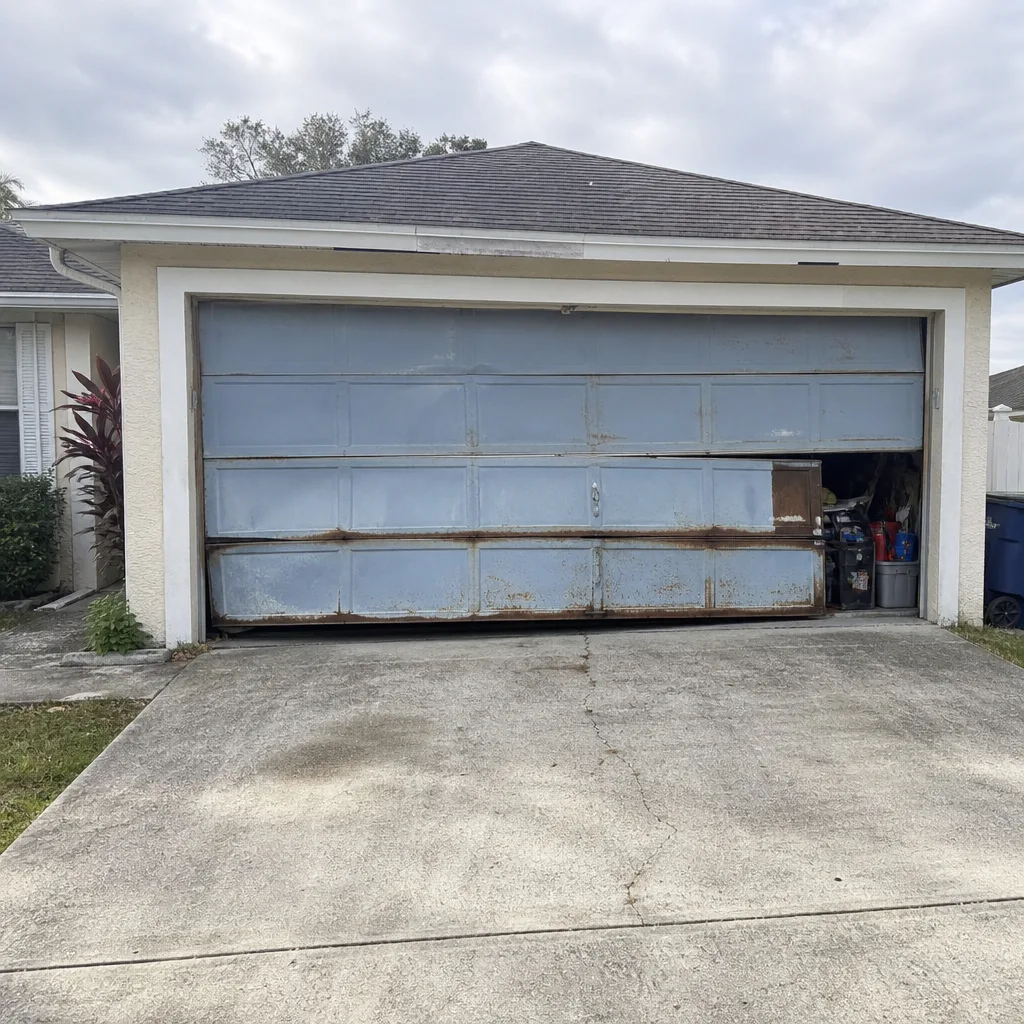 Before
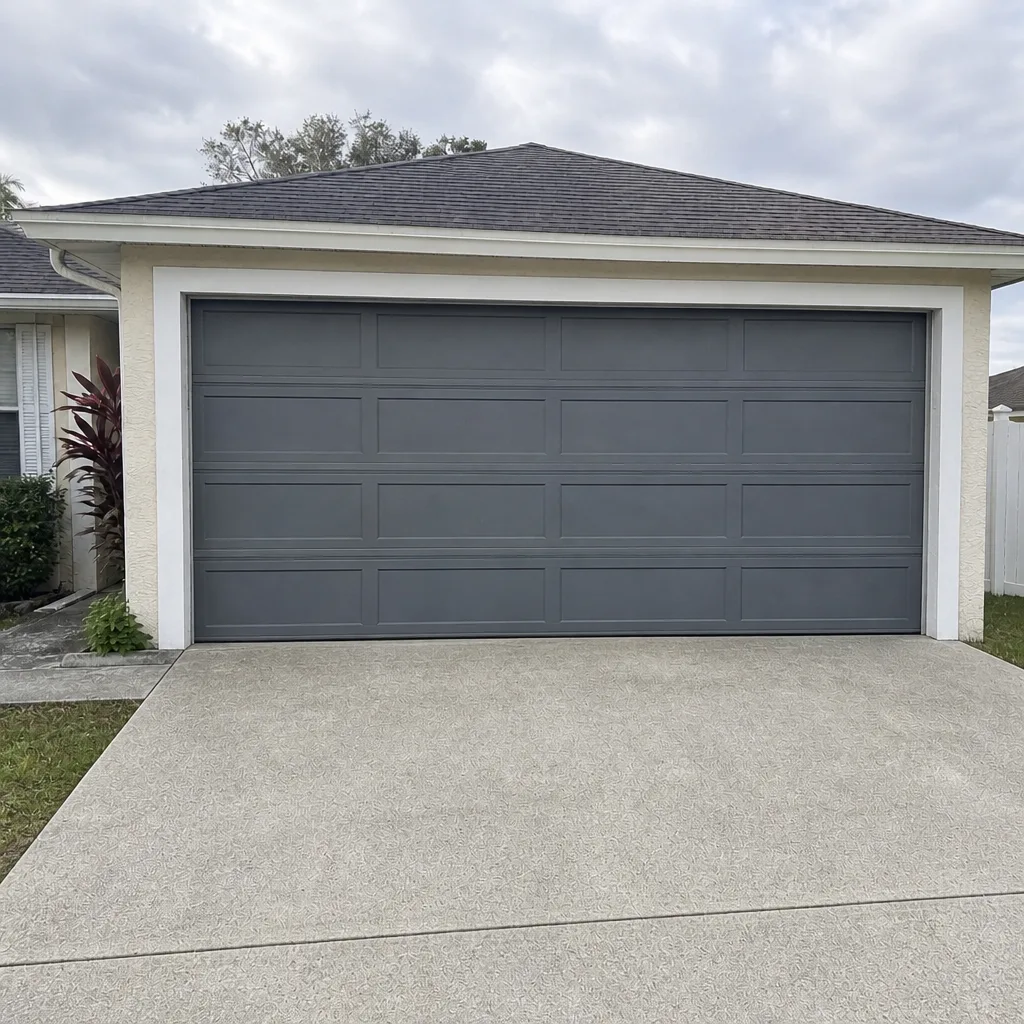 After
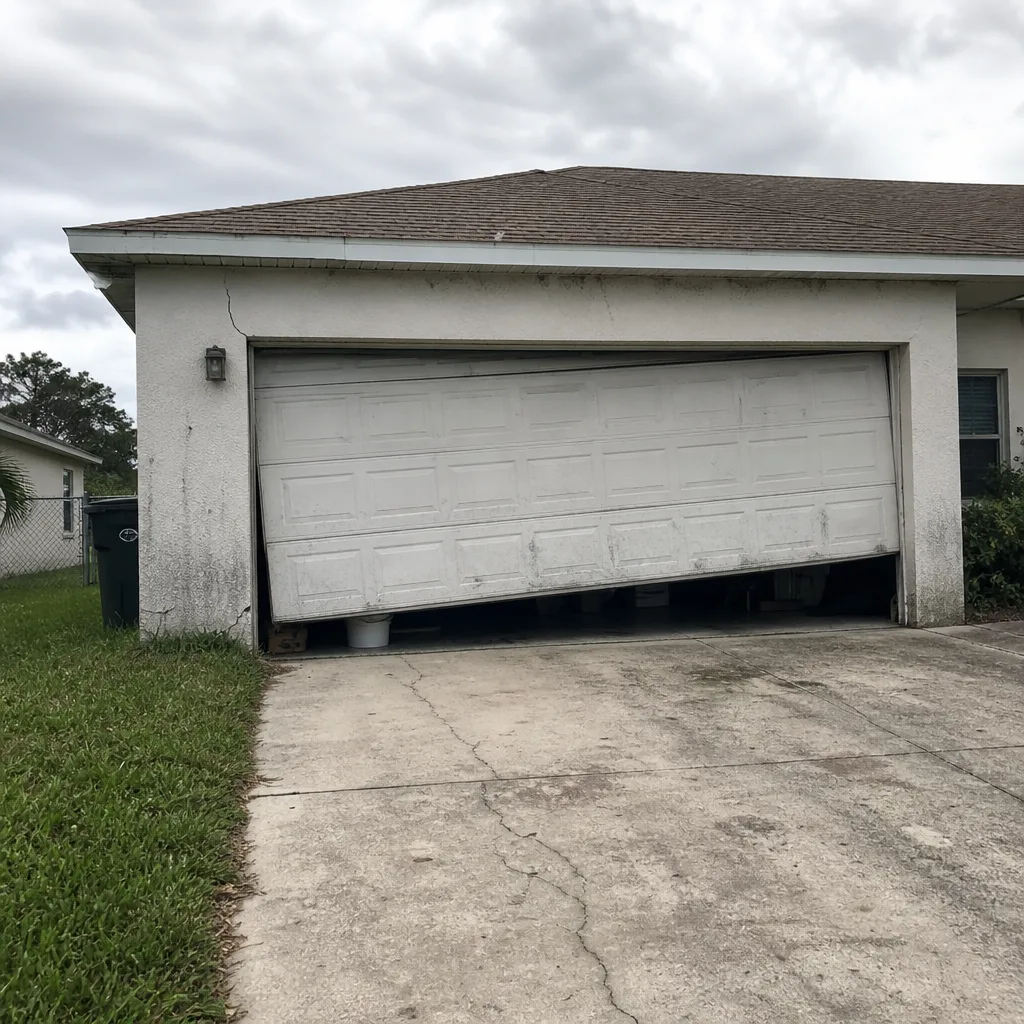 Before
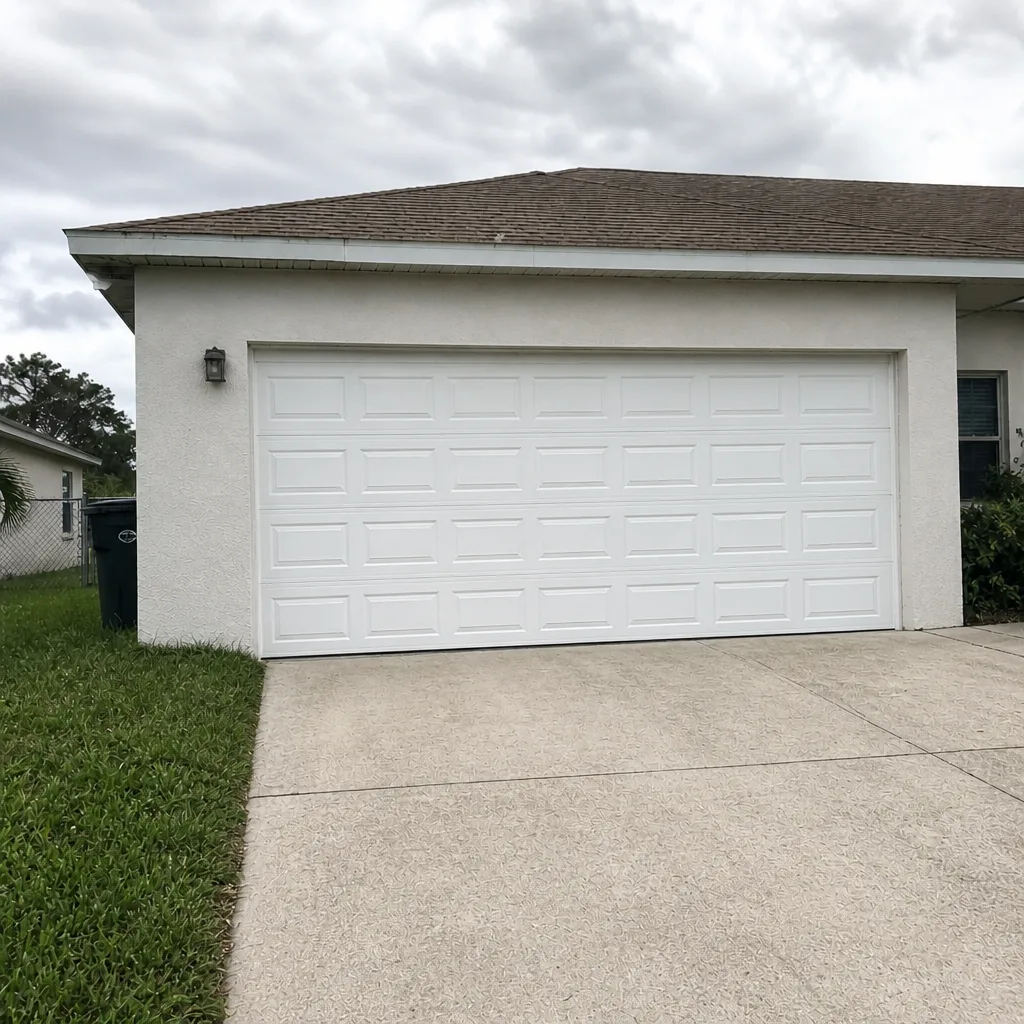 After
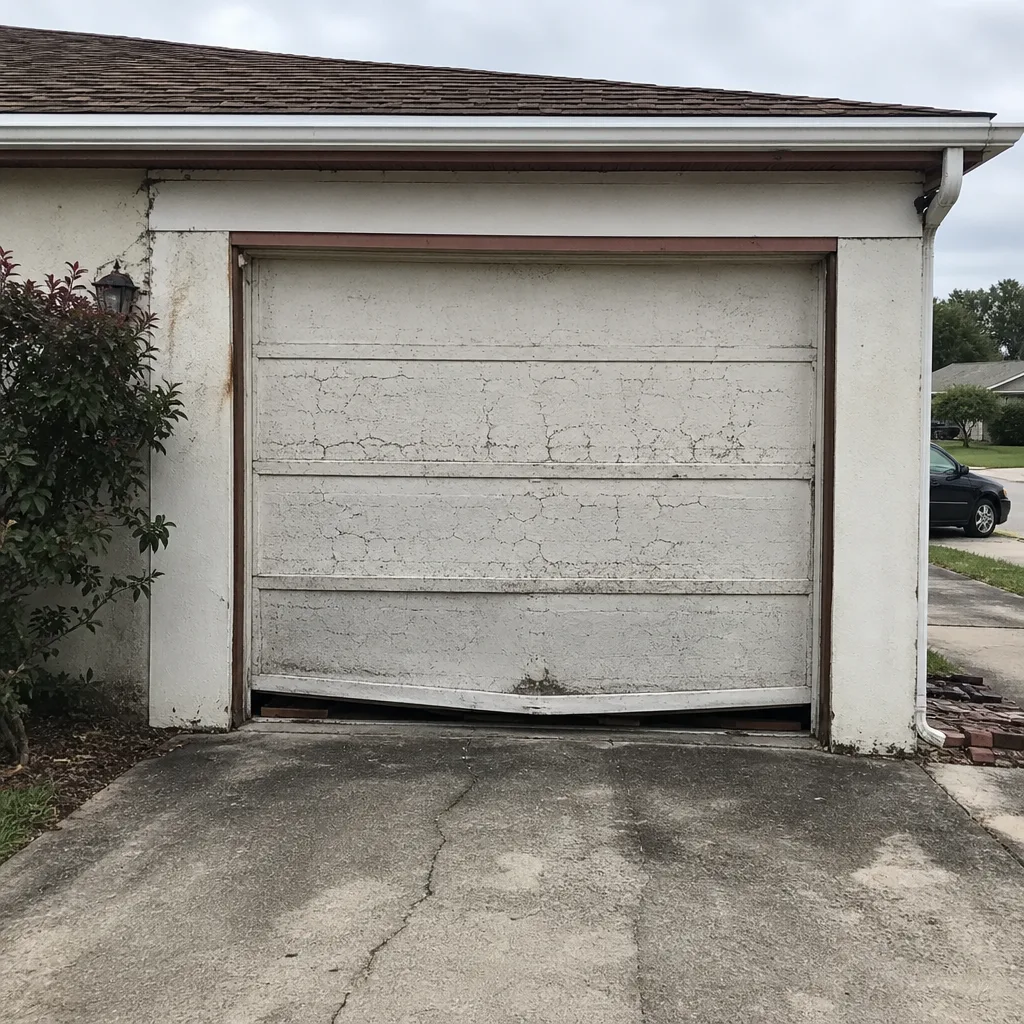 Before
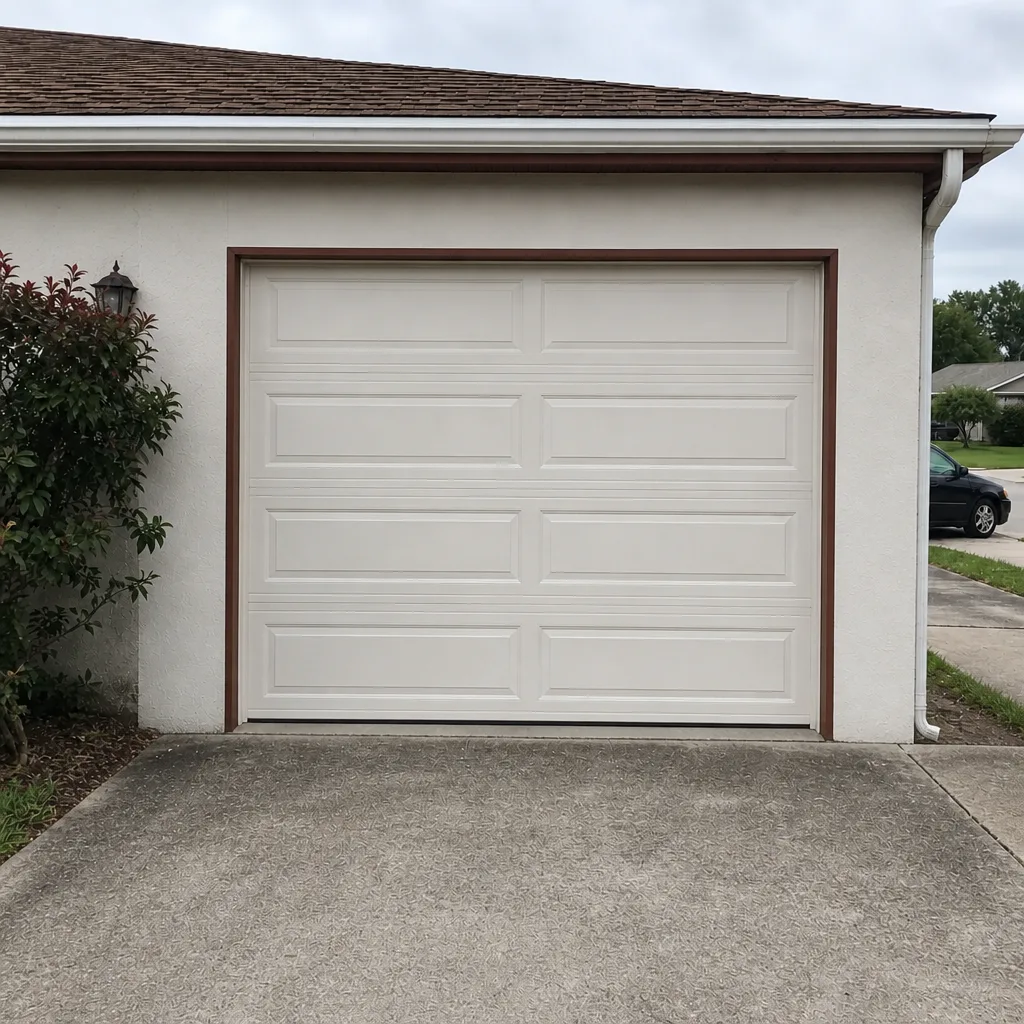 After
When to Call a Professional
Most of the seasonal work on this page is safe to do yourself: inspecting, testing, lubricating, replacing weatherstripping. Some of it isn’t, and it’s worth being clear about the line.
Call a trained technician for anything involving torsion springs or cables. Those parts store and release enormous force, and a spring that slips during a DIY adjustment can cause serious injury. The same goes for a door that’s off its tracks, a door that’s binding or hanging unevenly, and anything where the balance is clearly wrong. Those aren’t adjustments; they’re signs something has failed or is about to.
Also call if your door is stuck open, stuck closed, or you can’t get it secured before a storm. A door that won’t close is a security problem, and it’s the one situation where speed matters most. Springs are the most dangerous part of any garage door, and we handle them as a dedicated service rather than an afterthought.
Palm Bay Garage Door Repair Co offers free estimates in Palm Bay. Call (833) 762-4168. We answer 24/7. Fast dispatch from 7am to 7pm, Sunday through Friday. Our technicians have up to 13 years of experience, and we work across the brands most Palm Bay homes already have, from Genie and Chamberlain openers to Clopay, Amarr, and Wayne Dalton doors. The local pro is licensed and insured as their state requires, and the price is quoted and agreed before any work starts.
Frequently Asked Questions
The best single window is May, before hurricane season opens. That’s when the pre-season checklist gets done: wind-load rating, manual release test, weatherstripping, and a battery backup test. A second lighter inspection makes sense in late fall as temperatures drop, and a post-storm walk-around after any named storm or severe thunderstorm fills in the rest.
Yes. The humidity from June through September breaks down lubricant faster and keeps metal surfaces damp longer. In a drier climate, once or twice a year is reasonable. In Palm Bay, checking and re-lubricating the hinges, roller bearings, springs, and pivot points every few weeks during the humid stretch is closer to what the conditions call for. Call (833) 762-4168 if you’re not sure whether a part is dry or worn, and we’ll take a look.
No. Torsion springs store enough force to cause serious injury, and adjusting them safely takes the right tools and training. Dry-season contraction does change spring tension, which is why a door that ran fine in summer can feel heavy or out of balance in January, but that’s a job for a technician. If your door is binding or slow in the cooler months, call and we’ll check the balance for you.
Start with the tracks: look up each vertical track and check that it’s still plumb, then look at the horizontal track where it turns back. Check for dents, debris in the tracks, and a bottom seal that’s no longer flush. Then run the door carefully and stop if anything grinds or pops. If the door won’t move or is off its tracks, don’t force it. Call (833) 762-4168. We answer 24/7, and a call outside dispatch hours is booked into the next opening, Sunday through Friday, 7am to 7pm.
Once a year, in May, before hurricane season opens. Unplug the opener from the wall and try the remote. If the door doesn’t move, the battery is dead and the door won’t work during a power outage. That’s the most important time to have it working in a Palm Bay home, so testing it in May beats discovering the problem in a storm.
It depends on the door and what needs attention. A tune-up that covers lubrication, balance, cables, and an opener check is typically quoted per job, and the written estimate sets the final price. The estimate is free, and the price is quoted and agreed before any work starts. Call (833) 762-4168 for an exact quote.
The Bottom Line
Palm Bay has four maintenance windows, and they’re not the four seasons you’ll find on a generic guide. May is hurricane prep: wind-load rating, manual release, weatherstripping, battery backup. Post-storm is a walk-around: tracks, debris, seal, careful test operation. November through March is contraction season, when springs and hardware need checking as temperatures drop. June through September is humidity protocol: more lubrication, closer attention to rollers, hinges, and seals. Fold in a cable inspection before rainy season and a battery backup test in May, keep the tracks dry, and leave the springs to a technician. That’s the whole routine, and it’s built for this city rather than a climate a thousand miles away.
If you want help with any of it, Palm Bay Garage Door Repair Co is a single-trade company that works only on garage doors, from a broken spring to a full installation. Call (833) 762-4168 for a free estimate.
Written by the team at Palm Bay Garage Door Repair Co.