
Last updated November 21, 2026
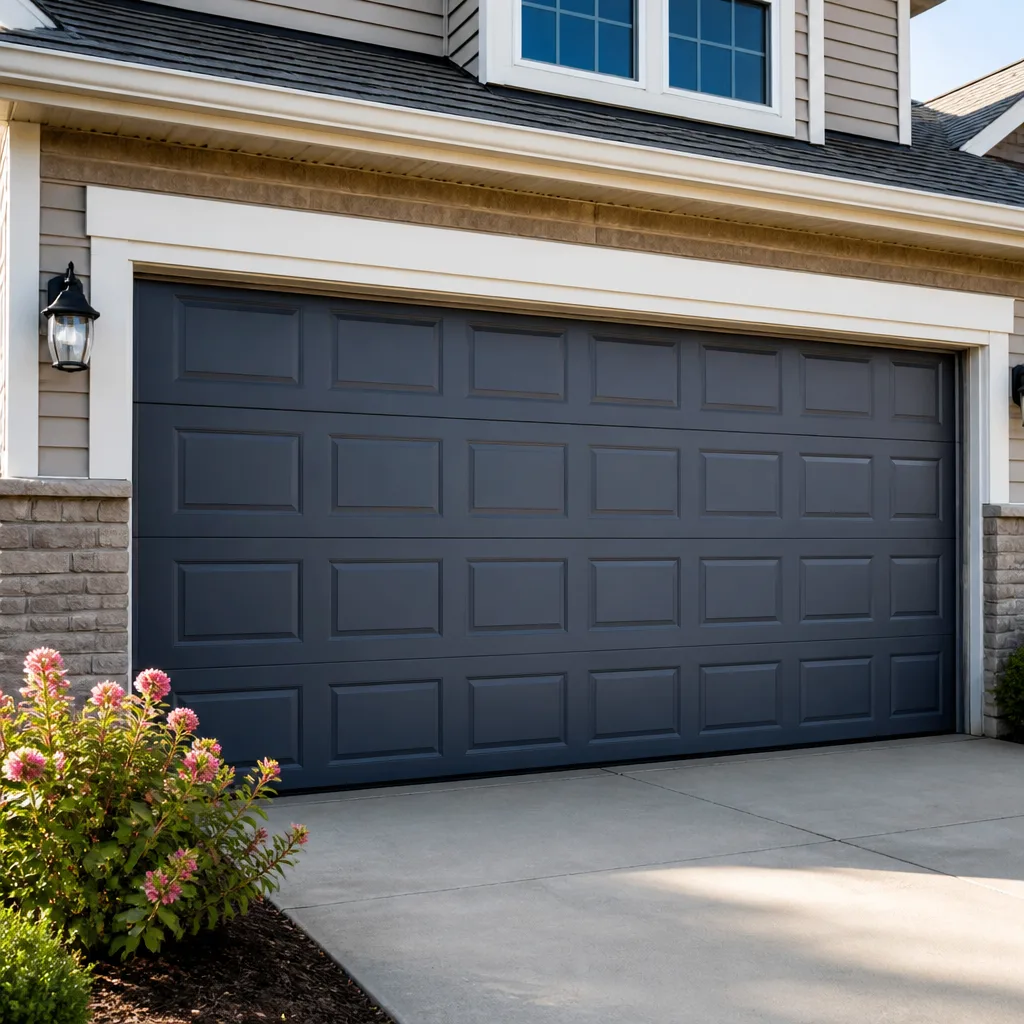 Raised-panel steel
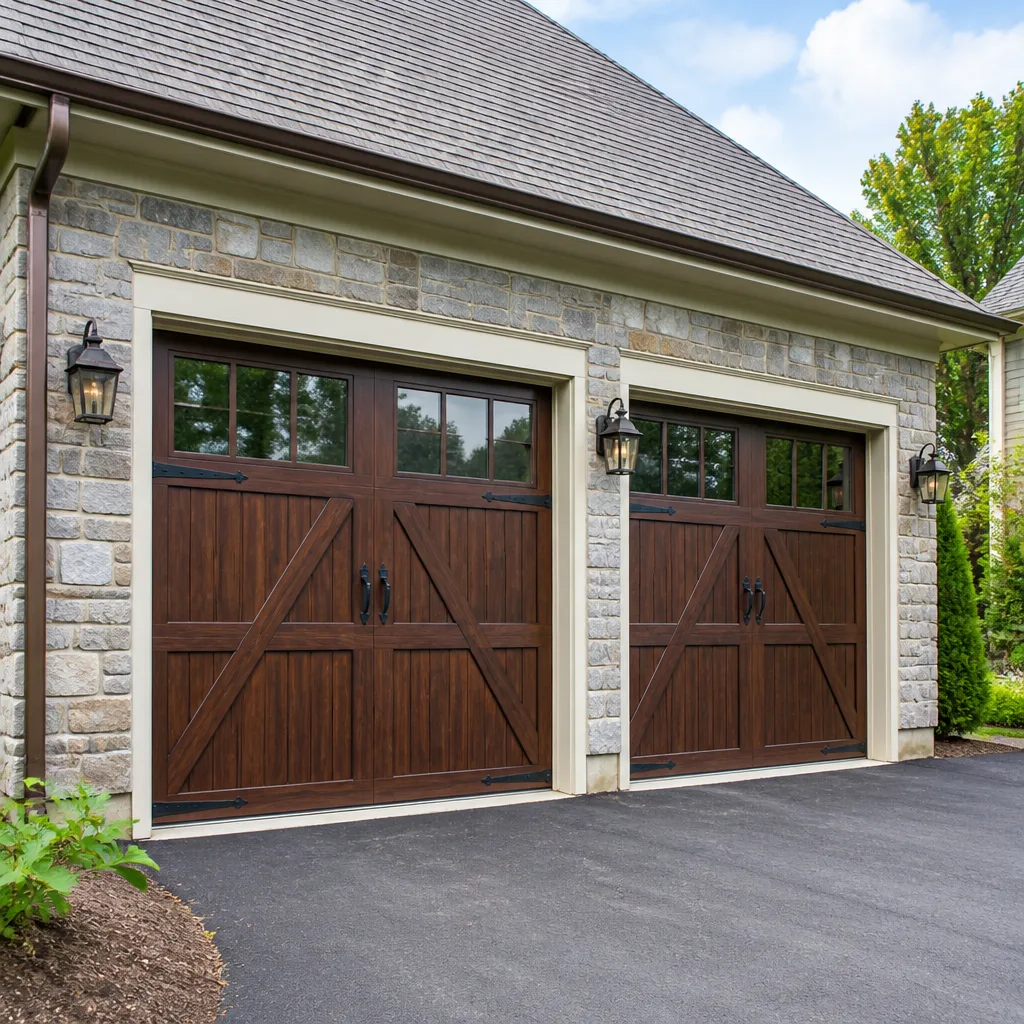 Carriage house
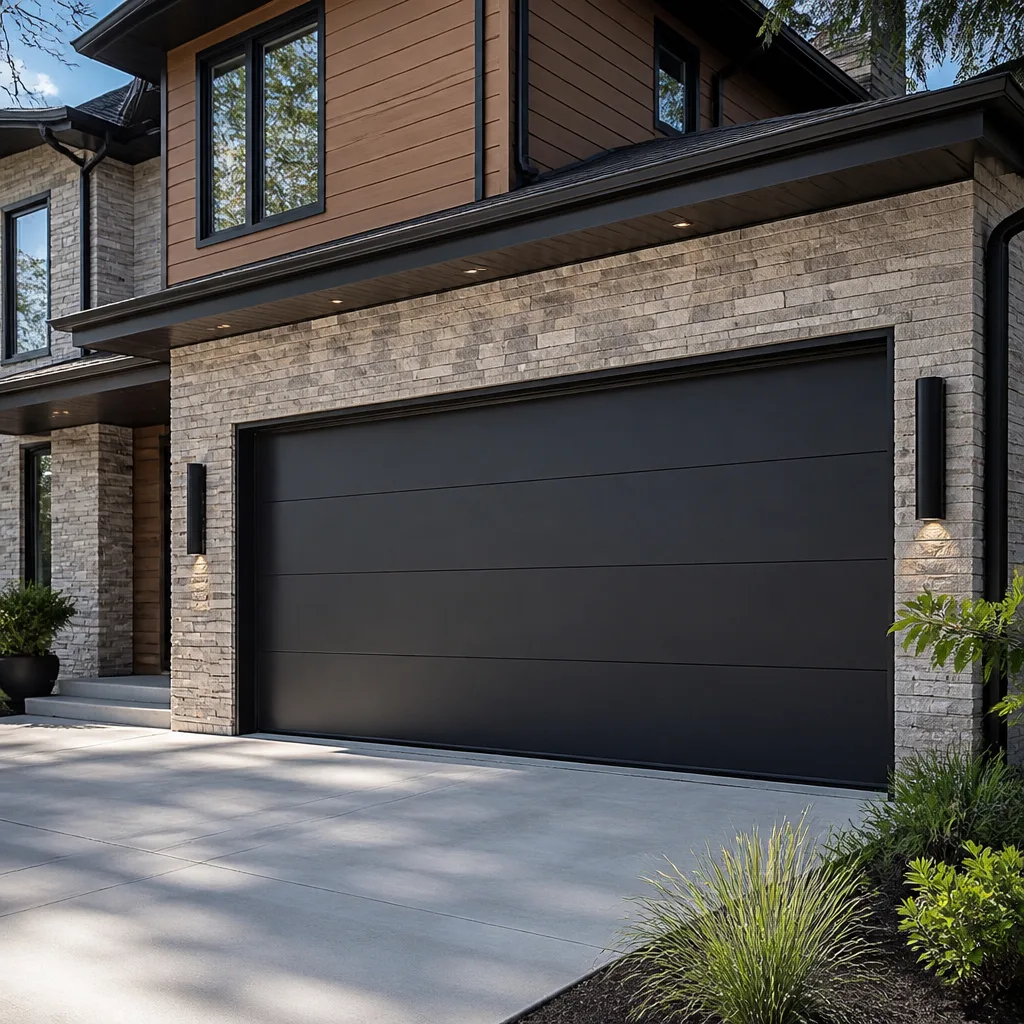 Modern flush
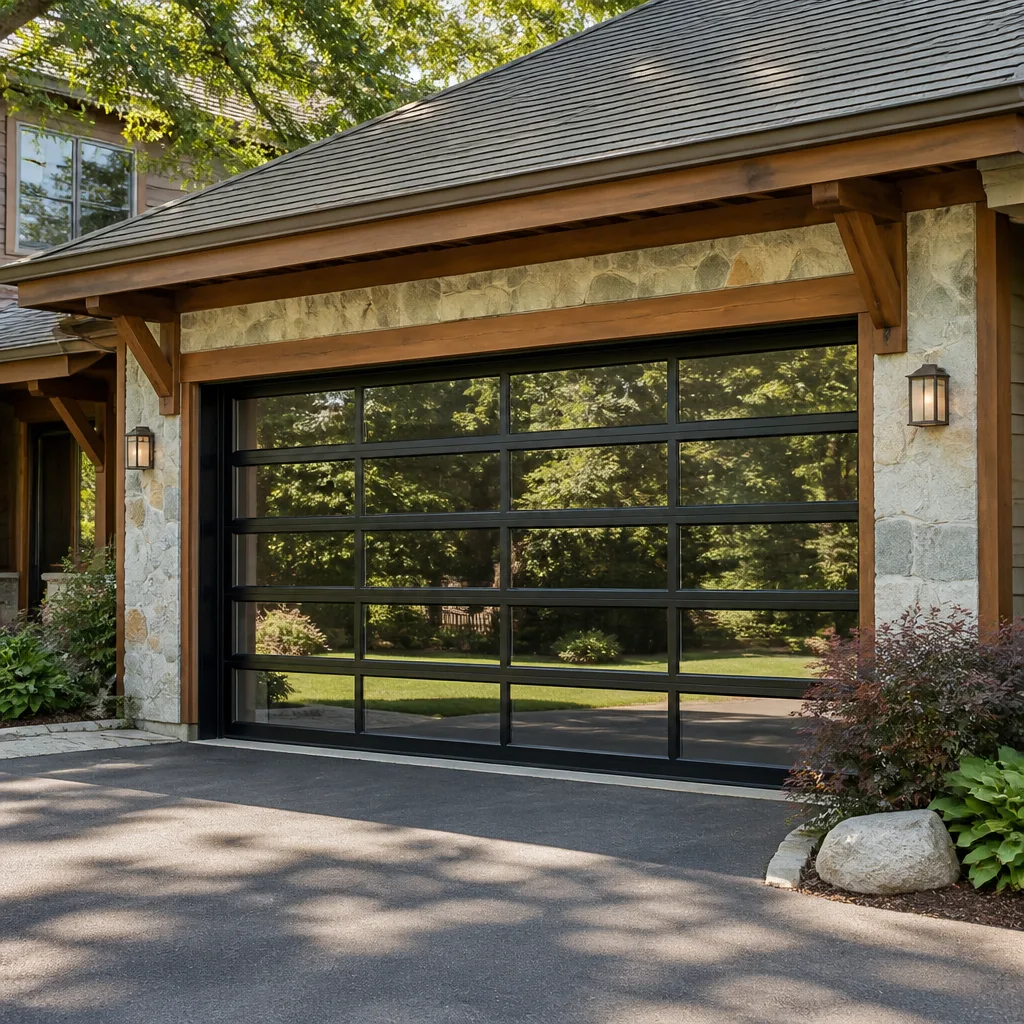 Full-view glass
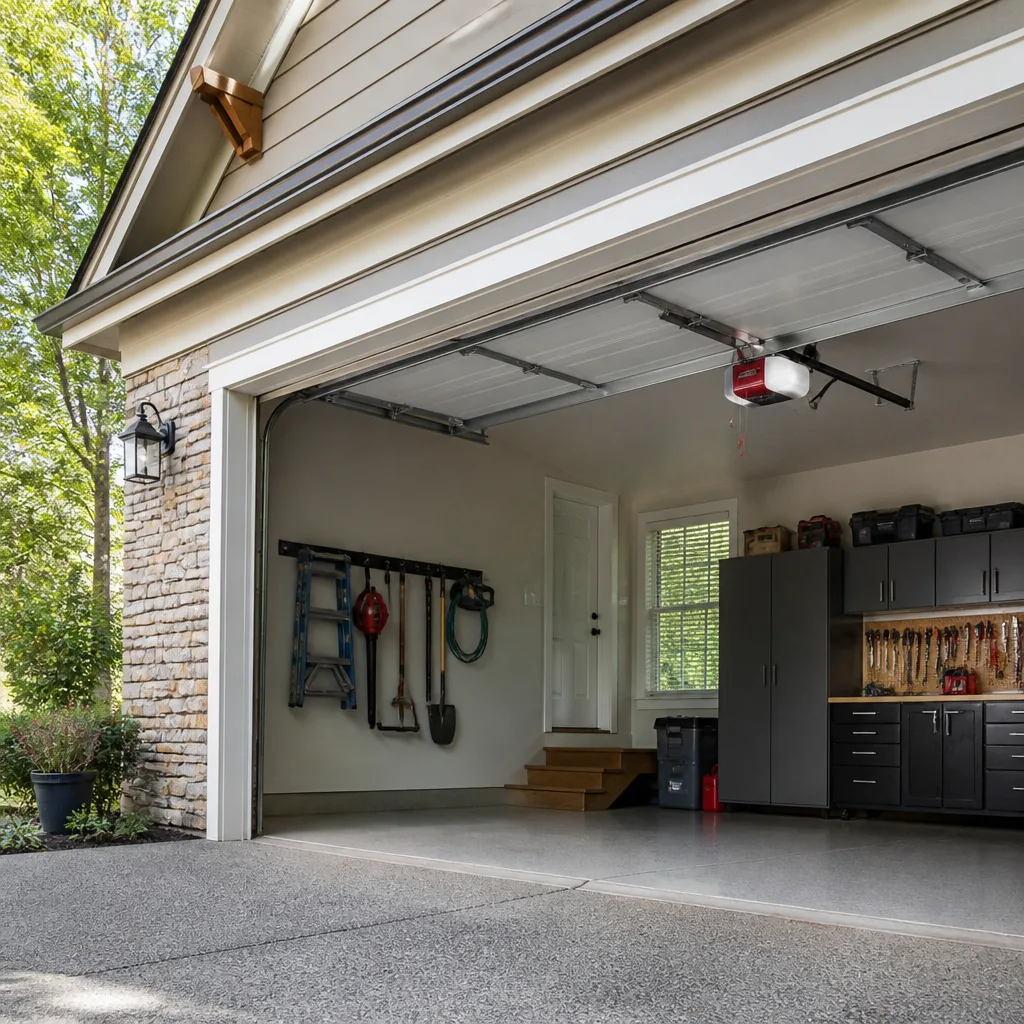 LiftMaster openers
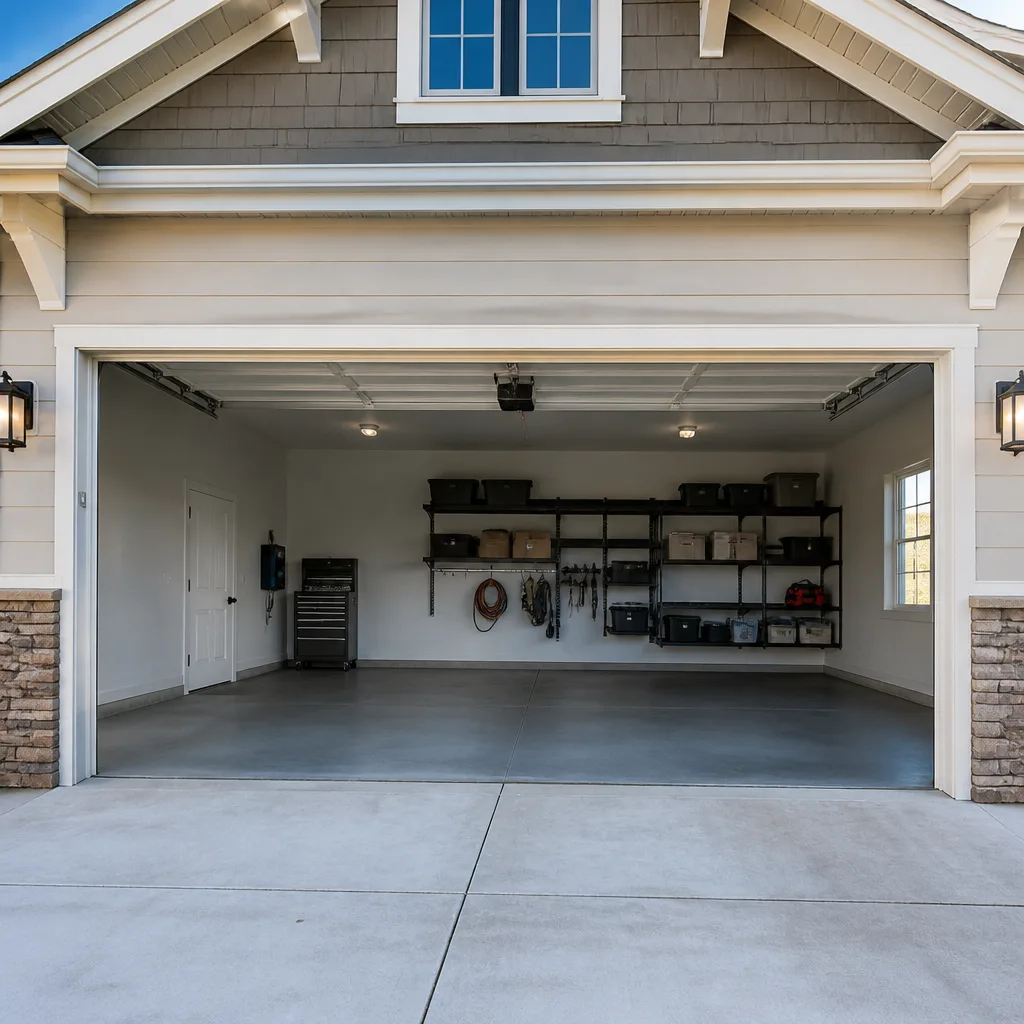 Chamberlain openers
Full 25-point door and opener safety check with every visit - springs, cables, rollers, tracks, and your LiftMaster or Chamberlain opener included
You get a price before we start. It does not change when the pro arrives.
Get your free estimateDIY vs Professional Garage Door: The Palm Bay Homeowner’s Decision Guide
Torsion spring replacement is the most-searched garage door DIY project online, and it’s also the repair most likely to send a homeowner to the emergency room. That’s not because people who try it aren’t handy. It’s because almost every tutorial out there underestimates how much stored energy sits in a spring sized for a door that can weigh several hundred pounds. The real question in Palm Bay isn’t whether you’re capable of DIY work. It’s which specific jobs have a risk profile a homeowner can manage and which ones don’t. This guide draws that line task by task.
Quick Answer
Most garage door maintenance is safe for a careful homeowner to do alone: lubricating moving parts, aligning safety sensors, replacing weatherstripping and testing the auto-reverse. Spring and cable work, opener rewiring, and full door replacement should always be handled by a trained professional. The dividing line is simple: if the job involves stored mechanical energy, line voltage, or a permit and inspection, it belongs in a professional’s hands.
Styles & brands we work with
- Raised-panel steel
- Carriage house
- Modern flush
- Full-view glass
- LiftMaster openers
- Chamberlain openers
Table of Contents
- Where the DIY Line Actually Falls
- Tasks a Palm Bay Homeowner Can Safely Do
- Why Spring Work Is Non-Negotiable
- The Brevard County Permit Factor
- Does DIY Actually Save Money in Palm Bay?
- The One Maintenance Habit That Pays for Itself
- How Palm Bay’s Climate Affects Your Door
- Common Mistakes to Avoid
- When to Call a Professional
- Frequently Asked Questions
Where the DIY Line Actually Falls
Homeowners tend to frame this as a skill question: am I handy enough to fix this? That’s the wrong lens. A retired electrician might be plenty handy and still have no business wrestling a loaded torsion spring. The better question is what happens if the job goes wrong, and whether you have the tools and training to prevent that outcome. That reframing changes the answer on almost every garage door task.
Here’s how we sort it, and it holds whether you’re in Palm Bay or anywhere else in Brevard County:
- Safe for a homeowner: lubrication, sensor alignment, weatherstripping, visual inspections, testing the safety reverse. These involve low energy, no line voltage and no permit.
- Professional-only: torsion and extension spring replacement, cable replacement, bottom bracket work, opener motor or circuit board replacement, and full door installation. Each involves either stored mechanical energy, household current, or a permit-and-inspection chain.
- Gray zone, lean professional: roller and hinge replacement on an older door, track realignment after an impact, and any adjustment to the door’s balance. They look simple until the door comes off its tracks.
This split isn’t arbitrary. It follows the two things that actually injure people and fail inspections: uncontained energy and untested work. If a task touches either one, it’s a professional job. If it doesn’t, a careful homeowner can usually handle it, and we’d rather you spend your time on the safe maintenance tasks than gamble on the dangerous ones. Call (833) 762-4168 if you want a straight answer on a specific job. We answer 24/7. Fast dispatch from 7am to 7pm, Sunday through Friday.
Tasks a Palm Bay Homeowner Can Safely Do
These jobs genuinely belong on your weekend list. They extend the life of your door, they don’t require special tools, and a mistake won’t cost you an injury or a failed inspection. If your door is sticking, noisy, or letting in a draft, one of these is usually the reason.
- Lubricate the moving parts. Apply a garage-door-specific lubricant (not WD-40) to the rollers, hinges, and torsion bar bearings a couple of times a year. This is the single highest-value thing most homeowners can do, and it’s covered in more detail further down.
- Align the safety sensors. The two small lenses at the bottom of the door tracks need to face each other and stay clear of cobwebs and dirt. If the door closes partway and reverses, misalignment is the first thing to check.
- Test the auto-reverse. Place a roll of paper towels under a closing door. If it doesn’t stop and reverse on contact, the opener’s force setting needs attention, and that’s a professional call.
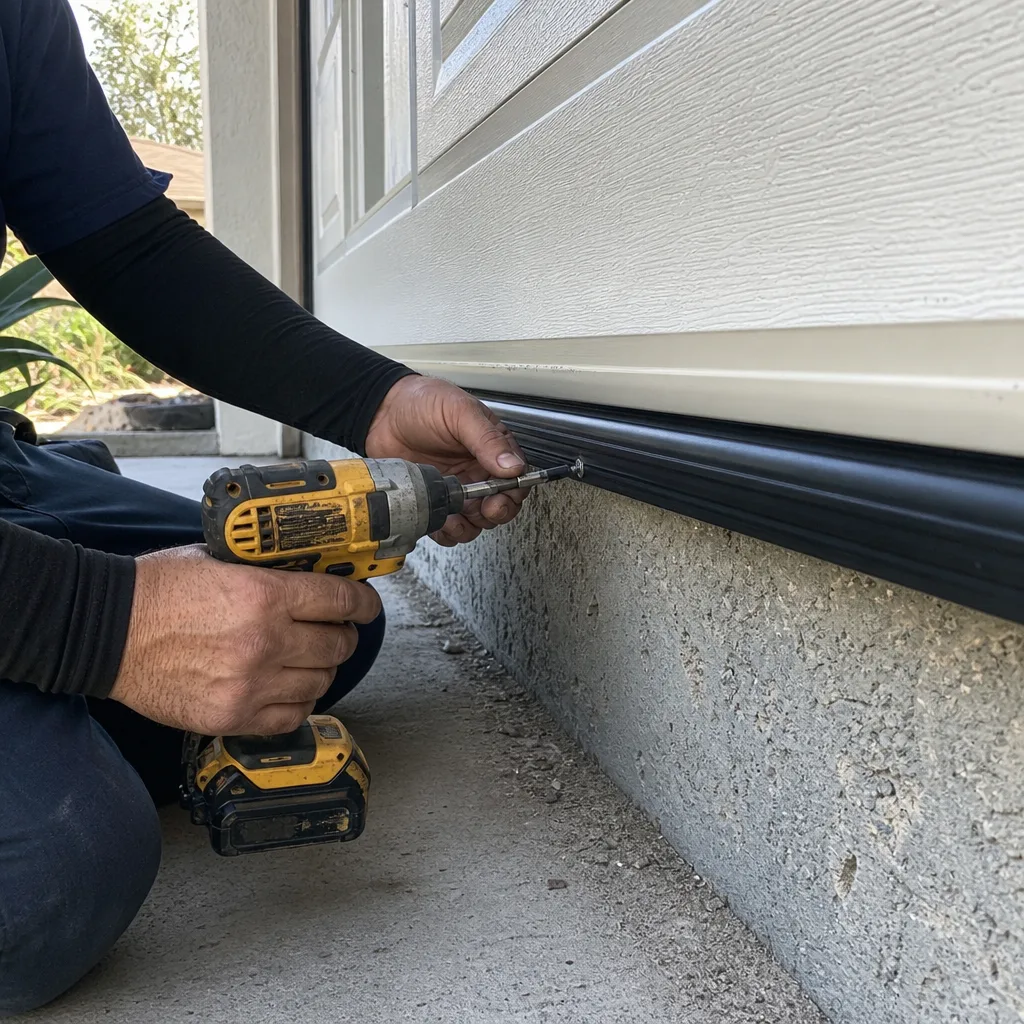
- Replace the bottom weather seal. The rubber strip along the bottom of the door hardens and cracks over time. It slides out of its channel and a new one slides back in, no tools beyond a screwdriver.
- Do a visual inspection. Look for frayed cables, worn rollers, bent tracks and gaps in the hardware. You’re not fixing anything here, just catching problems early enough to book a repair before they turn into a breakdown.
None of these touch a loaded spring or a live circuit. They’re the tasks we’d hand a homeowner directly, and doing them keeps small issues from becoming the kind of failure that needs emergency service on a Sunday morning in Palm Bay.
Why Spring Work Is Non-Negotiable
Torsion springs store enough energy to lift a door that can weigh several hundred pounds, and that energy stays loaded whether the door is open or shut. This is the crux of the whole DIY-vs-professional question. When a torsion spring lets go unexpectedly, that stored energy is released at once. That doesn’t mean it will hurt you; it means every spring reset is a controlled transfer of stored force that requires the right winding bars, the right technique and the right understanding of the door’s balance. A homeowner working from a video doesn’t have any of those.
In Florida specifically, there’s a liability dimension that doesn’t get enough airtime. If a door is left unadjusted or improperly balanced after DIY spring work, and it later comes down on a vehicle or fails to reverse, the responsibility lands on whoever did the work. There’s no warranty to fall back on, no inspection sign-off, and no one to call when the door won’t stay balanced. Most of the serious garage door injuries we hear about happen during exactly this kind of task: the homeowner was capable, the tutorial was clear, and the spring did what loaded springs do.
This is why we treat garage door spring repair as its own dedicated service rather than a side job squeezed into general repair work. Springs are the most dangerous component on any door, and they deserve someone who handles them every day. If your door is won’t-lift heavy, the spring has likely failed. Don’t test it by forcing the door up by hand. Call a professional and let the door sit until they arrive.
We service the full range of brands Palm Bay homes already have, from Clopay and Amarr doors to the Chamberlain and Genie openers that drive them, so there’s no guesswork about whether your system is one we know.
The Brevard County Permit Factor
This is where a lot of DIY replacement projects quietly go sideways. A full garage door replacement is a structural and safety change to a home, and in most jurisdictions that means a permit and a final inspection. Homeowners often assume that because a door is exterior equipment, they can swap it themselves and skip the paperwork. The permit exists for a reason, and the inspection checks things a homeowner can’t easily verify: proper anchoring, correct track alignment, spring-to-door balance, and that the safety reverse actually works.
A failed inspection on DIY work is common, and it’s more expensive to fix than a passing inspection is to get. The door may need to come back down so the anchoring can be redone, or the tracks realigned, or the balance corrected, and now you’re paying a professional to undo and redo work you already paid to do once. In Palm Bay, where plenty of homes are running doors that were installed years before the current code cycle, this becomes especially relevant if you’re replacing an older door and don’t know what the original install looked like behind the trim.
The rule of thumb: replacement means permit, and permit means a licensed professional who knows the inspection checklist. If you’re unsure what your city requires, call your building department and ask before you buy a door. We’re happy to walk you through what typically gets checked during a garage door installation, and a professional install comes with the inspection piece already planned for. That’s not a reason to skip DIY where it’s safe. It’s a reason to know which jobs fall on which side of the line.
Does DIY Actually Save Money in Palm Bay?
On paper, the DIY math looks obvious: buy the part, skip the labor, keep the difference. In practice, the calculation gets muddier once you account for how the parts market actually works. Retail hardware stores price springs, cables and opener components at a markup, and the specific part you need for your door’s weight and track radius may not be stocked locally at all. A generic spring from a big-box shelf, installed on a door it wasn’t sized for, is a setup for premature failure or a balance problem that never quite goes away.
Professional work includes the part, the sizing, the installation and the warranty in one number. That number is fixed in writing before anyone picks up a tool, so there’s no surprise at the end. The retail-plus-your-own-weekend version looks cheaper until the door is off balance, the opener is struggling, and the warranty on a self-installed part covers the part, not the labor to try again.
Here’s how that plays out on the tasks that matter most:
- Spring replacement: DIY saves the labor line, but you’re sourcing a matched spring, using rented or purchased winding bars, and taking on the injury and warranty risk yourself. Professional work includes the correctly sized spring and the balancing.
- Opener replacement: A DIY install means running the safety sensors, setting the force limits and pairing remotes. A mis-set force limit is a safety problem, not a convenience one. Professional garage door opener repair includes the calibration and the warranty.
- Door replacement: DIY has the permit, inspection and disposal to account for, plus the risk of a failed final. Professional install quotes the door, the removal and the inspection-ready install as one price.
We give free estimates in Palm Bay, and we set the price per job in writing before any work starts. If the DIY math still works for a task on the safe list, we’ll tell you to do it yourself. If it doesn’t, we’ll show you exactly where the numbers land. Call (833) 762-4168 for a quote. We answer 24/7. Fast dispatch from 7am to 7pm, Sunday through Friday.
The One Maintenance Habit That Pays for Itself
If you take one thing from this guide, make it lubrication. Twice a year, apply a garage-door-specific lubricant to the rollers, hinges and torsion bar bearings. That’s it. No tools, no risk, and it’s the single habit that consistently extends the life of a door and keeps the opener from working harder than it should.
Why it matters so much in Palm Bay specifically: the humidity here is relentless, and humid air plus the fine grit that settles on exposed metal is a recipe for rollers that seize and hinges that squeal. A door that’s fighting friction every time it moves stresses the opener and the springs, and that stored energy has to go somewhere. Lubrication costs almost nothing and buys you real time before the next repair. Do it in the spring and again in the fall, and you’ll notice the difference in how smoothly the door runs within a week.
The companion habit is a five-minute visual check while you’re out there. Frayed cables, worn rollers and bent tracks are visible if you look, and catching them early is how a $200 repair stays a $200 repair. This is the DIY that genuinely pays for itself. The dangerous work is the part where DIY stops being the smart call.
How Palm Bay’s Climate Affects Your Door
Palm Bay’s heat and humidity do more to shorten a garage door’s life than cold weather ever would. The two failure points that show up most often are hardened weather seals and stiffening lubricant. The rubber along the bottom of the door dries out and cracks in the summer heat, which lets in water and pests and makes the seal harder to close against. And the lubricant you applied in the cooler months can thicken in a hot garage, which is one more reason to check it twice a year rather than once.
The other climate-driven issue is track alignment. A garage that bakes all day can shift slightly as materials expand, and tracks that were perfectly aligned in cooler weather can develop a rub that shows up as a door that runs unevenly. If your door suddenly starts dragging on one side, the answer isn’t force. It’s a professional track check. A misaligned track wears out rollers and can eventually send the door off its tracks, which is a repair you don’t want to DIY on a door that’s already under stress.
None of this means the door is doomed. It means routine maintenance matters more here than in a mild-climate market, and it means the tasks on the safe list are worth doing properly. If a Palm Bay door has been ignored for a few summers, an inspection is the cheapest way to find out what actually needs attention. Whether your door is a LiftMaster-driven older model or a newer Amarr install, the check looks the same, and it’s worth doing before a small issue becomes an emergency.
Common Mistakes to Avoid
- Forcing a heavy door up by hand after a spring fails. When a spring lets go, the door can weigh far more than the opener is rated to lift. Forcing it up strains the opener and can bend the tracks. Leave it down and call for repair.
- Buying a generic spring that isn’t sized for your door. Door weights, track radii and spring sizes vary. A spring that’s close but not matched will run out of balance and fail early. Match the part to the door, or let a professional do it.
- Replacing the door without pulling a permit. A replacement in Palm Bay and across Brevard County typically requires a permit and a final inspection. Skipping it can create a problem when you sell or when an inspection is required later.
- Setting the opener’s force limit too high to “fix” a sticking door. Cranking up the force is the wrong answer to friction. It masks the real problem and defeats the safety reverse. Lubricate and inspect instead.
- Ignoring a door that reverses halfway down. A door that won’t close is usually a sensor or safety-reverse issue, and it’s the failure most worth fixing quickly because the door is left open to the house. Don’t tape over the sensors or prop the door.
- Skipping lubrication because the door “runs fine.” Seized rollers and dry hinges are quiet until they’re not. The two-times-a-year habit is cheaper than the repair it prevents.
- Assuming a professional can’t tell what a previous DIY job did. A technician inspecting a door will see mismatched springs, bent tracks and over-torqued hardware within minutes. Undoing DIY work costs more than doing it right the first time.
When to Call a Professional
Call a professional when the job involves stored spring energy, cable tension, line voltage inside an opener, or a permit. That covers spring and cable replacement, opener motor and circuit board work, track realignment after an impact, and any full door replacement. It also covers the door that won’t close, the door that reverses partway down, and the door that came off its tracks. Those aren’t DIY repairs. They’re garage door repair calls, and they’re the ones where a professional visit prevents a much larger problem.
Palm Bay Garage Door Repair Co offers free estimates in Palm Bay. Our technicians have up to 13 years of experience, and we work on the brands your home already has. Call (833) 762-4168. We answer 24/7. Fast dispatch from 7am to 7pm, Sunday through Friday. When the door won’t move, we do.
Frequently Asked Questions
No, we strongly advise against it. Torsion springs store enough energy to lift a door that can weigh several hundred pounds, and that energy releases at once if a spring lets go. Spring replacement requires correct sizing, proper winding bars and an understanding of door balance. It’s the repair most associated with serious garage door injuries, and it’s a job for a trained professional. Call (833) 762-4168 for a free estimate on spring work.
In most cases, yes. A full garage door replacement is treated as a structural and safety change and typically requires a permit and a final inspection. Check with your city’s building department for the exact requirement, since rules can vary by jurisdiction. A failed inspection on DIY work often costs more to fix than getting it right the first time. We can walk you through what a professional install includes.
Lubricating rollers, hinges and torsion bar bearings, aligning the safety sensors, replacing the bottom weather seal, testing the auto-reverse, and doing a visual inspection are all safe for a careful homeowner. They involve no stored spring energy and no household current. If a task touches a spring, a cable, live opener wiring or a permit, it belongs with a professional. Call (833) 762-4168 for an exact quote on anything on the professional side.
Sometimes, on the safe maintenance tasks, yes. On spring, opener and door replacement work, the savings shrink once you account for retail parts markup, the risk of a mismatched part, and the fact that a self-installed part’s warranty won’t cover the labor to redo it. Professional work includes the correctly sized part, the install and the warranty in one written price. Call (833) 762-4168 for a free estimate.
Start by checking the safety sensors. Clean the lenses and make sure they face each other and that nothing is blocking the beam. If the door still reverses, the opener’s force limit or travel settings need attention, and that’s a professional adjustment. Don’t tape over the sensors or force the door closed. It’s a quick fix for a technician and a safety risk when left. Call (833) 762-4168.
We work on the brands Palm Bay homes already have, including Clopay, Amarr, Chamberlain and Genie, along with LiftMaster, Wayne Dalton, Craftsman and Raynor. That means we’re not guessing at your system when we arrive. Whether it’s an opener calibration, a spring replacement or a full install, we know the equipment. Call (833) 762-4168 for a free estimate.
The Bottom Line
The DIY-vs-professional question for a garage door isn’t a judgment about whether you’re handy. It’s a question of what happens if the job goes wrong. Lubrication, sensor alignment, weatherstripping and visual inspections are safe, cheap and genuinely worth doing yourself. Springs, cables, opener wiring and full door replacement carry risks a homeowner can’t absorb, and a permit and inspection turn DIY into a longer, more expensive project than the professional version. Draw the line task by task, not as a blanket decision. If you’re in Palm Bay and you’re not sure which side a job falls on, call. We’ll tell you straight.
Call (833) 762-4168. We answer 24/7. Fast dispatch from 7am to 7pm, Sunday through Friday. Estimates are free, and the price is agreed in writing before any work starts. When the door won’t move, we do.
Written by the team at Palm Bay Garage Door Repair Co.
See the difference
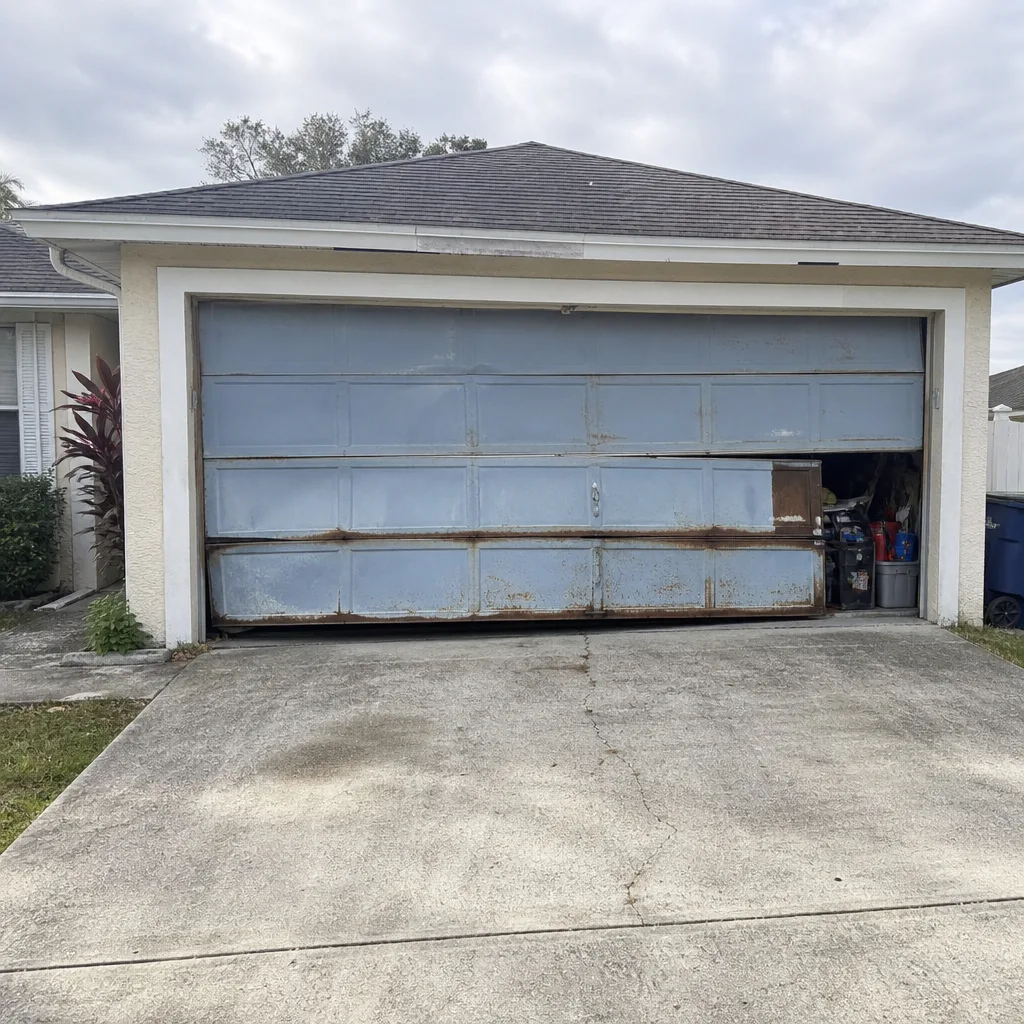 Before
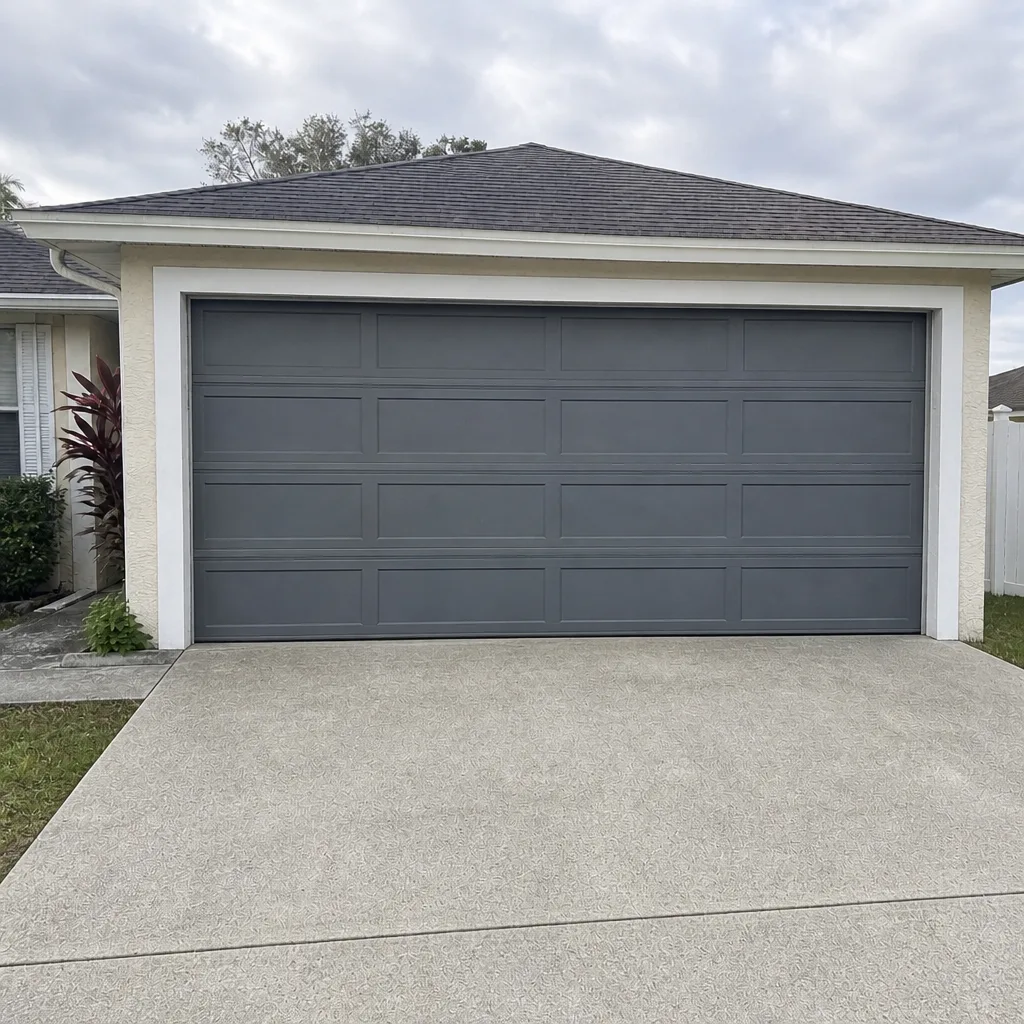 After
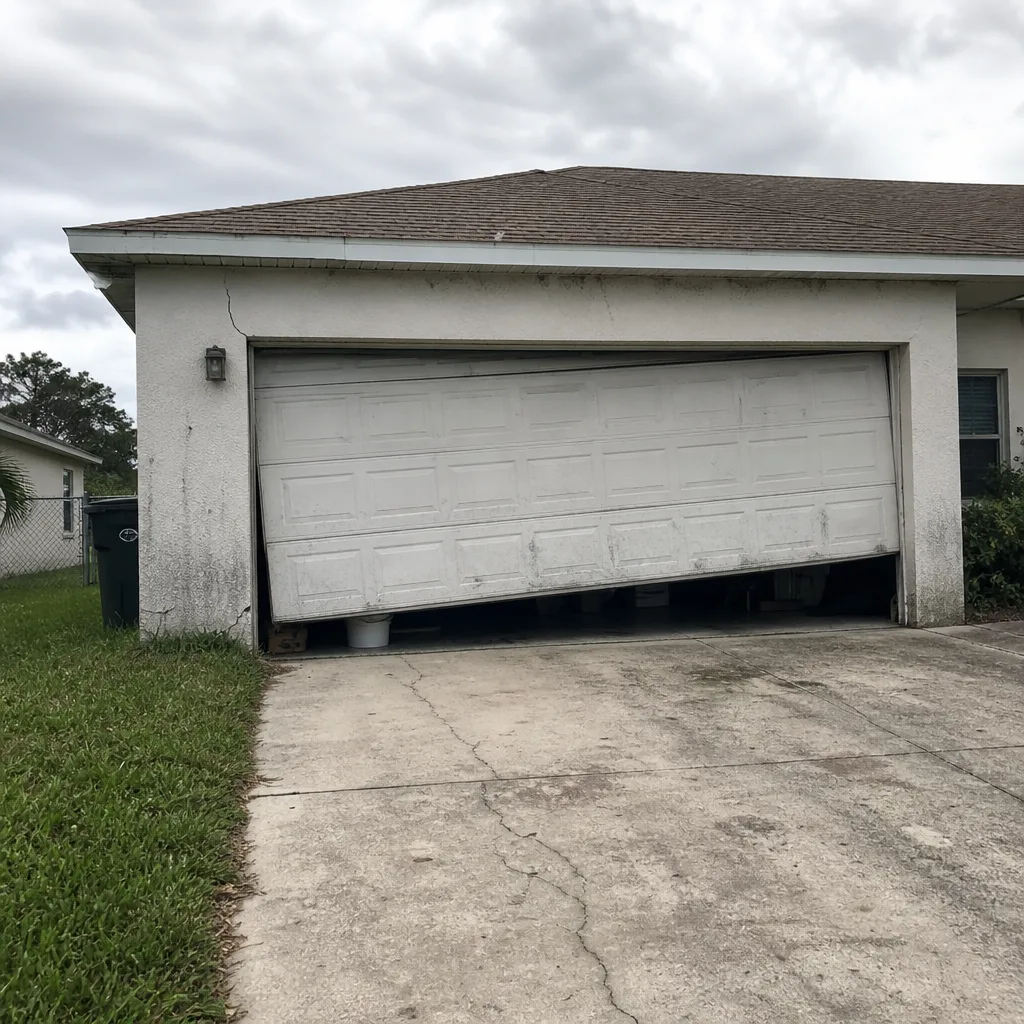 Before
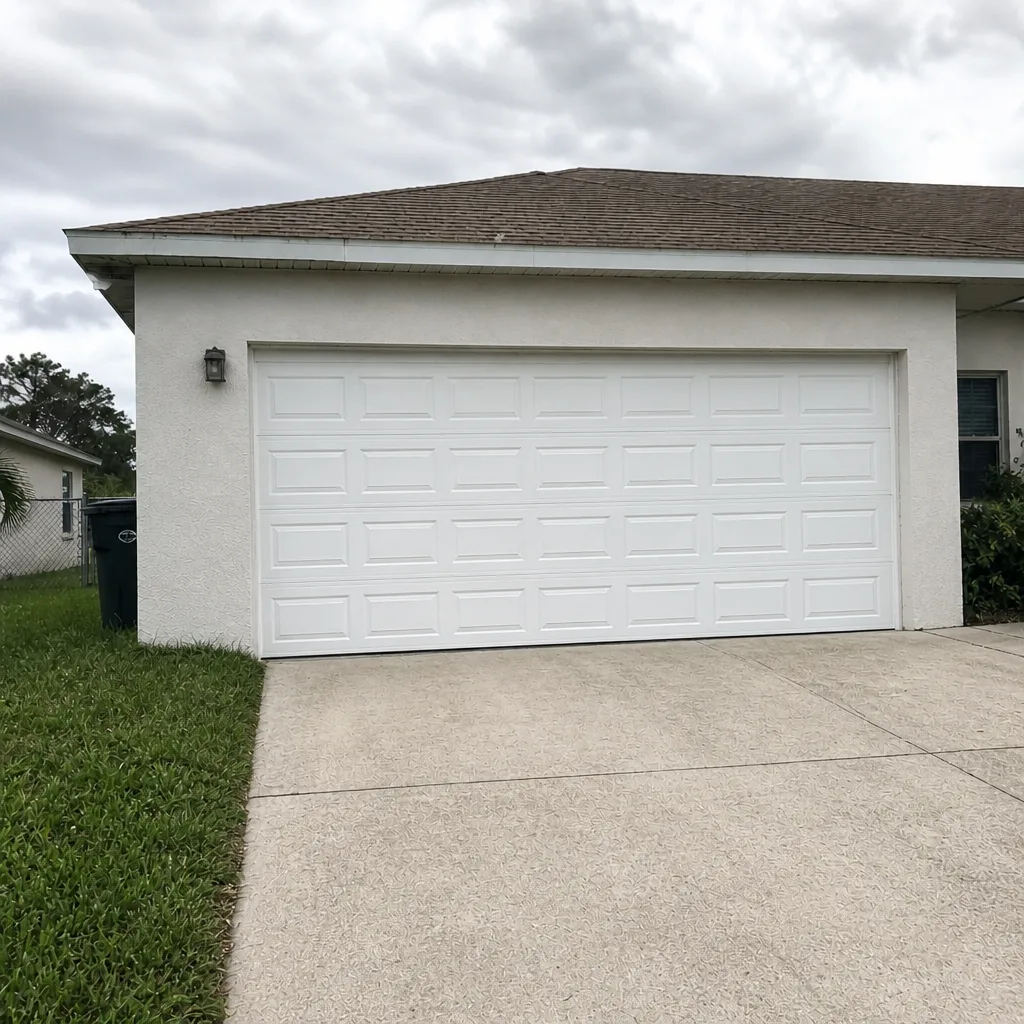 After
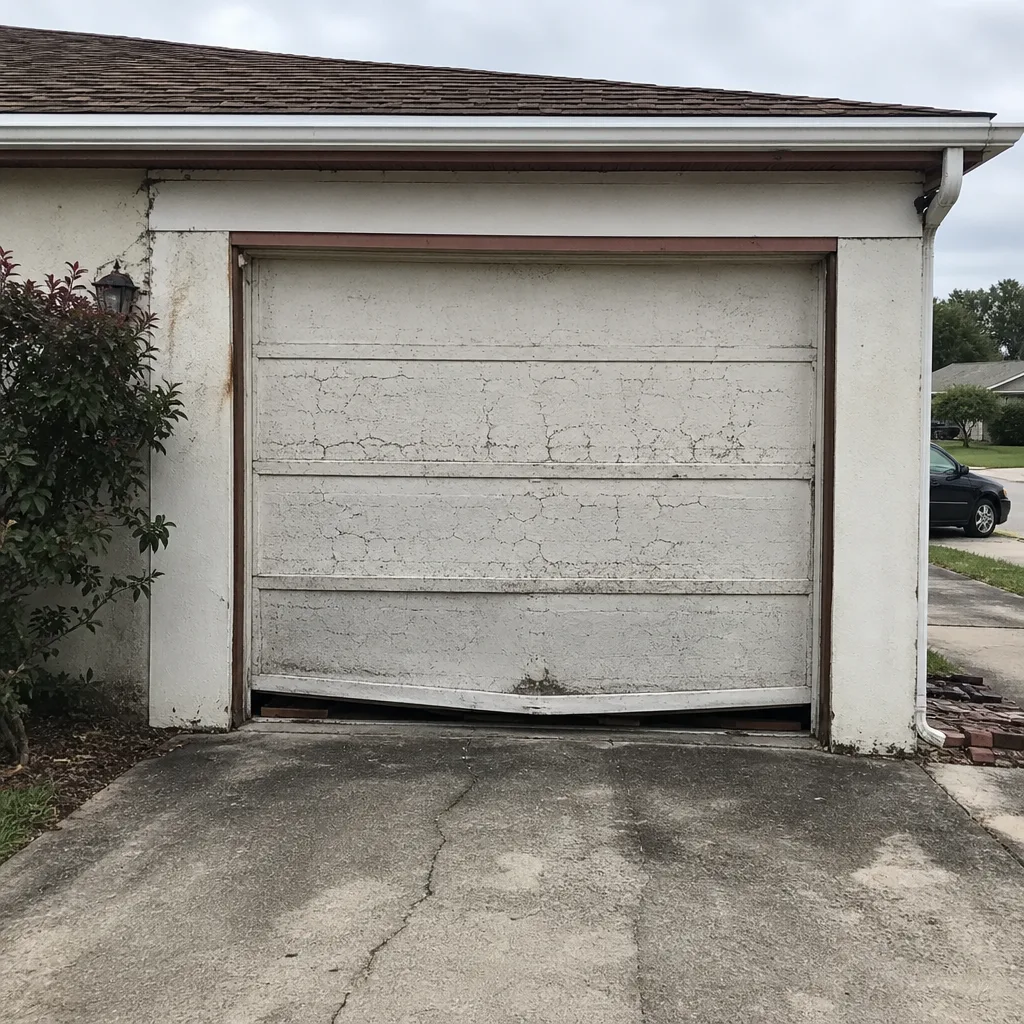 Before
 After